



News Desk
Islamabad:Speaking at the 2026 ICNA Convention in Baltimore, Dr. Ghulam Nabi Fai, Chairman of the World Forum for Peace & Justice, delivered a forceful and deeply reflective address titled “Kashmir: Occupation, Erasure and a People Still Waiting,” highlighting what he described as the continued denial of the Kashmiri people’s internationally recognized right to self-determination. The primary focus of the session was the “Muslims Around the World Series.” Additional speakers included Sr. Laila El Haddad, author and well-known public speaker and Dr. Osama Abuirshaid, Chairman, US Council of Muslim organizations (USCMO) who addressed the current situation in Palestine, as well as Ust. Habibullah Ziar, a prominent community leader and well-known expert on the situation discussed developments in Afghanistan. The session was facilitated by the highly competent and experienced MGA Brother Ismael.
Dr. Fai reminded the audience that the Kashmir dispute is not merely a territorial disagreement between India and Pakistan, but fundamentally concerns the political future, dignity, and human rights of more than twenty-three million people of the state of Jammu and Kashmir. He stressed that because of its implications for relations between two nuclear powers, the unresolved conflict remains a direct threat to regional and international peace.
Referring to the historical position of the United States and the United Nations, Dr. Fai recalled that U.N. Security Council Resolution 47 of April 21, 1948, co-sponsored by the United States and the United Kingdom, affirmed that the future of Kashmir was to be decided by the free will of its people under U.N. supervision. He noted that subsequent resolutions adopted by the United Nations Commission for India and Pakistan (UNCIP) further reinforced this commitment.
At the outset of his remarks, Dr. Fai referenced the March 18, 2005, decision by the U.S. State Department to revoke the diplomatic visa of Narendra Modi, then Chief Minister of Gujarat, citing allegations linked to the anti-Muslim riots in Gujarat. He also referred to reports, including those carried by BBC, concerning sworn testimony submitted before India’s Supreme Court regarding the 2002 violence.
Dr. Fai argued that the situation in Kashmir possesses several unique dimensions that distinguish it from other global human rights crises. Among them, he emphasized that Kashmir remains internationally recognized as a disputed territory; that the resistance movement is rooted in opposition to what he termed a foreign occupation; and that the international community’s prolonged silence has contributed to a sense of impunity regarding alleged human rights violations in the region.
Particular attention was devoted to the constitutional and demographic changes introduced after August 5, 2019, when India revoked Articles 370 and 35A of its Constitution. Dr. Fai stated that millions of domicile certificates had since been issued to non-Kashmiris, which he described as a deliberate effort to alter the demographic composition of the territory. He further alleged that large-scale land acquisitions and forced relocations of indigenous residents violated international humanitarian law and Article 17 of the Universal Declaration of Human Rights concerning property ownership.
Referencing remarks from former Indian Defense Minister A.K. Antony concerning land allocations to the Indian armed forces in Kashmir, as well as reports of land acquisition activities in the region amounting to over 250,000 acres within the past two to three years, Dr. Fai compared the scale of the land transfers to the size of five boroughs of New York City, which is only 191,000 acre of land, arguing that such policies represented systematic dispossession of local communities.
Throughout the address, Dr. Fai invoked comments and reports from international organizations, journalists, parliamentarians, and human rights advocates to support his claims regarding conditions in Kashmir. He cited observations made by Genocide Watch Chairman Dr. Gregory Stanton before the U.S. Congress, concerns raised by the Committee to Protect Journalists, remarks by head of European parliamentary delegation, John Cushnahan, and commentary by author Arundhati Roy regarding the militarization of the region. He referenced NY Times which wrote on August 10, 2019 that ‘Inside Kashmir, Cut Off from the world: A living hell of anger and fear,’ and Huff Post which wrote on August 5, 2019 that Indian democracy is dying in silence in Kashmir.
Dr. Fai also highlighted the cases of prominent Kashmiri political leaders, journalists, and human rights defenders, including Khurram Parvez, Yasin Malik, Shabir Ahmed Shah, Masarat Alam Bhat, Aasia Andrabi, Sofi Fehmeeda, Nahida Nasreen, and Irfan Mehraj, describing their detentions and prosecutions as part of a broader pattern aimed at silencing dissent in Kashmir.
Addressing the broader geopolitical implications of the conflict, Dr. Fai warned that recent tensions between India and Pakistan demonstrated once again that Kashmir remains “the most dangerous place on earth.” He referred to previous mediation offers by President Donald J. Trump and urged major world powers to facilitate meaningful dialogue involving India, Pakistan, and the authentic leadership of the Kashmiri people.
Deep concern continues to grow among human rights advocates and members of the Kashmiri diaspora over the worsening situation in Indian-occupied Jammu & Kashmir, where reports of repression, demographic engineering, arbitrary detentions, and restrictions on civil liberties have intensified in recent years.
Recent statements by observers and advocates have warned that the ongoing persecution of Muslims in Kashmir represents a dangerous and alarming trajectory. One such warning described the situation as “the stage just before genocide,” cautioning that “the next stage is extermination — that’s what we call a genocide.”
Human rights defenders have repeatedly emphasized that prolonged silence by the international community only emboldens policies that undermine human dignity, religious freedom, and the right of peoples to live in peace and security. Advocacy organizations have urged the United Nations, international human rights bodies, and democratic governments to take meaningful notice of the deteriorating conditions in the region.
They argue that Kashmir cannot remain a forgotten conflict while widespread allegations of collective punishment, suppression of dissent, confiscation of property, media intimidation, and prolonged detentions continue to surface. Observers stress that preventive diplomacy and principled international engagement are urgently needed before the crisis deepens further.
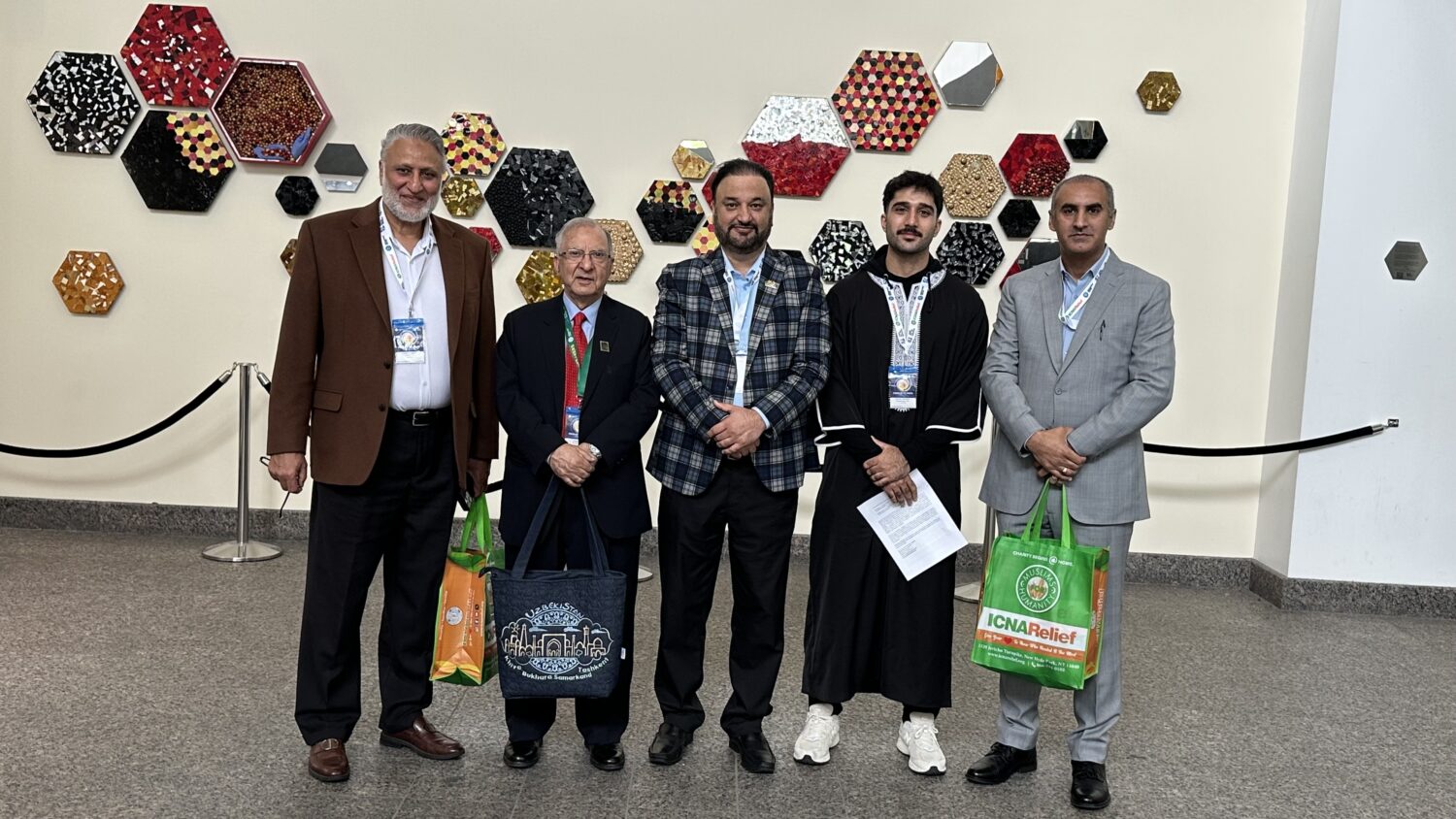 Dr. Fai also reiterated that sustainable peace in South Asia cannot be achieved without addressing the aspirations and fundamental rights of the Kashmiri people in accordance with international law and relevant United Nations resolutions.
Advocates have called upon civil society organizations, scholars, journalists, and policymakers worldwide to raise awareness about the humanitarian dimensions of the Kashmir dispute and to support peaceful, just, and democratic solutions to the longstanding conflict.
Concluding his remarks, Dr. Fai stated that lasting peace in South Asia would remain elusive until the promises made to the people of Kashmir through United Nations resolutions were fulfilled in accordance with international law and democratic principles.
Sardar Zulfiqar Roshan Khan, Director, Public Outreach, Voices of Justice in Kashmir; Sardar Zarif Khan, President, Kashmir American Welfare Association, (KAWA) and Sardar Shoaib Irshad, Advisor to the Prieme Minister Azad Kashmir commended the ICNA leadership for arranging a significant session addressing the conflicts faced by the Muslim community worldwide. They added that the session provided valuable insights from distinguished speakers regarding Palestine, Kashmir, and notably Afghanistan.