



Naveed Ahmad Khan
Every nation has leaders whose vision and sacrifices become inseparable from its history. For the people of Azad Jammu and Kashmir (AJK), Ghazi-e-Millat Sardar Muhammad Ibrahim Khan remains one such towering figure. Remembered as the First President of Azad Jammu and Kashmir, he played a decisive role in the political struggle that led to the establishment of the Azad Kashmir government on October 24, 1947. Nearly two decades after his passing, his legacy continues to inspire generations of Kashmiris and Pakistanis alike.
Born on April 22, 1915, in Poonch, Sardar Ibrahim received his early education in Kashmir before pursuing higher studies in law in London. Upon his return, he established himself as a successful lawyer and emerged as an influential political leader. His legal training, political foresight, and commitment to public service soon made him a prominent voice for the rights of the people of Jammu and Kashmir.
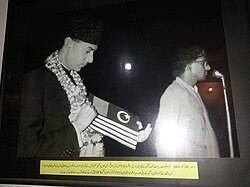 The partition of British India in 1947 transformed the political landscape of South Asia. Amid growing uncertainty over the future of Jammu and Kashmir, Sardar Ibrahim became one of the leading advocates of the political aspirations of the Kashmiri people. On July 19, 1947, the All Jammu and Kashmir Muslim Conference adopted a resolution supporting accession to Pakistan, a move in which Sardar Ibrahim played a central role. Historians regard this development as a defining moment in the political history of the region.
His most enduring contribution came on October 24, 1947, when the Provisional Government of Azad Jammu and Kashmir was established and Sardar Muhammad Ibrahim Khan was chosen as its first President. At a time when the region was engulfed in conflict and uncertainty, he provided leadership and direction to a nascent administration struggling to organize governance and represent the aspirations of its people.
Political analysts often describe Sardar Ibrahim as one of the principal architects of Azad Kashmir’s political identity. Historian Christopher Snedden, in his work on Kashmir’s political history, identifies him as a key leader of the Poonch uprising and one of the most influential figures in the formation of Azad Kashmir. His role extended beyond politics; he became a symbol of resistance, determination, and national consciousness among Kashmiris.
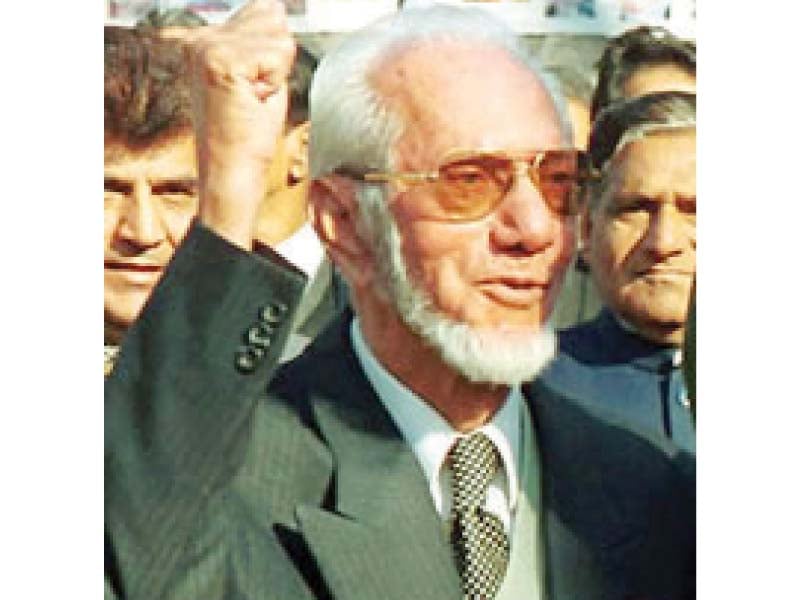 The title “Ghazi-e-Millat” bestowed upon him by the people of Azad Kashmir reflects the extraordinary respect he commanded. Throughout his life, he remained steadfast in advocating the rights of Kashmiris and emphasizing their right to determine their political future. His political career spanned several decades, during which he served multiple terms as President of Azad Kashmir, making him one of the longest-serving and most influential leaders in the region’s history.
Paying tribute to his services, former AJK Prime Minister Sardar Tanveer Ilyas Khan stated that Sardar Ibrahim’s role in the Kashmir freedom struggle would be remembered for generations and described him as a leader who never compromised on his ideals despite numerous political challenges. Such acknowledgements reflect the enduring admiration he continues to enjoy across political divides.
Senior Kashmiri political leaders have frequently referred to him as the “Founder President of Azad Kashmir” because he headed the first government of the territory and helped establish its administrative foundations. His leadership during the formative years of AJK provided institutional continuity and political stability at a time when both were desperately needed.
Beyond politics, Sardar Ibrahim was known for his integrity, simplicity, and commitment to democratic principles. Colleagues and contemporaries often described him as a leader who remained closely connected to the people. He consistently emphasized education, political awareness, and unity among Kashmiris, believing that lasting progress could only be achieved through collective effort and responsible leadership.
Researchers studying the Kashmir freedom movement have noted that his political and social struggle contributed significantly to the establishment of the Azad Kashmir government and helped shape the political consciousness of the region. His efforts brought together diverse communities under a common cause and provided a platform through which Kashmiri aspirations could be articulated.
When Sardar Muhammad Ibrahim Khan passed away on July 31, 2003, tributes poured in from across Pakistan and Azad Kashmir. Political leaders, scholars, and ordinary citizens mourned the loss of a statesman whose life had been devoted to public service and the Kashmir cause. Yet his death did not diminish his influence. Today, his name is remembered with reverence in schools, universities, political institutions, and public gatherings throughout Azad Kashmir.
As Kashmir continues to occupy a central place in regional politics, the legacy of Ghazi-e-Millat Sardar Muhammad Ibrahim Khan remains highly relevant. His vision, courage, and dedication continue to serve as a source of inspiration for those who believe in justice, democratic values, and the rights of the Kashmiri people. History remembers him not merely as the first President of Azad Jammu and Kashmir, but as a statesman whose leadership left an indelible mark on the destiny of his people.