



From Sialkot to the World Stage
A Legacy of Democratic Service and National Commitment
In the seven-decade history of Pakistan’s parliamentary democracy, few political families have sustained as deep a connection with public service as the Khawaja family of Sialkot. Khawaja Muhammad Safdar — a soldier, jurist and long-serving parliamentarian — built a political tradition rooted in discipline, integrity and an understanding that public office is a trust rather than a privilege. That conviction passed directly to his son.
Khawaja Muhammad Asif inherited not only a constituency but a philosophy of public responsibility. Raised in a household where governance and national debate were part of daily life, he came to see politics as an instrument for strengthening institutions rather than personal advancement. First elected to the National Assembly in 1993 and returned from Sialkot in election after election since, he has built one of the more substantial parliamentary records of his generation, having at different times held the portfolios of Petroleum and Natural Resources, Water and Power, Foreign Affairs, and — currently, as the 38th federal minister to hold the office — Defence.
Born on 9 August 1949 in Sialkot, Khawaja Muhammad Asif’s parliamentary career in fact began a few years earlier than his National Assembly debut: he was elected to the Senate of Pakistan in 1991 and served in the Upper House until 1993, where he first emerged as a strong and articulate parliamentary voice before moving on to contest, and win, his Sialkot National Assembly seat.
Sialkot: The Global Identity of Pakistan’s Industry
To understand Khawaja Asif’s political journey, it helps to understand Sialkot itself — a city that embodies Pakistan’s entrepreneurial capacity and export potential. Internationally recognised for its sporting goods, surgical instruments and leather products, Sialkot has turned local craftsmanship into globally competitive industry, carrying the Pakistani name into markets across Europe, North America and Asia.
The development of Sialkot’s business ecosystem, including the collective entrepreneurship organised through its Chamber of Commerce and Industry, reflects a culture of self-reliance and public-private cooperation that is unusual in Pakistan’s industrial landscape. As the city’s long-standing representative in Islamabad, Khawaja Asif has carried the voice of its exporters, workers and manufacturers into national policymaking, consistently linking his defence and economic arguments back to the basic proposition that a secure Pakistan and a competitive Pakistan are the same project.
Qualities of International Statesmanship
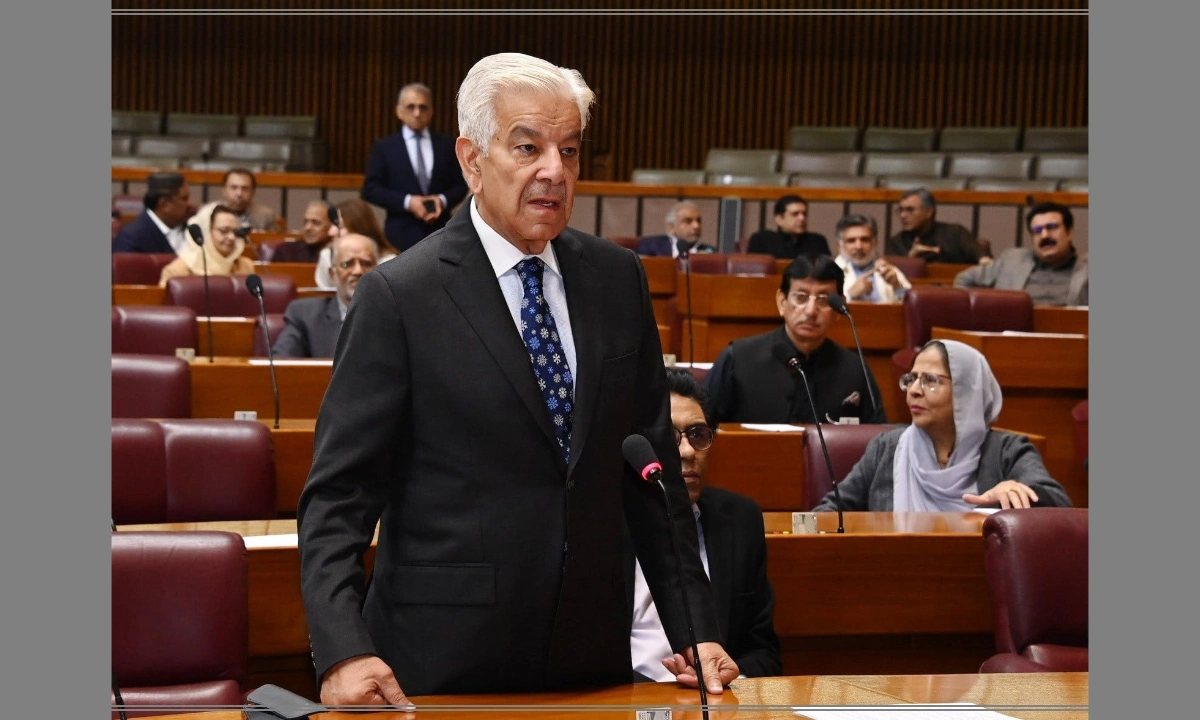 What separates a capable domestic politician from a statesman of international standing is usually some combination of command over technical detail, composure under scrutiny, the capacity to build coalitions across ideological lines, and a track record of representing one’s country credibly before foreign audiences. Khawaja Asif’s career displays each of these traits to varying degrees.
His command of detail is most visible in parliamentary debate, where his fluency with figures on energy shortfalls, defence expenditure and fiscal constraints has frequently allowed him to set the terms of a discussion rather than merely respond to it. This is paired with a temperament that rarely appears unsettled by hostile questioning — a quality that matters most precisely in moments of national crisis, when ministers must explain difficult decisions to domestic and international audiences at the same time.
His multilateral engagement as Defence Minister has also widened in scope. In June 2025 he led Pakistan’s delegation to the Shanghai Cooperation Organisation’s Defence Ministers’ Meeting in Qingdao, China, representing Islamabad’s interests within a forum that brings together some of Asia’s largest security establishments. In Islamabad, he has continued to receive credentialed diplomats from across the world, including ambassadors representing the Association of Southeast Asian Nations and African states such as Somalia — the routine, unglamorous diplomatic work through which bilateral relationships are actually maintained.
Perhaps most distinctive is the sheer breadth of his ministerial experience. Few Pakistani politicians have held portfolios spanning energy, water resources, foreign affairs and defence within a single career, and that breadth gives him a cross-sectoral fluency that is often missing in officials whose experience is confined to a single domain — allowing him, for instance, to discuss defence procurement not in isolation but against the backdrop of fiscal space, energy security and export competitiveness.
A Parliamentary Career Built on Debate and Political Understanding
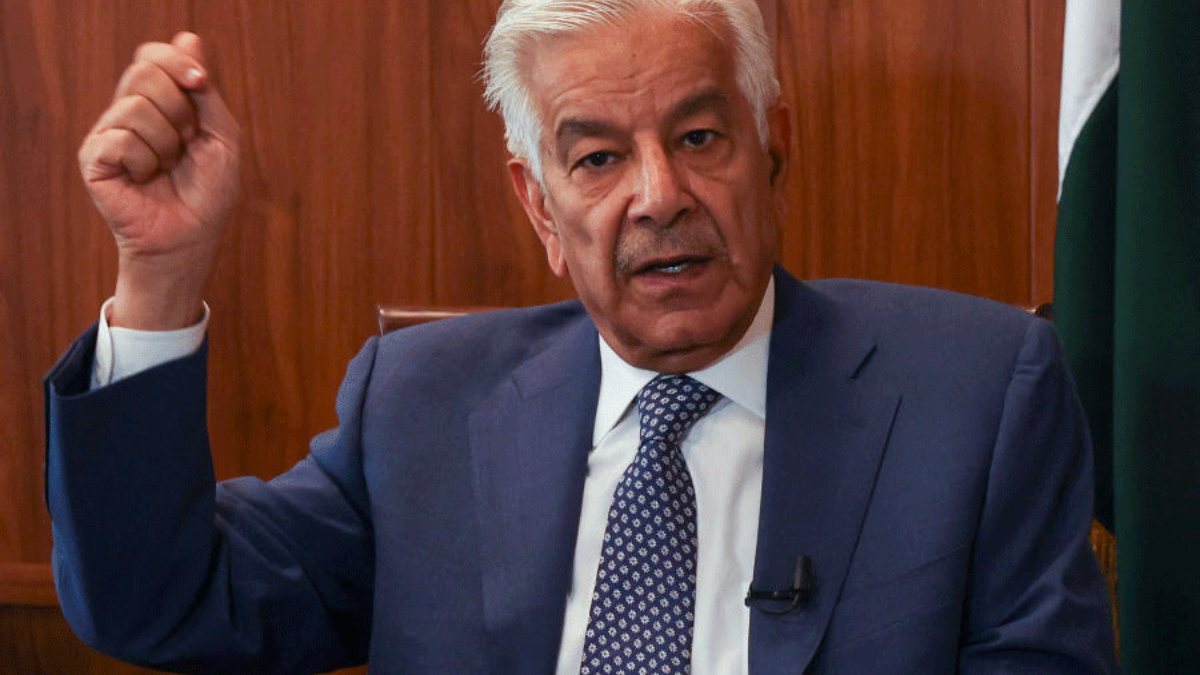
 Khawaja Muhammad Asif is recognised as one of Pakistan’s most prominent parliamentary voices. His political style is built on strong argumentation, command over facts and figures, and a willingness to respond to political challenges directly rather than evasively. His speeches in the National Assembly reflect extensive preparation across energy policy, foreign affairs, constitutional questions and national security, and his outspoken communication style has made him a distinctive, if sometimes polarising, figure in Pakistan’s political landscape.
As a long-standing political associate of Nawaz Sharif, his career also reflects a particular kind of political loyalty — the sort built over decades of shared setbacks and shared office rather than declared in a single speech — that has placed him among the more experienced parliamentary leaders of his party.
Defence Ministry: Stewardship Through Pakistan’s Most Testing Period
Serving as Pakistan’s Defence Minister is among the most consequential responsibilities in national governance, and Khawaja Asif’s tenure has coincided with the most serious military confrontation Pakistan has faced in decades. Following the attack on tourists in Pahalgam in April 2025, tensions between Pakistan and India escalated sharply, culminating in air and missile strikes that both governments have since described in sharply different terms. Pakistan’s armed forces responded with an operation named Bunyan-um-Marsoos, and a ceasefire — reached with American involvement — took hold on 10 May 2025 after roughly nineteen days of confrontation that Pakistan has named Marka-e-Haq, the Battle for Truth.
Throughout the crisis, Khawaja Asif was a central figure in articulating Pakistan’s position to domestic and international audiences, coordinating between the civilian government and military leadership and presenting Islamabad’s account of events across numerous television interviews and parliamentary sessions. The events themselves remain contested — India disputes elements of Pakistan’s narrative just as Pakistan disputes India’s — but there is little dispute that the episode tested Pakistan’s civil-military coordination and crisis-communication apparatus more severely than any event in recent memory, with Khawaja Asif’s ministry at the centre of that test.
In recognition of his role during this period, President Asif Ali Zardari conferred upon Khawaja Muhammad Asif the Nishan-e-Imtiaz at a ceremony held at Aiwan-e-Sadr on 14 August 2025, alongside other senior civilian and military leaders honoured for their contributions during Marka-e-Haq. The award cited his decisive response in strengthening national resolve and improving coordination during the crisis, and stands as formal recognition of his contribution to presenting Pakistan’s defence perspective with confidence and clarity, and to strengthening the country’s national narrative at a critical moment.
The Pakistan Armed Forces: A Story of Discipline and Institutional Resolve
 The credibility of any country’s defence establishment rests on decades of institution-building rather than any single event, and Pakistan’s armed forces are no exception. Their record includes sustained counterterrorism operations along the western border, participation in United Nations peacekeeping missions, and large-scale disaster-response operations during floods and earthquakes that have repeatedly drawn on the military’s logistical capacity. What changed in 2025 was less the institution itself than its visibility: the decisions taken during Marka-e-Haq, and the political leadership that communicated them, became more closely watched internationally than at almost any point in recent years.
Field Marshal Syed Asim Munir: From the Battlefield to the Global Stage
No figure embodied Pakistan’s military posture during this period more than General Syed Asim Munir, Chief of Army Staff since November 2022. In recognition of his role during Marka-e-Haq, the federal cabinet promoted him to the rank of Field Marshal in May 2025 — only the second time in Pakistan’s history that the rank has been conferred, the first having gone to Ayub Khan in 1959. In November 2025, following the 27th constitutional amendment, he additionally assumed the newly created post of Chief of Defence Forces, becoming the first officer in Pakistan’s history to simultaneously hold the Army Chief’s office and unified command of the country’s defence forces.
Field Marshal Munir’s profile acquired a distinctly international dimension in the same period. In June 2025, as tensions between Iran, Israel and the United States escalated sharply across the Middle East, he travelled to Washington at the invitation of senior American military leadership, addressing the U.S. National Defense University on Pakistan’s counterterrorism doctrine and meeting officials including the commander of U.S. Central Command, General Michael Kurilla, who publicly credited Pakistani intelligence cooperation with contributing to the capture of senior ISIS-K figures. Pakistani officials framed the visit — coming as it did amid a regional war involving three other states — as evidence that Islamabad’s military leadership had gained renewed standing in Washington at a volatile moment. It is worth noting plainly that this characterisation originates substantially from Pakistan’s own diplomatic messaging and has not been corroborated to the same degree by independent international observers; what is not in dispute is that the visit reflected a deliberate effort by Pakistan’s senior military leadership to position the country as an active participant in regional diplomacy rather than a bystander to it.
Within Pakistan, the government’s own assessment of the year has been considerably more emphatic, crediting Field Marshal Munir’s leadership with deterring further escalation during Marka-e-Haq and arguing that restraint after the ceasefire, as much as the military operation itself, secured the country’s standing in international forums. Independent assessments of the conflict’s military and diplomatic outcomes vary, and readers seeking a full picture should weigh Pakistani and Indian accounts alongside neutral reporting. What is reasonably clear is that the events of 2025 raised Pakistan’s defence establishment — and the civilian ministry responsible for representing it — to a higher international profile than at almost any point in the past two decades.
Foreign Affairs and Pakistan’s Global Representation
Khawaja Asif’s earlier tenure as Foreign Minister, from 2017 to 2018, extended his role from domestic politics into international diplomacy, engaging international partners on regional security, economic cooperation and bilateral relations. That experience has continued to inform his outlook as Defence Minister: he has consistently argued that foreign policy in the present era is inseparable from trade, investment and technology, and that Pakistan’s long-term security depends as much on strengthening exports and attracting investment as on military preparedness.
That diplomatic record has also included a consistent voice on the Palestinian question. At national and international forums alike, Khawaja Asif has repeatedly drawn attention to the rights of the Palestinian people and, in particular, to the suffering of children caught up in the conflict, framing Pakistan’s position around the broader themes of justice, peace and human dignity.
The Voice of Parliament and Democratic Responsibility
One of the defining features of Khawaja Asif’s career has been his sustained engagement in parliamentary debate — defending government positions, responding to opposition criticism in detail, and treating the floor of the National Assembly as a forum for substantive argument rather than ceremony. That approach reflects a broader view, shared by a generation of Pakistani legislators of his era, that parliament functions as a platform for national accountability as much as for legislation.
The Road Ahead: Leadership, Innovation and National Progress
Pakistan’s prospects rest on a young population, a strategic geographic position, and industrial centres such as Sialkot that have already shown an ability to compete globally. Translating that potential into sustained progress will require leadership that can connect local economic development with national priorities, and national priorities with a fast-changing international environment — one in which defence policy, trade policy and diplomacy are no longer separable from one another.
Khawaja Muhammad Asif’s career — from Sialkot’s constituency politics to the Defence Ministry of a nuclear-armed state navigating one of its most difficult years — illustrates both the opportunities and the constraints of that task. It is a career still being tested by events, including some, like Marka-e-Haq and its aftermath, whose final historical assessment is not yet settled.
Conclusion: A Continuing Legacy of Service
The story of Khawaja Muhammad Asif is one of inheritance, accumulated experience and continuing responsibility. From the legacy of Khawaja Muhammad Safdar to his own three decades in Pakistani public life, he remains an influential figure in the country’s parliamentary and national affairs, and 2025 placed both his ministry and Pakistan’s military leadership under more sustained international attention than in many years.
Pakistan’s progress will continue to depend on leaders who can hold together the aspirations of ordinary citizens with the demands of a volatile regional and global environment. Khawaja Asif’s journey from Sialkot to the institutions of national defence is, in that sense, not only an individual political career but one chapter in the longer, still unfinished story of Pakistan’s democratic development.
Author: Professor Dr Muhammad Jalal Arif is Former Professor & Head, Department of Entomology, University of Agriculture Faisalabad. Email: [email protected]