



Spokesman Report
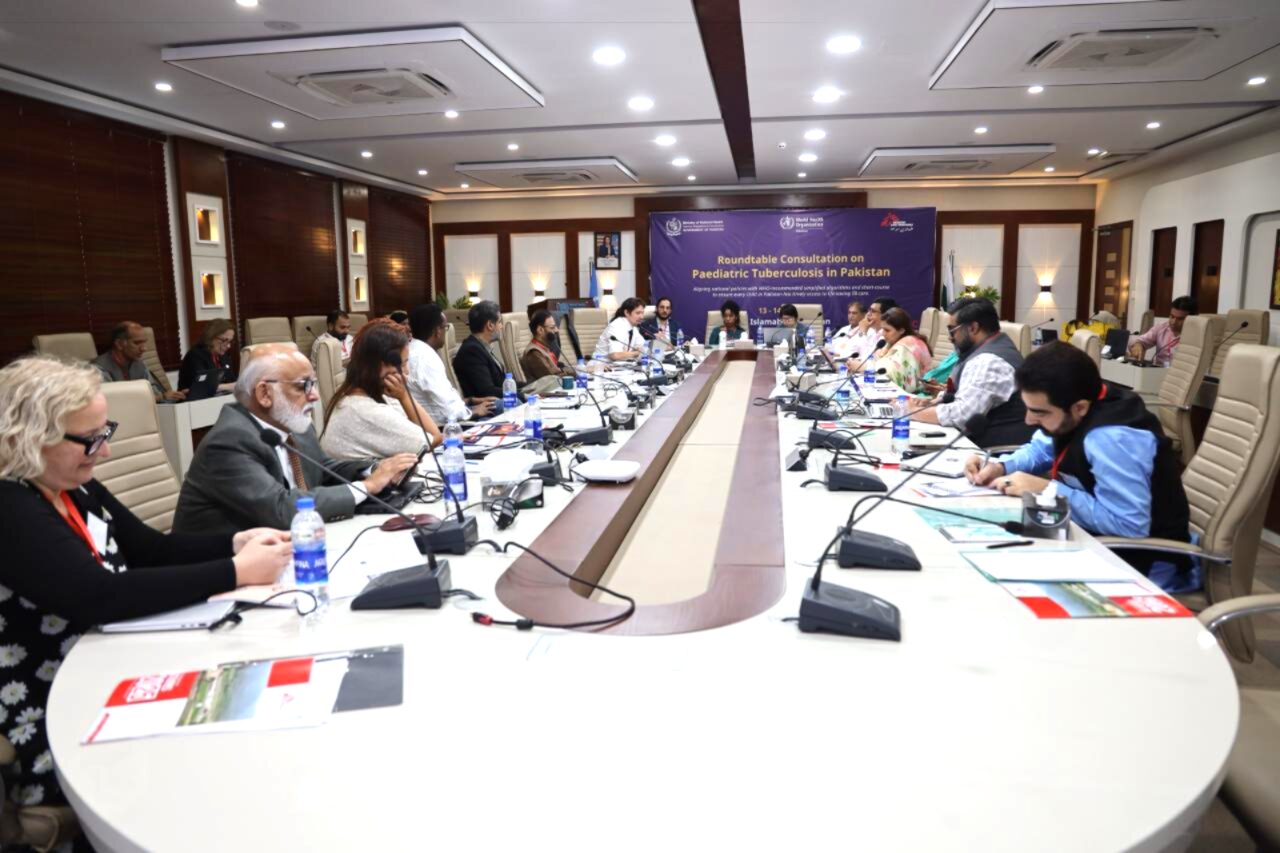
Islamabad, Pakistan – The Common Management Unit for AIDS, Tuberculosis and Malaria (CMU) at Pakistan’s Ministry of National Health Services, Regulation and Coordination, the World Health Organization (WHO) and Médecins Sans Frontières (MSF) convened a two-day consultation at WHO’s Country Office to enhance the response to childhood tuberculosis (TB), a deadly disease that it is estimated affects more than 93,600 children in Pakistan.
Under CMU leadership, the consultation aimed to align national policies with the latest WHO international guidelines to tackle an infection that is curable and preventable.
It is estimated that children account for at least 14% of the total 669,000 TB cases registered in Pakistan, which bears 73% of the burden in the Eastern Mediterranean Region and is the fifth most affected country in the world.
The roundtable discussion, organized in collaboration with the Pakistan Paediatric Association, focused on how to integrate the latest WHO science-based guidelines into national policies, taking into account lessons learned from the implementation of MSF’s TACTiC (Test, Avoid, Cure TB in Children) initiative.
WHO recommendations include, among others, a 4-month TB treatment regimen, TB preventive treatment, new all-oral 6-9 months regimens for drug-resistant TB, and a family-centred, decentralized model of care and treatment-decision algorithms.
“Under the leadership of senior management of the Ministry of National Health Services, Regulations and Coordination and the Common Management Unit, Pakistan has prioritized paediatric tuberculosis as a critical programmatic gap, in line with recommendations of the Joint Programme Review Mission 2025. The programme has advanced integrated, child-focused interventions, including standardized clinical diagnosis, systematic household contact investigation, and scale-up of TB preventive therapy, while embedding services within primary healthcare and child health platforms. Strengthened engagement with private providers and improved surveillance systems are enhancing case detection, notification, and treatment outcomes. These strategic actions are being institutionalized through the forthcoming National Strategic Plan to ensure sustained, measurable reductions in the burden of tuberculosis among children”, said CMU’s TB Programme Manager Dr Faisal Siraj.
“Children are among the most vulnerable to developing TB because diagnosing the disease is more challenging, and the risk of severe disease is higher compared to adults,” said Dr. Florian Götzinger, National Implementer for MSF’s TACTiC initiative. “We are implementing new WHO diagnostic algorithms to support doctors in initiating treatment early, even when laboratory tests are unavailable or inconclusive.”
Tuberculosis causes 51,000 deaths annually in Pakistan. Every day, over 1,800 new cases arise in the country and 140 people die from tuberculosis. Globally, according to the WHO Global TB Report 2025, an estimated 1.2 million children developed TB in 2024. Many children are still missed, go undiagnosed, or are diagnosed too late.
“Protecting children from TB is not only a medical responsibility — it is a moral imperative and an investment in a healthier and more prosperous future for Pakistan,” WHO Deputy Representative in Pakistan Ellen Thom said during the consultation. “WHO commends Pakistan’s commitment to end childhood tuberculosis and remains committed to supporting Pakistan in accelerating science-based efforts to ensure that every child at risk of TB is reached and protected through preventive care, early diagnosis, and timely treatment when necessary. Our goal is to reach every child, regardless of social or economic status, no matter where they live or who they are.”