


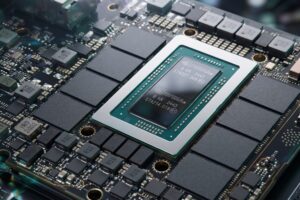
WASHINGTON: A US congressional committee has raised questions about the Trump administration’s approval of nearly 900,000 advanced artificial intelligence chip shipments to Chinese companies over a six-month period, intensifying debate over technology exports and national security.
According to information released by the House Foreign Affairs Committee, US authorities approved applications covering approximately 879,000 advanced chips produced by Nvidia and AMD between December 2025 and May 2026.
The companies seeking approval had applied to export more than 3.4 million chips, including advanced Nvidia H200 and AMD MI325X processors. Chinese technology companies identified among the intended recipients included Alibaba, Tencent, Baidu and BYD.
The committee’s disclosure has prompted concerns about whether export-control procedures were sufficiently strict and whether advanced processors could eventually be used for military or strategic purposes.
However, the approved number does not necessarily mean that all the chips were delivered. The available information does not establish how many processors actually reached Chinese customers.
The US Commerce Department said applications involving certain advanced processors were subject to additional national-security requirements and reviewed individually. Nvidia said the approvals carried strict conditions and limited volumes, while AMD said it complied with applicable export-control laws.
Advanced AI processors are essential for training large artificial intelligence models, operating data centres and developing sophisticated computing systems. Their growing importance has made semiconductor exports a central issue in the technology competition between Washington and Beijing.
The controversy highlights the difficult balance facing US policymakers as they seek to protect national security while maintaining the commercial interests of American technology companies.
Source: Reuters, 19 November 2026

