


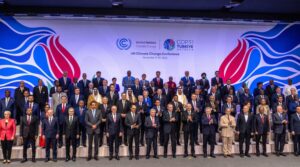
ANTALYA, November 12, 2026: Prime Minister Shehbaz Sharif has called on the international community to provide greater financial assistance to countries vulnerable to climate change, stressing that developing nations need fair and accessible funding to deal with the growing threat of climate disasters.
Addressing the Leaders’ Summit of the 31st Conference of the Parties (COP31) in Antalya, Türkiye, the prime minister emphasised the importance of grant-based financing and stronger resilience and adaptation funds.
He said countries facing climate disasters require timely financial support that does not increase their existing debt burden.
Pakistan Highlights Climate Vulnerabilities
During his address, Shehbaz Sharif highlighted Pakistan’s experience with devastating climate-related disasters, particularly the catastrophic floods of 2022.
The floods caused widespread destruction, displaced millions of people and damaged homes, infrastructure, agriculture and livelihoods across the country.
The prime minister stressed that climate change is a global challenge that requires collective international action.
He also expressed appreciation to Türkiye and its people for their support during Pakistan’s devastating floods in 2010 and 2022.
Call for Grant-Based Climate Financing
The prime minister urged developed nations and international financial institutions to improve access to climate funding for vulnerable economies.
He highlighted the importance of:
-
Grant-based climate financing.
-
Increased resilience and adaptation funds.
-
Public-private partnerships.
-
Timely financial assistance after climate disasters.
-
Greater international cooperation on climate protection.
He argued that vulnerable countries should not be forced to take on additional debt when responding to disasters caused by climate change.
Pakistan Highlights Renewable Energy Progress
During the summit, Shehbaz Sharif also discussed Pakistan’s efforts to expand renewable energy and promote cleaner transportation.
According to his remarks reported by Radio Pakistan, clean energy sources now contribute nearly 55 percent of Pakistan’s energy mix.
He also highlighted the country’s efforts to promote electric mobility and its target of reducing projected emissions by approximately 50 percent by 2035.
The prime minister stressed that domestic initiatives alone cannot address the global climate crisis without a fair international response.
Global Climate Cooperation
COP31 brings together representatives from countries around the world to discuss climate action, emissions reduction, renewable energy and financial assistance for vulnerable economies.
Pakistan’s participation provides an opportunity to highlight the country’s climate challenges and seek stronger international cooperation.
The prime minister’s call for grant-based financing reflects the country’s position that nations facing the greatest climate risks need accessible financial support to strengthen resilience and protect their populations.

