



 S.M. Hali
 S.M. Hali
Every year on June 12, Russia pauses to commemorate its most significant national holiday: Russia Day. More than a ceremonial date, it is a moment of reflection on the country’s journey from Soviet rule to independent statehood. It marks the adoption of the Declaration of State Sovereignty of the Russian Soviet Federative Socialist Republic (RSFSR) in 1990, a pivotal step that laid the foundation for the modern Russian Federation. Over the decades, Russia Day has evolved into a focal point for national pride, cultural expression, and political debate, embodying the resilience and complexity of the Russian identity.
The origins of Russia Day lie in the turbulent twilight of the Soviet Union. On June 12, 1990, the Congress of People’s Deputies of the RSFSR passed a declaration asserting Russia’s sovereignty within the Soviet framework. While not an outright secession, the declaration emphasized the supremacy of Russian laws over Soviet legislation. This assertion of autonomy foreshadowed the dissolution of the USSR in December 1991, when Russia emerged as its largest successor state. Initially, the holiday was informally referred to as Independence Day, but many Russians felt the term was misleading. The declaration did not signify liberation from foreign rule; rather, it was a reassertion of Russia’s constitutional authority. In 2002, the name was officially changed to Russia Day, aligning the celebration with themes of unity and statehood rather than separation.
For Russians, the day is more than a historical marker. It symbolizes national identity and sovereignty, representing the rebirth of Russia as a distinct political entity after decades of Soviet collectivism. It is also a reminder of the country’s resilience in navigating the economic upheaval, political reforms, and social transformations of the 1990s. Russia Day underscores three dimensions of identity: political sovereignty, affirming Russia’s independence in decision making and its role as a global power; cultural unity, celebrating the diverse ethnic, linguistic, and religious communities that coexist within the federation; and historical continuity, linking modern Russia to centuries old traditions of governance, literature, and national pride.
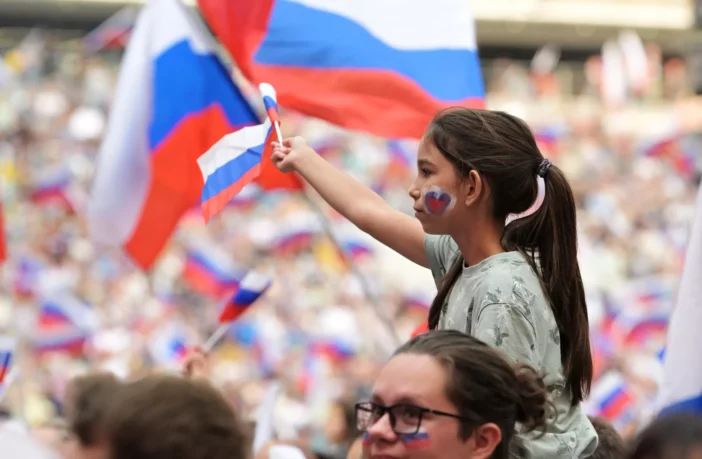 The celebrations themselves are vibrant and varied. In Moscow, the President delivers a national address, often highlighting themes of unity, patriotism, and Russia’s place in the world. State awards are presented to distinguished citizens in fields ranging from science and education to arts and humanitarian service. Across the country, cities host concerts, exhibitions, and parades. Public squares are adorned with the tricolour flag, while fireworks illuminate the skies in the evening. Museums and theatres organize special programs showcasing Russian history and culture. For ordinary citizens, the day is both a public holiday and an opportunity to reflect on their national identity, often spent with family and friends in festive gatherings.
Yet Russia Day is not static; its meaning has evolved over time. For some, it is a straightforward celebration of sovereignty and pride. For others, particularly older generations who lived through the Soviet collapse, it evokes mixed emotions of nostalgia and uncertainty. The economic hardships of the 1990s left lasting scars, and the declaration of sovereignty is sometimes associated with that difficult transition. In recent years, the government has reframed the holiday as a celebration of unity and strength, emphasizing Russia’s achievements in science, defence, and global diplomacy. This narrative seeks to consolidate national identity in the face of external pressures and internal diversity, presenting Russia Day as a symbol of resilience and progress.
Beyond its domestic significance, Russia Day also serves as a platform for projecting national image abroad. Diplomatic missions around the world host receptions, cultural showcases, and exhibitions to highlight Russian heritage. These events reinforce Russia’s role as a global actor with a distinct cultural and political identity. For international observers, Russia Day is a reminder of the country’s complex history and its ongoing efforts to balance tradition with modernity. It underscores Russia’s determination to assert itself as a sovereign power in a multipolar world, even as debates continue over its political trajectory.
Like many national holidays, Russia Day is not without controversy. Critics argue that the holiday’s historical basis—the sovereignty declaration—remains ambiguous in meaning. Was it a step toward democracy, or simply a legal manoeuvre within the Soviet system? Others question whether the day adequately reflects the struggles of ordinary Russians during the post Soviet transition. Nevertheless, the holiday endures as a unifying symbol. Its ambiguity allows for multiple interpretations, enabling citizens to project their own values onto the celebration—whether pride in cultural heritage, respect for sovereignty, or hope for a stronger future.
Ultimately, Russia Day is more than a commemoration of a political declaration; it is a living tradition that reflects the complex identity of modern Russia. It bridges past and present, acknowledging the challenges of transition while celebrating the resilience of the Russian people. As fireworks illuminate Red Square and the tricolour flag waves across the federation, Russia Day continues to remind citizens—and the world—that sovereignty, unity, and cultural pride remain at the heart of the Russian national story.