



Masjid Rehmatlil Alameen F-8/4, Islamabad
Naveed Ahmad Khan Photos by Sultan Bashir
Islamabad: True to its annual tradition, Masjid Rehmat-ul-Alameen in Sector F-8/4, Islamabad, once again turned Eid-ul-Adha into a festival of compassion this year. Hundreds of animals were sacrificed under the mosque’s organized Qurbani program, and thousands of freshly cooked meals were served to deserving families, daily wage workers, students, and low-income households across the federal capital.
What began years ago as a modest community effort has now grown into one of the most organized charity drives in the city. This year’s campaign not only honored the religious spirit of sacrifice but also addressed a very real need: ensuring that no family in the locality spent Eid without food on their table.
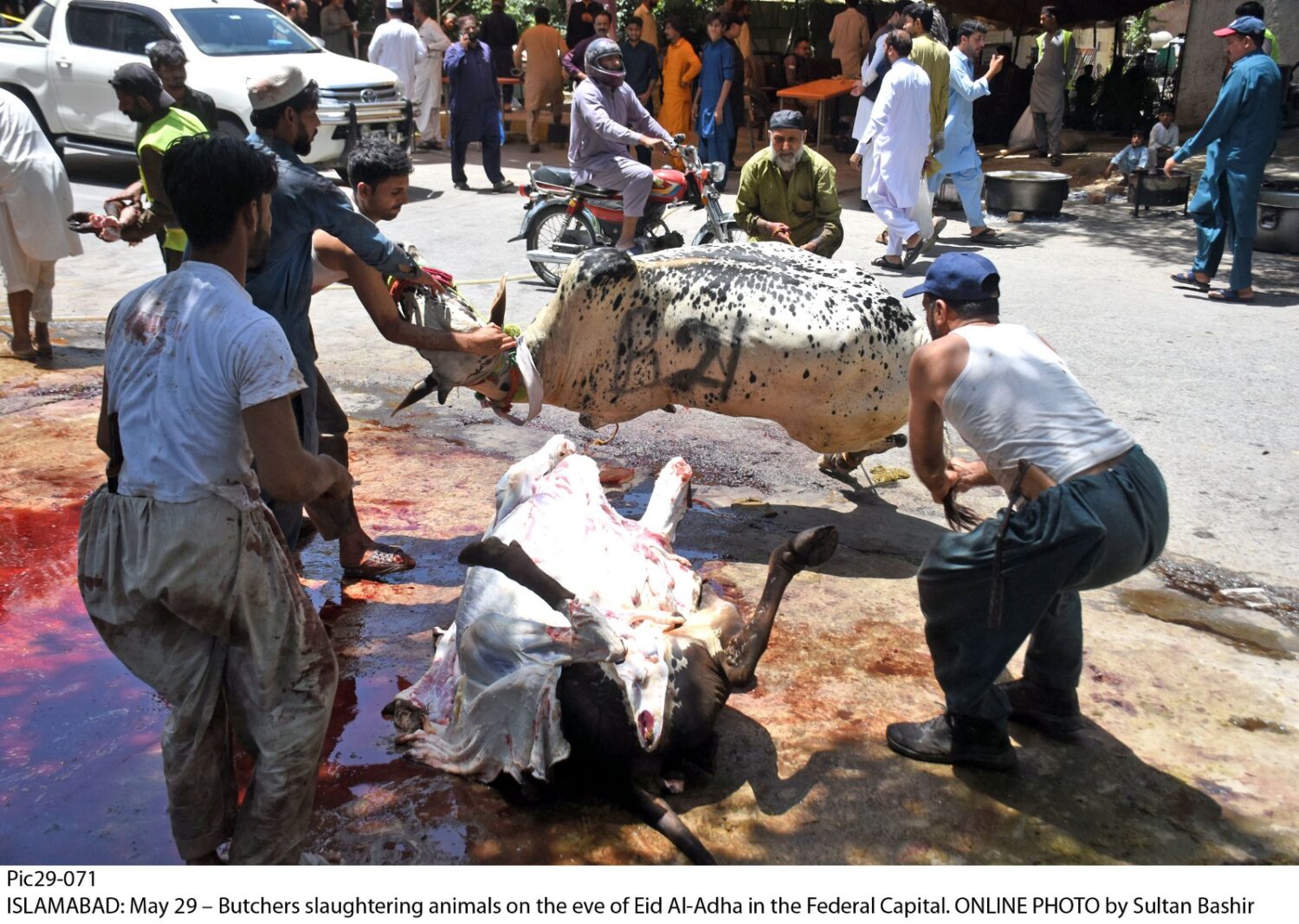 A Well-Organized Qurbani Operation
For three days, the mosque premises became a center of coordinated activity. The entire process followed strict Islamic and hygiene standards. Qualified butchers supervised by the mosque committee handled the slaughter, while volunteers managed skinning, cutting, and packaging. Separate areas were designated for slaughtering, washing, and packing to maintain cleanliness and avoid congestion. Medical waste and animal remains were disposed of through arrangements with CDA sanitation teams, keeping the surrounding area clean despite the scale of the operation.
“Organization is the key when you’re handling this volume,” said a senior committee member. “We start planning months before Eid. Every animal is registered, every donor is given a receipt, and every packet of meat is accounted for so it reaches the right people.”
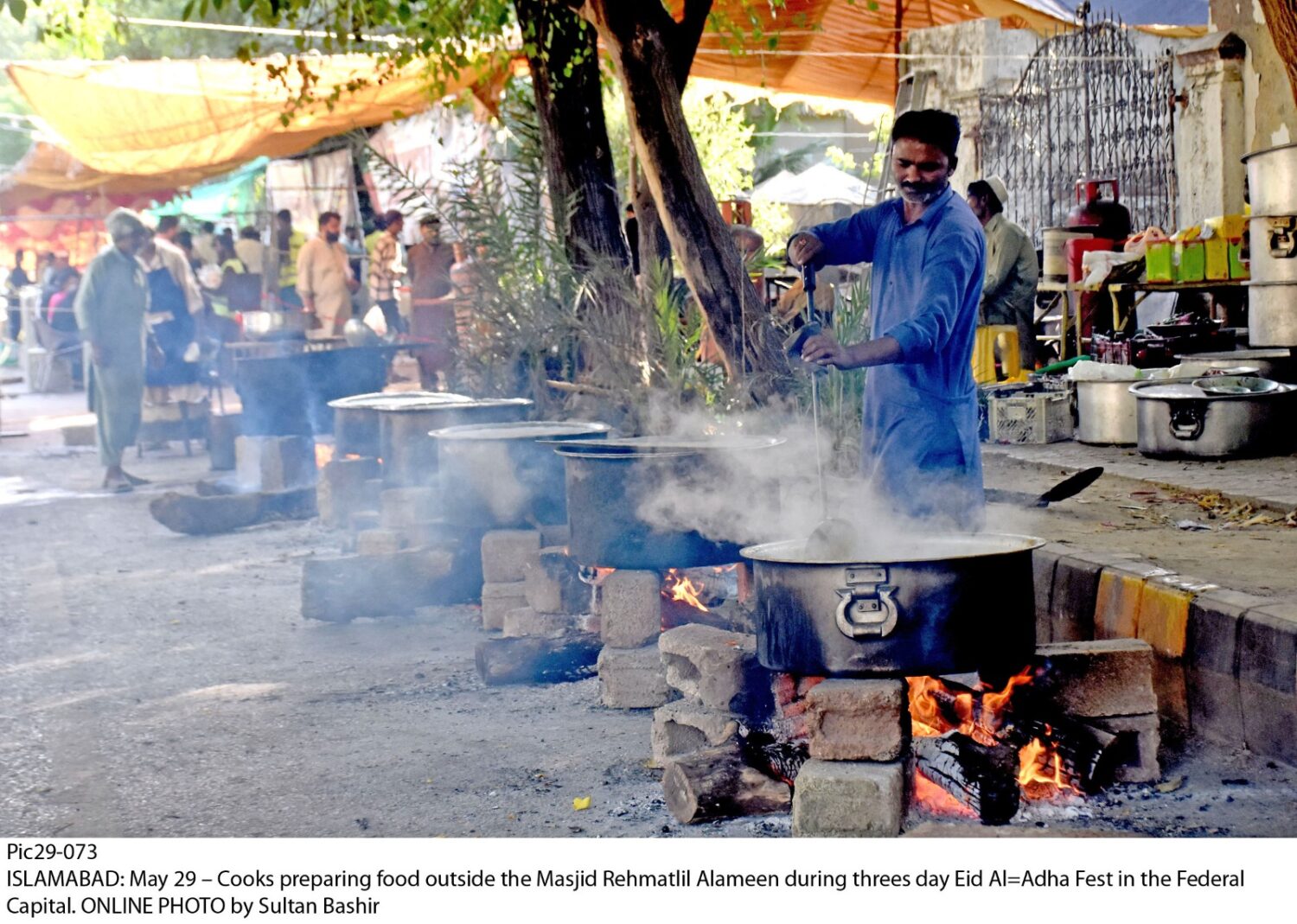 Community Kitchen: Fresh Meals for Thousands
Alongside raw meat distribution, Masjid Rehmat-ul-Alameen ran a community kitchen throughout Eid. Large deghs were set up in the oppside of mosque , and professional cooks along with dozens of volunteers prepared fresh meals twice daily.
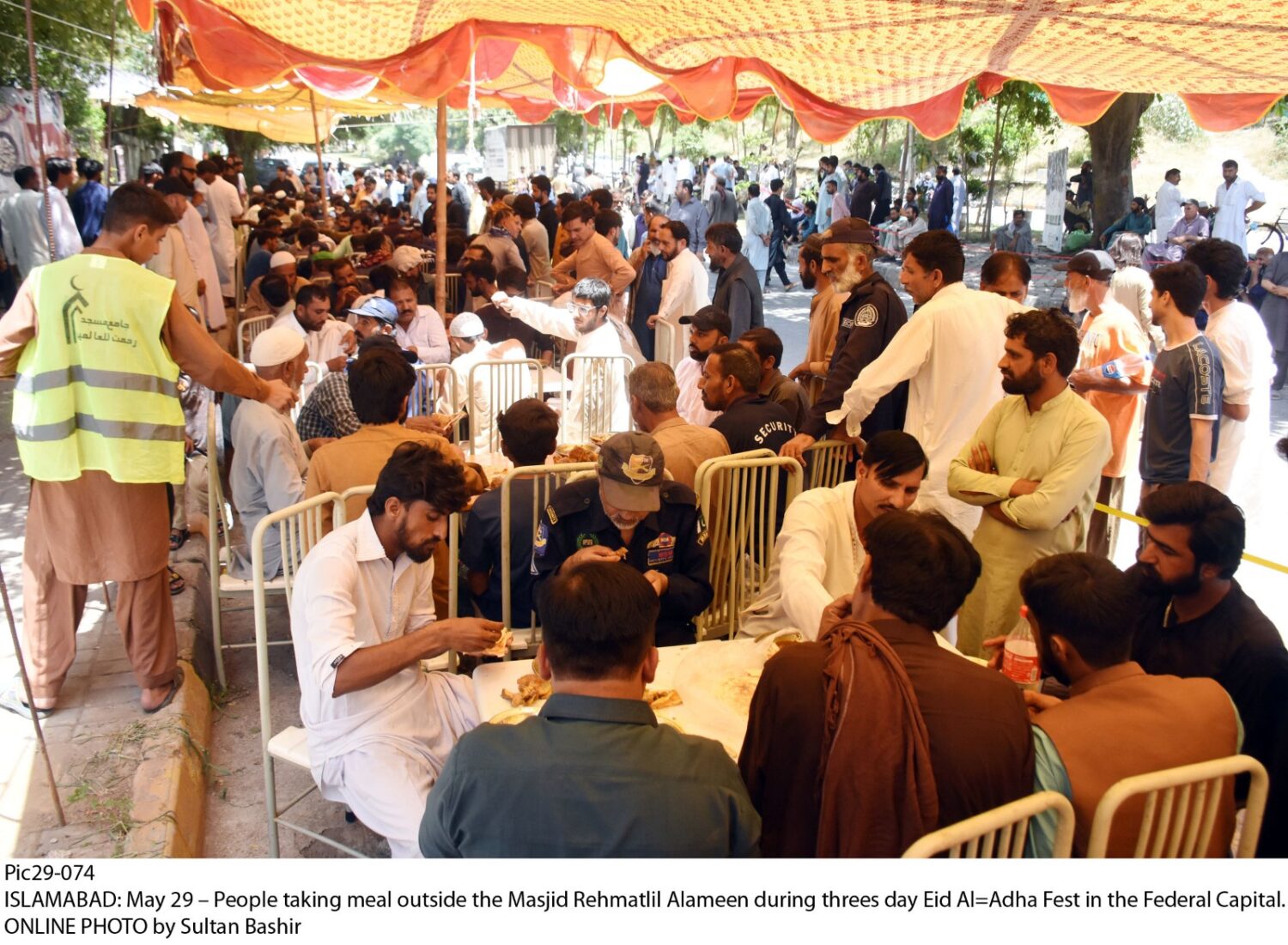
The menu was simple but hearty: Qurbani meat curry and roti . Meals were served to thousands of people who gathered in an organized queue. Separate seating and serving areas were arranged for men, women, and families to maintain privacy and comfort.
Students from nearby universities, security guards, rickshaw drivers, and laborers working on construction sites were among the regular visitors. For many, it was the only proper Eid meal they could afford.
A university student who benefited from the kitchen said, “Most of us live away from home. On Eid the hostels feel empty. Coming here and eating with others gives us the feeling of family.”
 Volunteers: The Backbone of the Drive
Young volunteers said the experience taught them the real meaning of Eid. “We spend Eid morning serving instead of just visiting relatives. It’s tiring, but when you see a child smile after eating, it feels worth it,” one volunteer noted.
The mosque committee coordinated the volunteers in shifts, provided refreshments, and ensured safety protocols were followed.
Spirit of Qurbani Beyond Ritual
Islamic scholars who addressed the congregation during Eid prayers at the mosque emphasized that Qurbani is not merely a ritual of slaughter. It is a test of sharing, empathy, and social responsibility.
“The meat does not reach Allah, nor does the blood. What reaches Him is your piety and your care for His creation,” the Imam reminded worshippers. This message was reflected in the mosque’s actions, where the focus remained on ensuring the benefits of sacrifice reached those most in need.
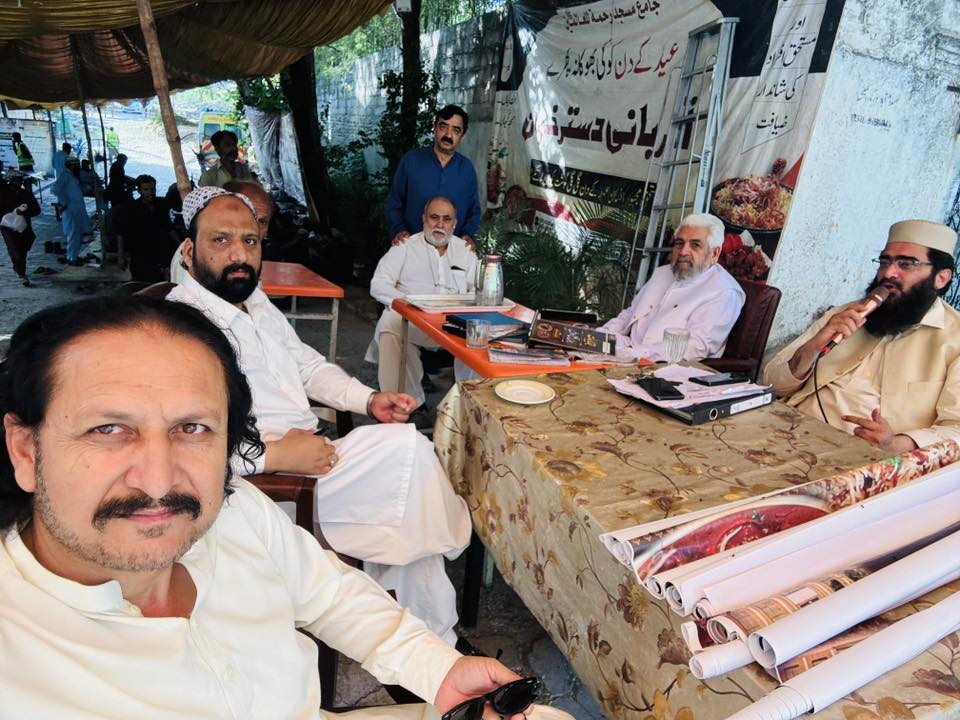 Challenges and the Way Forward
Organizing a drive of this scale comes with challenges. Managing hundreds of animals, ensuring hygiene, coordinating hundreds of volunteers, and maintaining transparency in distribution requires months of planning and resources. Rising costs of livestock and cooking materials also put pressure on the budget each year.
Yet the mosque committee says community trust and donor support make it possible. Many donors now give advance pledges, and several welfare organizations have partnered with the mosque to expand the reach.
For the future, the committee is considering digital registration for donors and beneficiaries to make distribution even more transparent, and expanding the community kitchen to operate beyond Eid for deserving families year-round.
Conclusion
This Eid-ul-Adha, Masjid Rehmat-ul-Alameen F-8/4 once again proved that the spirit of sacrifice is strongest when it translates into service. Hundreds of animals were offered, but the real sacrifice was made by volunteers who gave their time, donors who gave their wealth, and organizers who worked tirelessly behind the scenes.
For thousands of people in Islamabad, the mosque did more than facilitate a religious duty – it delivered dignity, food, and the feeling of being remembered. As one recipient put it while collecting his packet, “This is not just meat. This is someone remembering us on Eid.”
In a city where inequality is often visible, initiatives like this remind us that compassion, when organized collectively, can feed thousands and uplift entire communities. Masjid Rehmat-ul-Alameen’s annual drive stands as a model of how religious institutions can play a vital role in social welfare, turning the occasion of Qurbani into a true celebration for all.