


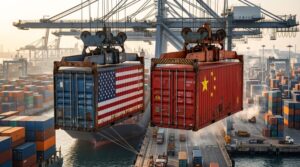
WASHINGTON – The United States has proposed new tariffs on 14 major trading partners, including China, India, the European Union and several Asian economies, following an investigation into alleged excess industrial production and unfair trade practices.
The proposal was announced by the Office of the United States Trade Representative on Wednesday, November 25, 2026, as part of the Trump administration’s efforts to address what it describes as structural overcapacity in international manufacturing.
The proposed measures target China, Bangladesh, Cambodia, the European Union, India, Indonesia, Japan, South Korea, Malaysia, Singapore, Switzerland, Taiwan, Thailand and Vietnam.
According to the announcement, the proposed tariffs could reach 20 per cent for certain Chinese goods. Washington argues that government subsidies, industrial policies and excessive manufacturing capacity in some countries create unfair competition for American producers.
The investigation examined manufacturing sectors in several major economies, including industries producing steel, aluminium, electric vehicles, solar products and household appliances.
China is expected to face particular scrutiny because of its extensive manufacturing and export capacity. However, Beijing has rejected American accusations that its exports represent unfair competition, arguing that its industrial success reflects competitiveness and market demand.
The proposal could also create difficulties for other trading partners, including European and Asian economies that maintain significant commercial relationships with the United States.
However, the tariffs are not immediately final. The proposed measures must undergo a public notice and comment process, followed by further administrative procedures before implementation.
International businesses and financial markets are expected to monitor the development closely because changes in trade policy could affect supply chains, manufacturing costs and consumer prices.
The announcement represents another significant development in the ongoing debate over global trade, industrial competition and economic relations between Washington and its international partners.

