


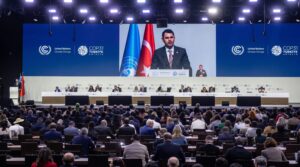
ANTALYA, November 23: United Nations climate negotiations have ended without a consensus agreement after the European Union and several other countries rejected the final draft presented by the Turkish and Australian leadership of COP31.
The negotiations, held in Antalya, Türkiye, experienced significant disagreements over the level of ambition required to address climate change, particularly the question of fossil fuels and the need for stronger international commitments.
The talks had originally been scheduled to conclude on Friday but continued into the weekend as negotiators attempted to reach an agreement. The extended negotiations ultimately failed to produce a document acceptable to all participating countries.
COP31 President Murat Kurum acknowledged the lack of consensus during the closing plenary session, confirming that the proposed decisions had not been adopted.
The European Union and other countries argued that the final draft was insufficient to advance global climate action. One of the major disagreements concerned the absence of sufficiently clear language addressing fossil fuels and the transition towards cleaner energy sources.
The failure to secure an agreement highlights the growing difficulties facing international climate diplomacy. Governments are under pressure to address rising temperatures, extreme weather events, wildfires, flooding and other climate-related challenges while simultaneously managing economic pressures and geopolitical tensions.
Developing countries have also continued to emphasise the importance of financial assistance, climate adaptation and support for nations that face the greatest consequences of global warming despite contributing relatively little to historical emissions.
The breakdown of negotiations raises concerns about the ability of international institutions to secure coordinated action at a time when climate-related risks are becoming increasingly serious.
Although the conference failed to achieve the expected consensus, the discussions have again highlighted the need for stronger international cooperation, realistic climate commitments and effective financial mechanisms to support vulnerable countries.
The outcome is likely to intensify debate over the future direction of international climate policy and the responsibilities of major economies in reducing greenhouse gas emissions.

