

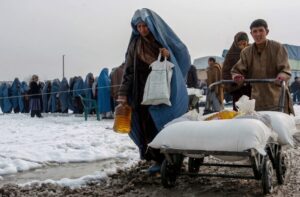
UNITED NATIONS: The United Nations has released $18 million in emergency funding to support approximately 824,000 vulnerable people in Afghanistan ahead of the 2026–27 winter season, as humanitarian agencies warn that funding shortages are threatening essential relief operations.
The allocation was approved from the UN Central Emergency Response Fund (CERF) and forms part of a wider $48 million humanitarian support package for the country. The additional funding includes $30 million from the Afghanistan Humanitarian Fund, according to the UN Office for the Coordination of Humanitarian Affairs (OCHA).
The assistance will support seven projects covering food security, agriculture, healthcare, nutrition, protection, shelter, and water, sanitation and hygiene services.
Humanitarian agencies say the coming winter could create further hardship for families already struggling to meet their basic needs. Falling temperatures, limited household resources and gaps in humanitarian assistance are expected to increase risks for displaced people and vulnerable communities.
The programme will prioritise returning refugees, internally displaced people and host communities. Special attention will be given to women, girls, children, older people and persons with disabilities.
The UN has also stressed the importance of national and local organisations, including women-led groups, in delivering assistance to communities. Female humanitarian workers are considered particularly important for reaching women and girls in areas where access may otherwise be restricted.
The emergency funding is intended to help humanitarian partners provide essential services before winter conditions become more severe. However, the UN has warned that the wider humanitarian response continues to face significant financial shortages.
The allocation highlights the continuing international concern over Afghanistan’s humanitarian situation and the need for sustained support to prevent further deterioration in living conditions.
Source: OCHA / United Nations, reported by The Nation, 19 November 2026.

