



INTELLECTUAL PERSPECTIVES
How One Officer’s Vision Turned a Neglected Marketplace into Faisalabad’s Proud New Landmark
 By Professor Dr. Muhammad Jalal Arif
For decades, Faisalabad’s historic Katchery Bazaar stood as a fading memory of what it once was. This was never merely a marketplace — it was a living symbol of the city’s intellectual, literary, social, and cultural heritage, a place where commerce and community intertwined, where generations of Faisalabad’s citizens gathered, traded, and built the social fabric of everyday life. Yet years of neglect had dimmed its character, its narrow lanes crowded, its infrastructure aging, and its once-proud identity slowly fading into the background of a rapidly expanding city. Today, that story has been rewritten. Completed at a cost of Rs 310 million, the Katchery Bazaar Beautification Program has emerged as a defining example of urban renewal, cultural revival, and forward-looking city planning — and, more importantly, as a testament to what determined, hands-on leadership can achieve when vision is matched with execution.
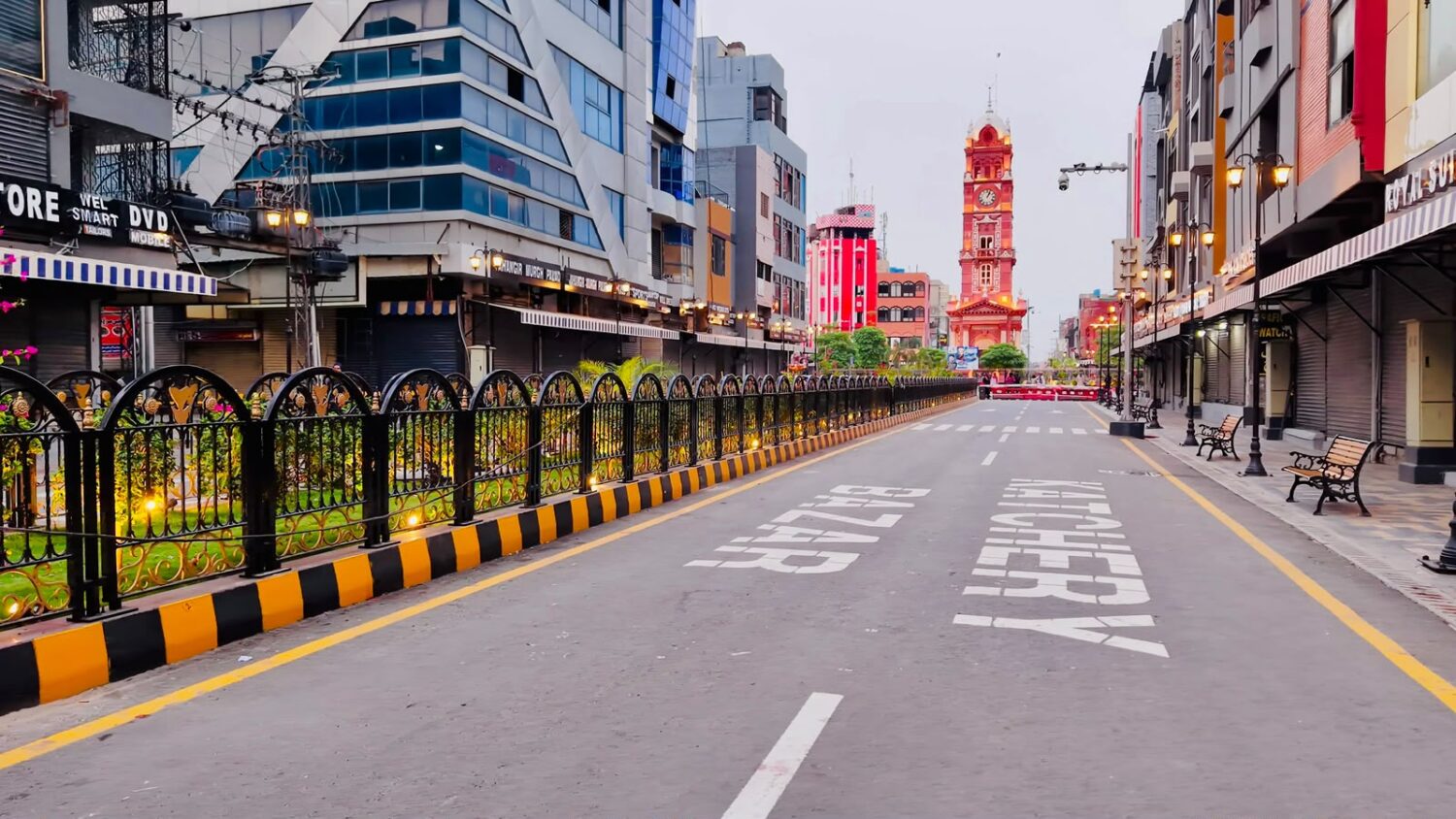 What makes this transformation particularly remarkable is the speed and precision with which it was carried out. Large-scale urban renewal projects in Pakistan are often plagued by delays, cost overruns, and half-finished work that lingers for years. Katchery Bazaar’s revival broke that pattern entirely, offering a rare example of a public project completed on time, within budget, and to a standard that has drawn favorable comparisons to some of the world’s most celebrated marketplaces.
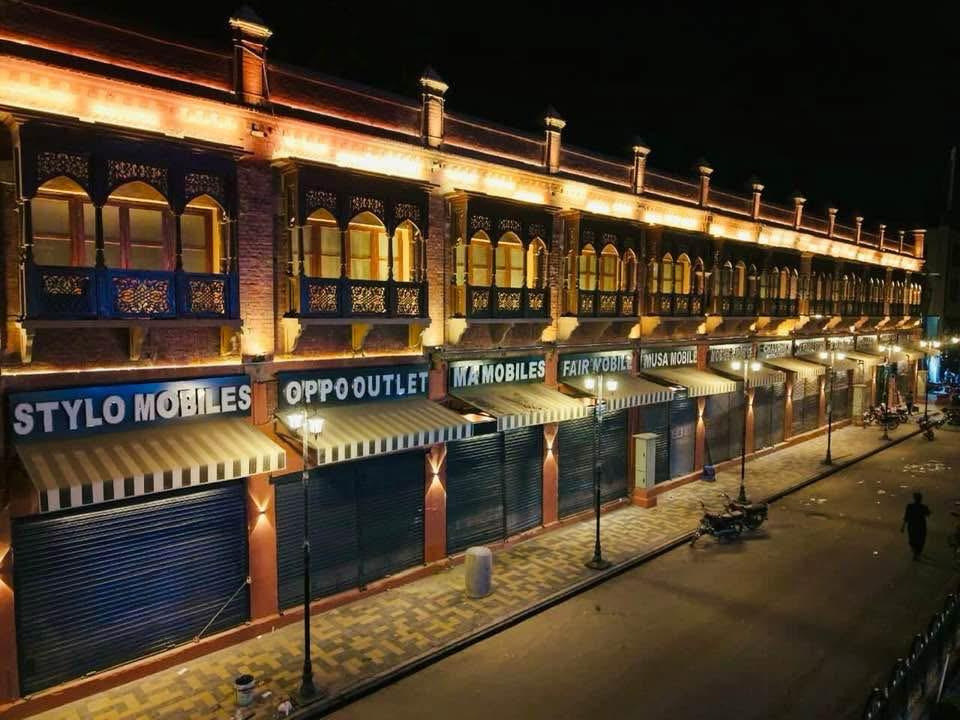
Executed in just four months, the project delivered a modern security system, comprehensive infrastructure upgrades, restored drainage networks, new electrification works, lush green belts, elegant landscaping, colorfully illuminated fountains, and uniformly redesigned shopfronts that gave the bazaar a cohesive, dignified identity. Rare ornamental plants and carefully chosen greenery now frame the marketplace, while at night, its vibrant lighting evokes the grandeur of Istanbul’s famed Grand Bazaar and Peshawar’s iconic Sadar Squares — a striking transformation for a market that had long been overlooked.
Shopkeepers who once operated out of mismatched, deteriorating storefronts now trade beneath a unified architectural facade that lends the bazaar a sense of order and pride. Visitors arriving in the evening find a marketplace transformed: strings of colored lights reflecting off fountains, walkways free of the clutter and disrepair that once defined the area, and a general atmosphere that feels less like a neglected commercial strip and more like a destination in its own right. For a city long associated primarily with its textile industry, Katchery Bazaar now offers Faisalabad something it has needed for years — a public space that residents can be genuinely proud to walk through.
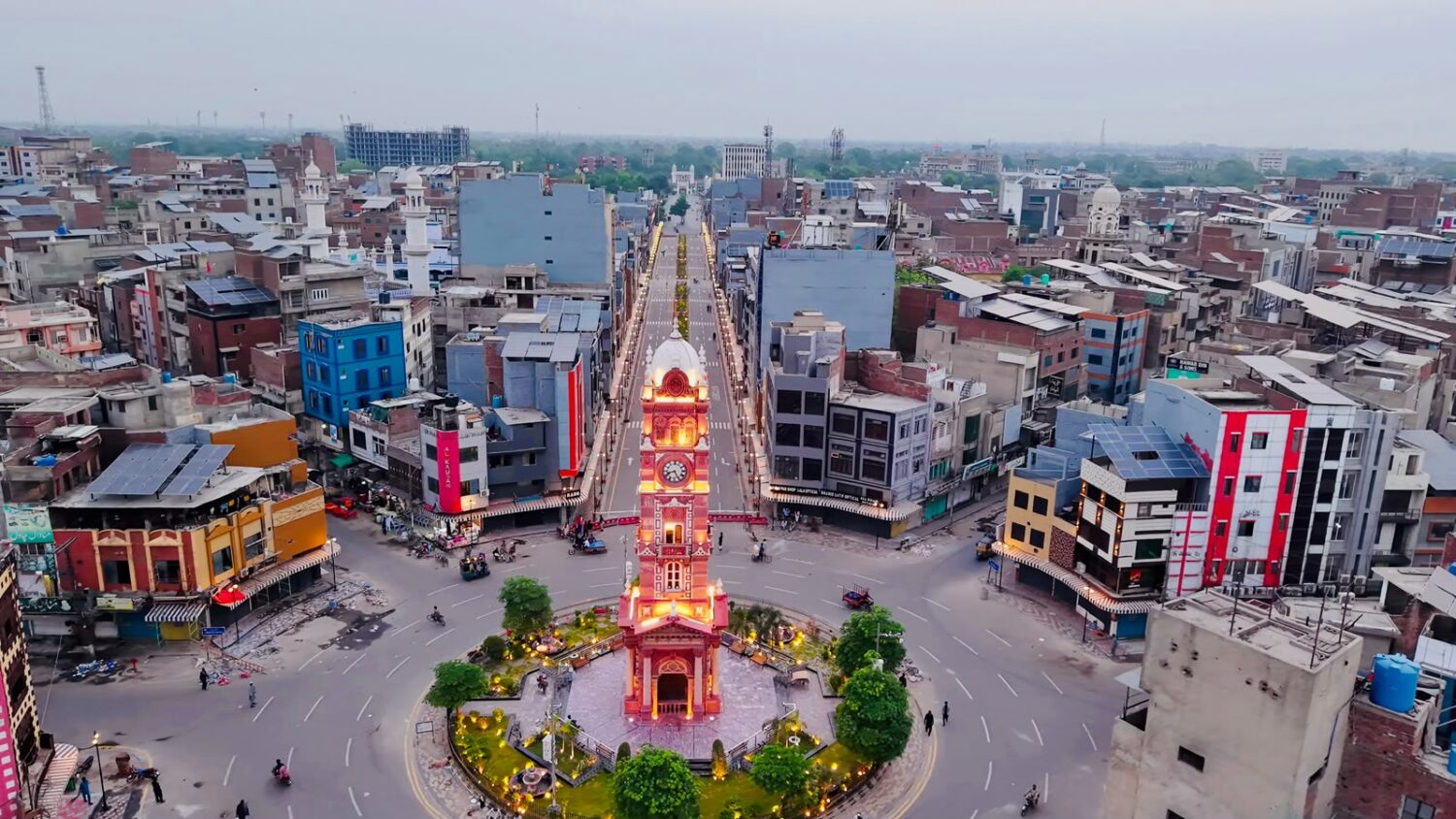 Katchery Bazaar was once one of the city’s most distinguished cultural, social, and literary hubs. The iconic Jelloz Hotel, Jhanday Ka Hotel, and Cosmos Hotel were not merely commercial establishments; they served as renowned meeting places for writers, poets, intellectuals, businessmen, and people of refined literary and cultural taste. This heritage forms an integral part of Katchery Bazaar’s cultural memory, and its revival is inseparable from the revival of that intellectual and literary life the market once nurtured.
The scope of investment extended well beyond Katchery Bazaar. Main Bazaar Dijkot, Mochi Bazaar, Chak Jhumrah, and 66 Futta Bazaar, Mansoorabad collectively received development funding, bringing the total spent across these beautification and urban development projects to Rs 920 million — a figure that reflects the Punjab government’s broader commitment to urban development across the province.
The recent beautification, restoration, and urban transformation of Katchery Bazaar have elevated it to a standard comparable with the celebrated historic shopping streets and café districts of Europe and the United States. Much as the great historic markets of the world’s leading cities have retained their old-world charm while embracing modern comfort, Katchery Bazaar now carries that same spirit — a historic marketplace made new without losing what made it meaningful.
Under the leadership of Chief Minister Punjab Maryam Nawaz Sharif, the Punjab government has placed urban aesthetics and civic facilitation firmly among its top priorities. The Katchery Bazaar Beautification Program stands as clear evidence that historic city centers can be modernized to meet contemporary needs without sacrificing the traditional identity that makes them meaningful to the people who use them every day.
The Man Behind the Master Plan
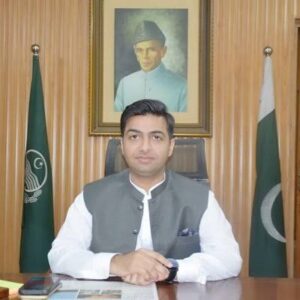
Every great transformation has an architect, and for Katchery Bazaar, that architect was former Deputy Commissioner Faisalabad, Captain (R) Nadeem Nasir. It was he who, as the Principal Architect of the Katchery Bazaar Beautification Program, conceived and prepared the project’s comprehensive master plan — and then, crucially, saw it through to successful completion on the ground. This was not simply administrative oversight; it was hands-on vision translated into brick, light, and green space.
Under Captain (R) Nadeem Nasir’s effective and determined leadership, the project became the first landmark achievement of its kind under the Faisalabad Vision for urban beautification and redevelopment — a success story that has since set a benchmark for other cities to follow. His foresight did not stop at Katchery Bazaar. The same planning discipline and hands-on execution extended to the beautification of Mochi Bazaar and Main Bazaar Dijkot, both of which now form part of the city’s broader cultural and aesthetic revival.
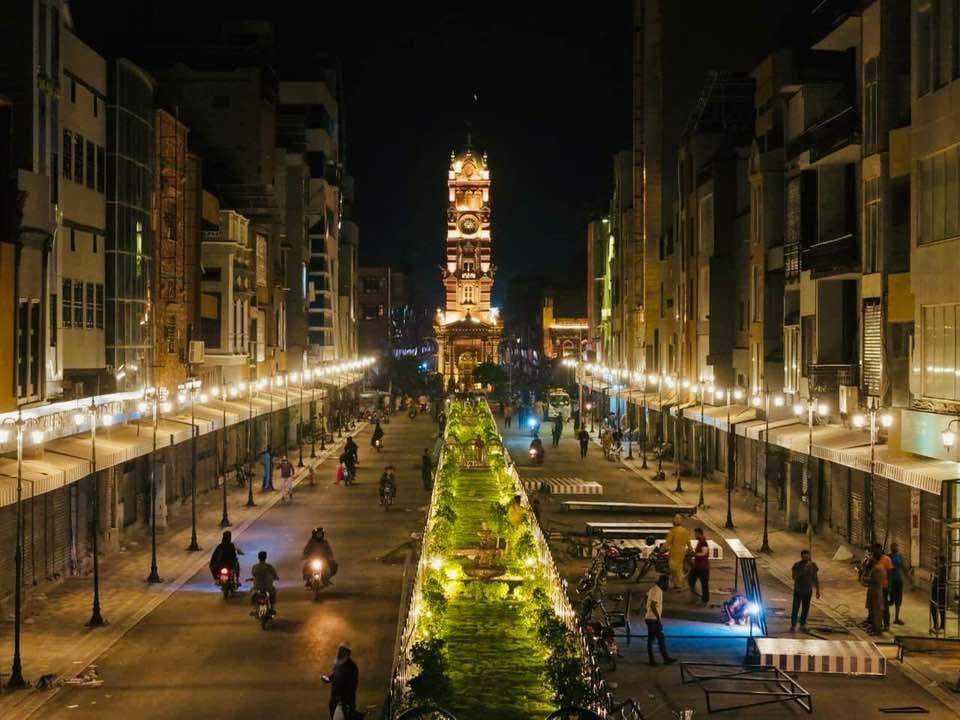 What distinguishes Captain (R) Nadeem Nasir’s contribution is not simply that a master plan was drawn up on paper, but that it was carried through, phase by phase, to real and visible completion. Many urban beautification schemes falter precisely at this stage — plans are approved, funds are allocated, and yet execution stalls amid bureaucratic delay or shifting priorities. Katchery Bazaar avoided that fate because its Principal Architect remained personally invested in the details: the placement of every fountain, the uniformity of every shopfront, the timing of every phase of construction. It is this combination of design vision and disciplined execution that transformed Katchery Bazaar from a proposal into a landmark, and it is this same combination that other officers across Punjab would do well to study and replicate.
This success, however, was not achieved in isolation. It was built on the strong institutional backing of former Commissioner Faisalabad, Raja Jehangir Anwar, whose visionary patronage created the space in which Captain (R) Nadeem Nasir’s technical expertise and practical leadership could flourish. Together, the two officers — one providing strategic direction from the top, the other delivering disciplined execution on the ground — breathed new life into these historic marketplaces. Their partnership stands as a model of what capable, committed public administration can accomplish when vision at the top is matched by execution on the ground.
Carrying the Vision Forward

Today, that same spirit of purposeful leadership continues under the current Commissioner Faisalabad, Imran Hamid Sheikh, and Deputy Commissioner Nauman Siddique. Both officers have taken up the mantle of Faisalabad’s development vision, working not only to sustain the projects handed down to them but to expand this momentum to markets across the city. Their commitment is visible in the field itself — both officers are regularly seen personally monitoring beautification and restoration work, ensuring that development projects move forward on a war footing rather than remaining bound to paperwork and delay.
This kind of field presence matters more than it might first appear. Public trust in development projects is often eroded not by a lack of funding but by a lack of visible, accountable oversight — citizens see announcements made and ribbons cut, but rarely see the officers responsible actually walking the site, checking on progress, and holding contractors to account. By making themselves visible in the very markets they are working to restore, Commissioner Imran Hamid Sheikh and Deputy Commissioner Nauman Siddique are sending a clear signal that Faisalabad’s development agenda is not a one-time announcement but an ongoing commitment.
This continuity of leadership — from Raja Jehangir Anwar’s founding vision, through Captain (R) Nadeem Nasir’s master planning and execution, to the present efforts of Commissioner Imran Hamid Sheikh and Deputy Commissioner Nauman Siddique — reflects something Faisalabad has needed for a long time: administrative consistency in pursuit of civic improvement. Each phase has built upon the last, rather than starting over, and the results across the city’s bazaars speak for themselves.
It is worth noting how rare this kind of continuity is in public administration, where officers are frequently transferred before projects reach maturity, and successors often abandon or redesign their predecessors’ plans rather than build upon them. Faisalabad’s bazaar beautification story stands out precisely because it has avoided this trap. Rather than treating each change in leadership as a reason to start over, successive officers have chosen to honor and extend the groundwork laid before them — a quiet but significant achievement in a system where institutional memory is too often lost with every transfer order.
A Respectful Appeal: Beyond the Bazaars

I would like to make a respectful appeal to Commissioner Imran Hamid Sheikh and Deputy Commissioner Nauman Siddique. The same passion and precision being directed toward the city’s bazaars deserves to be extended to Faisalabad’s historic parks, gardens, and green belts. Kaleem Shaheed Park, the green spaces surrounding the Ghanta Ghar (Clock Tower), Bagh-e-Jinnah, and the city’s various green belts were once equally defining features of Faisalabad’s identity and beauty. Today, they wait quietly for the same attention and restoration that has transformed the bazaars.
These green spaces are not incidental to the city’s character — they are, in many ways, its lungs. As Faisalabad continues to grow and its commercial districts expand, the pressure on its remaining parks and gardens only increases. A city that beautifies its markets while allowing its parks to decline risks solving one problem while quietly creating another. The same administrative energy, the same field-based monitoring, and the same commitment to visible, timely completion that defined the Katchery Bazaar project could, if applied to these green spaces, restore an equally important dimension of Faisalabad’s civic life.
Should this renewal extend to the city’s parks, gardens, and green belts alongside its markets, Faisalabad stands to become not only a cleaner, greener, and more modern city, but one that plays a meaningful role in environmental preservation and overall civic beauty — a gift worth leaving for generations of Faisalabad’s citizens still to come.
A Further Appeal: The Case for a Lyallpur Tea House
 Alongside this appeal for the city’s green spaces, I would also respectfully urge Commissioner Imran Hamid Sheikh and Deputy Commissioner Nauman Siddique to consider establishing a “Lyallpur Tea House” adjacent to the Lyallpur Museum, the District Council, and the Central Library. Such an institution would serve as a vibrant literary and cultural centre, providing writers, poets, scholars, young authors, artists, and intellectuals with a dignified forum for dialogue, creativity, and cultural engagement — a modern successor to the role once played by the Jelloz, Jhanday Ka, and Cosmos Hotels in the city’s intellectual life.
A dedicated space of this kind, situated alongside the Lyallpur Museum, the District Council, and the Central Library, would help preserve and promote Faisalabad’s rich historical and cultural heritage while providing a meeting place for writers, scholars, students, artists, and the wider community — closing the circle between the city’s physical renewal and its historic identity as a home for its thinkers and writers.
A Legacy Built on Continuity

Tradition endures, and it is through that continuity that lives and cities are transformed. The true architects of the Katchery Bazaar Beautification Program were former Commissioner Faisalabad Raja Jehangir Anwar and Principal Architect Captain (R) Nadeem Nasir, who together prepared the project’s comprehensive master plan. What followed — the effective, on-ground implementation of that plan — was carried out under the determined leadership of former Deputy Commissioner Captain (R) Nadeem Nasir himself. Together, this partnership produced the first landmark project of its kind under the Faisalabad Vision, establishing a model that other cities across Punjab would do well to emulate.
Today, as Commissioner Imran Hamid Sheikh and Deputy Commissioner Nauman Siddique carry that vision forward, expanding beautification and restoration efforts to markets across the city, their active, field-based leadership offers reassurance that Faisalabad’s development story is far from finished. If that same energy is now turned toward the city’s parks and green spaces — and toward the revival of its literary and cultural institutions — Faisalabad will not just reclaim its past beauty — it will secure a greener, more graceful, and more intellectually vibrant future for all who call it home.