



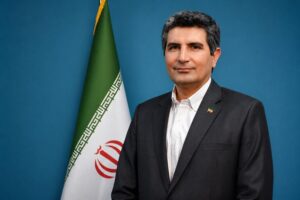
Dr. Mehdi Taheri
On the occasion of the anniversary of the passing of Imam Khomeini (RA)—the founder of the Islamic Republic of Iran—it is appropriate to recall his invaluable and enduring legacy, particularly his role in the field of “Muslim unity,” which was not limited to slogans but was clearly reflected in both his character and his discourse.
Among the Islamic countries, Imam Khomeini’s special attention to and affection for Pakistan stands as a shining example of this consistent intellectual and practical approach.
Imam Khomeini (RA) regarded unity not merely as a political strategy, but as a Qur’an and strategic necessity. In his view, the greatest attack of the enemies of Islam is “division,” and he repeatedly emphasized that although Shi‘a and Sunni differ in secondary jurisprudential matters, they are fully united in the fundamentals of religion. Therefore, they must stand in a single front against arrogant and hegemonic powers.
Imam Khomeini (RA) considered Islamic unity not only a political strategy, but a Qur’an obligation and an indispensable strategic necessity for the Muslim Ummah. In his farsighted vision, the most effective weapon of the enemies of Islam is to create division and discord among Muslims. For this reason, he repeatedly emphasized that Shi‘a and Sunni Muslims, although they may differ in certain subsidiary and jurisprudential matters, are partners in the fundamentals of religion, core beliefs, and shared Islamic values. Therefore, they must stand together as a unified force and become a “single hand” against the arrogant powers.
Declaring the blessed days between the Sunni and Shi‘a traditions of the birth of the Holy Prophet Muhammad (PBUH) as “Unity Week” was one of Imam Khomeini’s historic and lasting initiatives, the echoes of which are still heard across the Islamic world today and which has become a powerful symbol of harmony and brotherhood among Muslims. Likewise, “Quds Day” was also a manifestation of his trans-sectarian and unity-based vision. He designated this day not only for the support of Palestine but also as a means of reviving the unity, awakening, and collective struggle of the entire Muslim Ummah.
Imam Khomeini’s special attention to Pakistan should also be understood in this context. He considered Pakistan, due to its rich historical legacy, large Muslim population, and significant geopolitical and strategic position, as “a part of the body of the Islamic world,” and he stated:
“We consider Pakistan a part of the body of Islam, and protecting it is the responsibility of all Muslims. We consider the security and independence of Pakistan as our own security and independence.”
In a message full of affection and sincerity addressed to the people and government of Pakistan, he further stated:
“We and Pakistan are two brotherly Islamic countries, and the enemies can never create division between us.”
He described Pakistan as a “strong fortress of Islam” and believed that the strength and prosperity of this country would enhance the power of the entire Islamic world. His perspective on Pakistan was entirely brotherly, equal, and free from any sense of superiority. He consistently advised the religious and political leaders of both countries to strengthen their unity based on the Holy Qur’an and the Seerah of the Prophet Muhammad (PBUH).
This sincere and affectionate vision created deep love and respect for Imam Khomeini among the people of Pakistan. Upon his passing, Pakistan declared national mourning, and political and religious leaders described the Supreme Leader of the Islamic Revolution as “the loud voice of Muslim unity.” Today, the name and path of Imam Khomeini remain a strong bridge of mutual respect and friendship between the two brotherly Islamic nations.
On the occasion of his blessed heavenly departure, remembering this legacy is a collective and universal responsibility. The Muslim Ummah today is still wounded by division and discord, and the only way out of these difficulties is to firmly hold onto the “rope of unity”—the banner of which was raised by Imam Khomeini.
Relations between Iran and Pakistan, based on this wise, far-sighted, and brotherly vision, can serve as a bright, practical, and exemplary model not only for both countries but for the entire Islamic world.