



 Dr. T. M. Malik
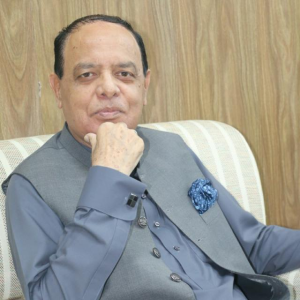 Dr. T. M. Malik
Pakistan confronts a stark educational imperative: channeling investments into girls’ schooling stands to supercharge GDP by up to 30%, dismantle poverty traps, and cultivate resilient societies, yet entrenched gender disparities belie this promise, with primary net enrollment for girls hovering at 72% compared to 85% for boys, rural dropout rates soaring beyond 50%, and secondary participation plummeting to just 33% in the most deprived provinces. A staggering 22 million children remain out of school, two-thirds of them girls, a human capital catastrophe that drains trillions from the economy while perpetuating cycles of multidimensional poverty afflicting 40% of the population. Deep-seated cultural norms masquerading as “honor” severely restrict mobility, child marriages precipitate dropouts at rates 40% higher for girls, lack of basic infrastructure such as toilets repels 25% of potential attendees, and sheer economic hardship excludes another 35%. This multifaceted crisis demands nothing less than a comprehensive investment paradigm encompassing visionary planning, multifaceted strategies, and unyielding implementation to propel girls from societal peripheries to the forefront of national progress.
The contours of this deficit reveal profound regional and socioeconomic fissures. In rural Balochistan, girls’ enrollment languishes at a mere 40%, while urban Punjab achieves 80%; Sindh’s secondary rates stagnate at 33%. Malnutrition chronically undermines cognitive development, sparse ratios of female teachers erode parental confidence, and treacherous distances expose young girls to risks that keep them homebound. Half of those who complete primary never transition to secondary, a bottleneck exacerbated by adolescence. The COVID-19 lockdowns widened these chasms further, with girls enjoying 15% less digital access, entrenching learning losses that could span generations. Economically, the calculus is unforgiving: uneducated girls translate to 20% lower household incomes, suboptimal child health outcomes, and elevated fertility straining scarce resources. Modeling from global institutions projects that achieving parity could inject 2.5% annual growth; targeted rural interventions alone might reclaim 10 million learners from the margins.
Planning must form the bedrock of any transformative effort, beginning with evidence-based audits tailored to provincial realities, forecasting a decadal infusion of Rs 500-700 billion to elevate education spending to 4% of GDP, with ring-fenced allocations prioritizing girls. A Vision 2030 framework sets phased milestones: universal primary access by 2028, 90% secondary by 2032. Core instruments include conditional cash transfers delivering PKR 200-500 monthly stipends tied to attendance, proven to slash dropouts by 20%; complimentary uniforms, textbooks, and meals further dismantle financial barriers. Public-private partnerships (PPPs) blueprint the construction of 10,000 dedicated rural girls’ primaries, with private capital funding facilities while government secures land and utilities. Curricula recalibration embeds vocational STEM tracks, life skills, and menstrual health education, complemented by aggressive training pipelines for 100K female educators annually. Donor alignments unlock billions in concessional financing, while equity indices populate public dashboards for real-time monitoring of enrollment, retention, and learning outcomes. Participatory mechanisms engage parent-teacher associations (PTAs) and community leaders like imams in co-designing culturally attuned models, ensuring buy-in from grassroots upward. Macro-planning synchronizes with Sustainable Development Goals through gender budgeting mandates allocating 30% of education outlays to girls-specific initiatives; fiscal federalism empowers provinces to compete on outcome metrics, fostering innovation in delivery. Risk matrices preempt corruption via transparent procurement and resistance through data-driven showcases of economic returns.
The strategy arsenal deploys a barrage of targeted interventions across financial, access, infrastructural, human capital, normative, technological, vocational, and health domains. Financial levers encompass tiered stipends for adolescents reaching PKR 1000+, merit-cum-need scholarships that boost retention by 30%. Access innovations like mobile and community schools halve travel distances, enrolling 40% more in remote areas; subsidized bike and transport banks ensure safe commutes. Infrastructure mandates achieve 95% toilet coverage, boundary walls, and CCTV for dignity and security. Human capital accelerates fast-track certification for female teachers with incentives for postings in hard-to-reach locales. Normative shifts leverage media campaigns and imam-led advocacies that double parental consents by reframing education as familial honor. Technological leaps introduce solar-powered digital classrooms streaming adaptive content, AI tutors personalizing learning trajectories. Vocational bridges offer post-primary internships in tailoring, IT, and agribusiness, aligning skills with labor markets to elevate future LFPR. Health integrations via school clubs address hygiene, nutrition, and vaccinations, acting as potent retention boosters. Holistic NGO prototypes bundling stipends, clinics, and parenting workshops demonstrate 90% persistence rates, scalable blueprints for national rollout. Rural-focused stipends paired with transport lift completion rates 25%; urban scholarships forge STEM parity, narrowing urban-rural chasms.
Implementation fuses ownership, scalability, capacity, monitoring, accountability, and technology into an ironclad engine. Federal coordination devolves execution to provinces armed with budgets and autonomy, scaling proven pilots – like those doubling enrollments in select districts – nationwide. Biometric systems enforce attendance tracking, annual standardized assessments gauge learning, and geo-tagged inventories verify infrastructure. Third-party audits, citizen grievance apps, and performance-linked provincial incentives ensure fidelity; PPP covenants impose quality metrics with penalties for lapses. Community PTAs wield veto on fund misuse, embedding local guardianship. Technological backbones – public dashboards visualizing progress, AI flagging spending anomalies – curb corruption. Phased rollout prioritizes Year 1 infrastructure and access, Year 2 retention and skills, Year 3 equity and outcomes. Pilots validate efficacy: stipends curtail dropouts 30%, mobiles integrate 40% remote learners, underscoring replicability. Challenges like entrenched resistance yield to evidence parades highlighting GDP multipliers; fund leakages succumb to blockchain-tracked disbursements.
The cascading dividends of such investments reverberate across economic, social, and human spheres. Educated girls command 20-30% wage premiums, orchestrate 15% better child nutrition and survival, and defer marriages curbing fertility pressures. Women’s labor force participation doubles, turbocharging productivity; remittances stabilize from empowered households; innovation pipelines swell with patents from diverse minds. Achieving parity unlocks trillions in latent output, slashes Gini coefficients by 10 points, and fortifies resilience against shocks. Intergenerational transmission ensures daughters educate kin, compounding societal gains manifold.
In conclusion, Pakistan’s pathway to equitable ascent hinges on bold investment – visionary planning rooted in data and milestones, inclusive strategies assaulting every barrier, accountable implementation scaling pilots to masses. This triad not only elevates girls’ destinies but ignites national glory, transforming human capital from liability to superpower. The time for half-measures has passed; comprehensive commitment today begets brighter tomorrows for all.
The writer holds a PhD in Media Sciences, Rawalpindi. Email: [email protected]