


Spokesman Report
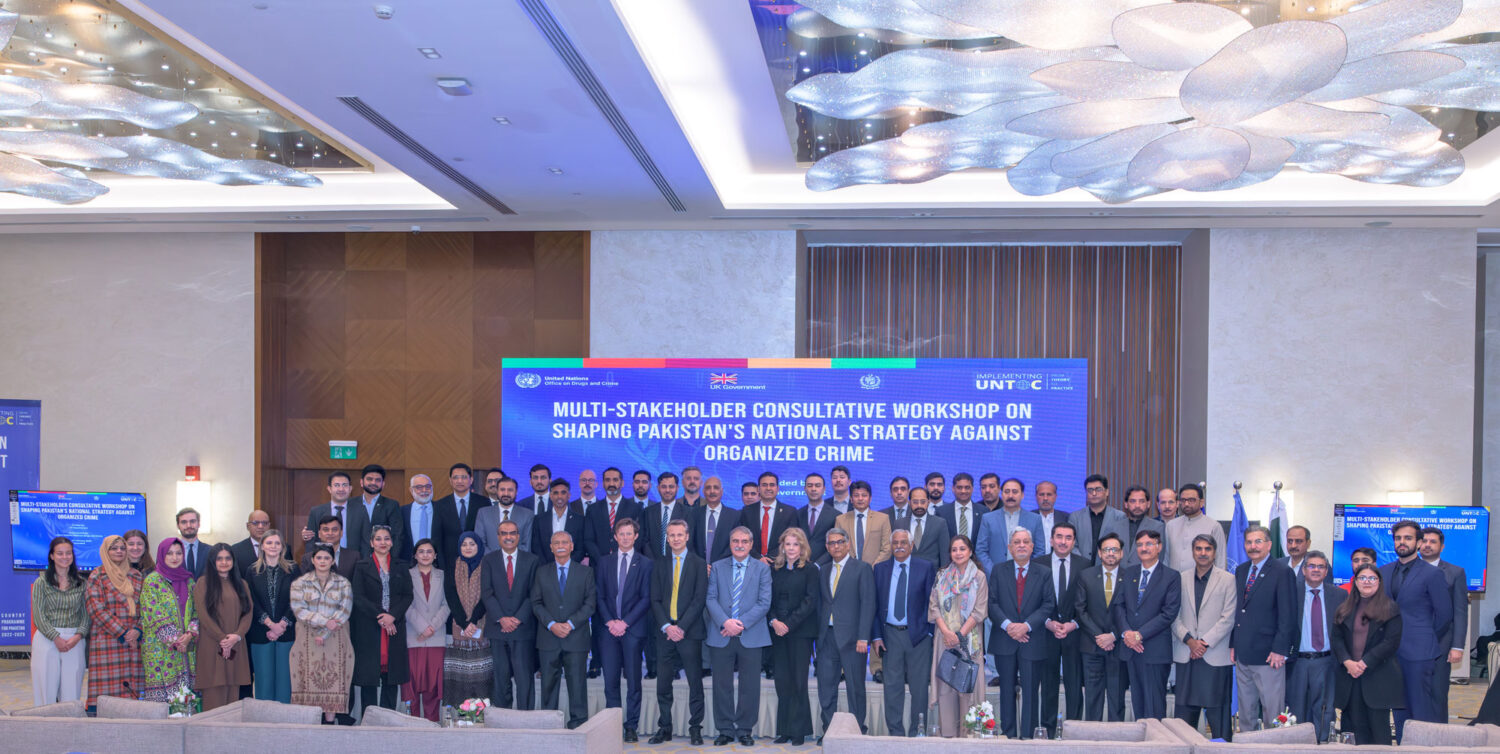
Islamabad 18 February 2026 – Key national and international stakeholders convened in Islamabad on 16–17 February for the Multistakeholder Consultative Workshop on shaping Pakistan’s National Strategy against Organized Crime, marking an important step toward finalizing the country’s first comprehensive framework to address organized criminal networks.
The two-day workshop supported by the United Kingdom, facilitated by the United Nations Office on Drugs and Crime (UNODC) in collaboration with the Government of Pakistan brought together approximately 60 participants from federal and provincial authorities, law enforcement agencies, civil society organizations, and development partners.
Opening the proceedings, UNODC Country Representative Troels Vester highlighted the evolving and multidimensional nature of organized crime, stressing that effective responses must move beyond isolated institutional efforts toward a coordinated whole-of-society approach.
 Representing the Ministry of Interior, Joint Secretary Shahzad Hameed Khan Durrani reaffirmed the Government of Pakistan’s commitment to endorsing and implementing the National Organized Crime Strategy. He underscored the need for strengthened investigative capacity, intelligence sharing, gender-responsive approaches, and sustained inter-agency coordination.
The Director General of the Federal Investigation Agency (FIA) emphasized the Agency’s frontline role in combating transnational and technology-driven crimes, including irregular migration, human smuggling, cybercrime, and money laundering. He noted that the emerging strategy must translate into operational results through improved investigations, prosecutions, and institutional capacity-building.
Mr. Alasdair Grant, Counsellor for Security and Justice at the British High Commission emphasized that the UK is proud to support Pakistan’s National Strategy Against Organised Crime. He stressed how this was an important milestone in strengthening coordination, promoting evidence‑based action, and upholding the rule of law. Working alongside the Government of Pakistan and UNODC, we are helping to protect communities and reinforce our shared effort to reduce transnational organized crime.
During the workshop, participants reviewed and refined activities under the four strategic pillars of Prevent, Pursue, Protect and Promote, while identifying implementation, monitoring, and evaluation mechanisms to ensure sustainability.
A significant milestone was the presentation of the Civil Society Declaration, which reinforced the importance of community engagement, accountability, and victim protection within the national response framework.
The consultative process reflects Pakistan’s growing commitment to an inclusive, evidence-based and coordinated approach to tackling organized crime. The next phase will focus on finalization and operationalization of the National Strategy.