


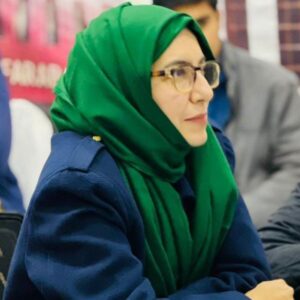
 Sarah Rasul Taus Banihali
There are tragedies that arrive like tempests and depart with the season. And then there are those that settle upon a people like an interminable winter. The modern history of Kashmir, since 1990, belongs unmistakably to the latter.
What began in 1990 as political unrest soon evolved into armed resistance and an expansive militarized response. The Valley was transformed into one of the most heavily militarised regions in the world. Extraordinary legislation — including the Armed Forces (Special Powers) Act and the Public Safety Act — entrenched sweeping powers of arrest and detention. Checkpoints multiplied. Crackdowns became routine. Night raids entered the architecture of domestic life.
From that year onward, generations of Kashmiris have lived not in the rhythm of ordinary civic order, but in the irregular cadence of curfews, crackdowns, fake encounters, protests, and prolonged uncertainty. Lives have been suspended in a state of perpetual fragility. Yet within this prolonged crisis, it is the women and children who have borne the most intimate and enduring suffering.
The resistance against Indian occupation that began of the 1990s introduced a phenomenon that continues to haunt the Valley: enforced disappearances. Thousands of men were reported missing. Wives were left behind — neither widowed nor secure — condemned to inhabit what has come to be known as the condition of the “half-widow” or “shadow widow.” Without a death certificate, these women cannot claim inheritance or property rights. Without proof of life, they cannot anchor hope. Their existence is one of endless waiting.
Psychologists have long observed that ambiguous loss — grief without closure — corrodes the human spirit in unique and devastating ways. In Kashmir, this ambiguity has persisted for more than three decades. Children raised in such households grow up asking questions their mothers cannot answer: Where is father? Is he alive? Will he return? Silence becomes a companion.
International human rights law leaves little ambiguity on such matters. The International Covenant on Civil and Political Rights safeguards against arbitrary detention and protects family life. The Convention on the Rights of the Child affirms a child’s right to psychological well-being and development. United Nations Special Rapporteurs and Working Groups have repeatedly expressed concern regarding prolonged detentions and preventive incarceration practices in the region. Yet the language of law, however precise, cannot fully capture the emotional devastation within a home when a father is taken away in the dead of night.
The knock at midnight has become an emblem of dread. Doors splintered. Children awakened in terror. Fathers escorted into darkness. Under statutes such as the Public Safety Act and the Armed Forced Special Powers Act, and unlawful Prevention Activities Act detentions may extend without timely trial — a practice that has drawn sustained scrutiny from UN human rights mechanisms.
The consequences are immediate and merciless. In many households, the detained husband is the sole breadwinner. His absence precipitates economic collapse. Women must navigate distant prisons, labyrinthine court procedures, and mounting legal costs. They become, simultaneously, caregivers, providers, and advocates. Childhood, meanwhile, is reshaped by fear.
The constitutional abrogation of Article 370 in August 2019 did not occur in isolation; it descended upon a region already burdened by decades of unrest. What followed was an unprecedented lockdown. Communications were severed. Mobile networks silenced. Internet services suspended for months. Political leaders detained. Curfews imposed with rigid severity.
For women, this was suffocation. They could not contact detained husbands. They could not reach hospitals easily. Mothers with ill children pleaded at checkpoints for passage. Markets shuttered. Food supplies fluctuated. Electricity disruptions deepened anxiety. The Valley was not merely governed — it was enclosed.
Then came the global calamity of COVID-19. Whilst the world retreated indoors with digital connectivity as its lifeline, Kashmir entered the pandemic already strangled by communications restrictions. Remote schooling, telemedicine, and online commerce — which sustained societies elsewhere — were gravely hindered. Children were doubly confined: first by political lockdown, then by pandemic necessity.
Mental health practitioners in the region have consistently reported extraordinarily high levels of psychological distress among women and youth in conflict-affected districts. Anxiety, depression, and post-traumatic symptoms have reached alarming proportions. Many children exhibit sleep disturbances, panic at sudden sounds, withdrawal from play, and deep-seated insecurity. When confinement becomes habitual, fear embeds itself into character.
Women from Azad Kashmir married into Indian-occupied territory face additional hardship. Documentation disputes and residency uncertainties render them precarious in times of heightened scrutiny. During lockdowns, lack of recognised papers has translated into restricted access to healthcare, ration supplies, mobility, and educational recognition for their children. Marriage across divided geographies, instead of symbolising unity, becomes a bureaucratic vulnerability.
International humanitarian law prohibits collective punishment and demands proportionality in security measures. Emergency powers, under international jurisprudence, must remain necessary, lawful, and time-bound. Yet in Kashmir, securitisation has assumed a permanence that normalises restriction.
What becomes of a child raised amid barricades and blackouts? Educational interruptions widen inequality. Aspirations shrink. Girls in economically strained households risk withdrawal from schooling. Boys may internalise anger or despair. Trauma, when unaddressed, becomes intergenerational.
And yet — astonishingly — dignity persists. Mothers teach by candlelight when electricity falters. They ration food with quiet courage. They form support networks. Children continue to write essays about peace, sketch mountains in exercise books, and dream of futures beyond surveillance.
From the military crackdown of 1990’s to the constitutional rupture of 2019, from prolonged detentions to pandemic isolation, Kashmir’s history is one of cumulative strain. Its political status may remain contested, but its humanitarian crisis is undeniable.
History’s ultimate judgment will not be confined to territorial outcomes. It will ask how the vulnerable were treated when authority was most absolute. In that solemn inquiry, the testimony of Kashmir’s women and children — their endurance, their unanswered questions, their silent vigils — will stand as the truest measure of conscience.