Daily The Spokesman 20 January 2026 PDF
UK PTI Leader Vows Unwavering Support for Imran Khan’s Release

Europe Bureau Report
London: Senior Pakistan Tehreek-e-Insaf (PTI) leader from the UK, Misbah Qasir, has expressed unwavering support for former Prime Minister Imran Khan, stating that PTI supporters will not step back under any circumstances. She emphasized that all calls issued by the party for Khan’s release will be fully supported.
Addressing the media, Misbah Qasir said that following the party’s announcement of a nationwide wheel-jam strike and street protests on 8 February 2026, overseas Pakistanis, particularly PTI members in the UK, will actively participate in the movement.She further remarked that Imran Khan is not just an individual but a vision, and this vision will be defended through peaceful and constitutional means. Misbah Qasir added that the release of Imran Khan is a shared demand of Pakistanis both at home and abroad, and the struggle will continue until this goal is achieved.
Punjab Pivots to Mobile-First: 49 Apps Launch E-Governance Revolution

Qudrat Ullah
As AI-based governance is shaping the future, Chief Minister Maryam Nawaz Sharif is taking steps to establish Punjab as an e-governance hub. With a portfolio of 49 officially launched mobile applications, the Punjab government has repositioned mobile-first service delivery as a central pillar of administrative reform. This strategy represents a decisive shift away from paper-driven, office-bound governance toward a data-centric, automated and citizen-facing service architecture aligned with global smart-government trends.
The logic behind this transformation is straightforward: smartphones have become the most scalable and inclusive interface between the state and citizens. Rather than expanding physical offices and manual processing layers, Punjab has invested in digital public infrastructure that embeds services directly into mobile applications. These platforms digitize complete service lifecycles, application submission, verification, processing, tracking and delivery, replacing fragmented workflows with integrated digital pipelines. The outcome is a governance model where speed, traceability and accountability are built into the system by design.
At the center of this ecosystem is the GoPb application, which functions as a unified digital gateway for government services. From a technical perspective, it reflects a shift toward centralized digital identity management and service orchestration, allowing citizens to access multiple departmental services through a single authenticated interface. This consolidation reduces data duplication, standardizes service protocols and enables interoperability across departments. Such architecture is essential for AI-led governance, as it generates clean, structured datasets that support advanced analytics, predictive modeling, and automated decision-support systems.
Women have emerged as major beneficiaries of Punjab’s mobile governance framework. Applications such as Dastak enable doorstep delivery of essential government services, including documentation and facilitation tasks, without requiring visits to government offices. For women facing mobility constraints, safety concerns or time limitations, this represents a significant expansion of access. Similarly, the Meri Awaz application integrates SOS alerts, complaint lodging and rapid response mechanisms, linking users directly to centralized monitoring systems. These platforms rely on real-time data transmission, geo-tagging and automated escalation protocols widely used in advanced smart-city deployments.
Children and families benefit through education and welfare-related applications that provide digital access to enrollment information, institutional updates, examination data and complaint mechanisms. Parents can interact with education departments remotely, reducing dependence on informal intermediaries. From a governance standpoint, these applications generate continuous data flows that help identify attendance gaps, infrastructure deficiencies and service delivery trends. Over time, such datasets can support AI-based education planning tools, enabling evidence-driven resource allocation and early detection of systemic weaknesses.
For persons with disabilities, mobile governance has replaced historically exclusionary processes with accessible digital workflows. The assistive devices and wheelchair application allows eligible individuals to apply for mobility aids from home, upload documents digitally and track application status in real-time. The system integrates eligibility verification, inventory management and distribution tracking, ensuring transparency and efficiency. More importantly, it embeds inclusion into governance design, demonstrating how digital systems can dismantle, not reinforce, structural barriers.
Economic facilitation further illustrates the depth of Punjab’s digital strategy. Agriculture-focused applications such as bardana registration digitize farmer onboarding, procurement and subsidy access. These platforms generate structured agricultural datasets that allow policymakers to shift from reactive interventions to data-led planning. With sufficient historical data, such systems can support AI-driven forecasting models for crop yields, demand estimation and supply-chain optimization, strengthening food security and market stability.
Consumer protection and market transparency have also improved through applications like Qeemat Punjab and AMIS Punjab, which publish real-time prices of essential commodities across districts. These applications function as live data dashboards for citizens while simultaneously feeding regulators with up-to-date market intelligence. By replacing delayed manual reporting with continuous data streams, the Punjab government has strengthened price monitoring and reduced information asymmetry.
Public safety and urban management applications show how mobile devices are being integrated into broader digital command-and-control ecosystems. Apps linked to the Punjab Safe Cities Authority allow citizens to report incidents and interact with centralized response systems. Technically, this reflects a convergence of mobile computing, citizen inputs and centralized analytics, an early-stage smart-city model capable of evolving into AI-assisted incident prediction and optimized resource deployment.
From a systems perspective, Punjab’s mobile applications rely on standardized backend architectures, automated workflows and digital audit trails. Service requests are time-stamped, tracked and routed algorithmically, improving predictability. While fully autonomous AI governance is still emerging, the infrastructure already supports rule-based automation, performance monitoring and data-driven oversight.
Collectively, Punjab’s 49 mobile applications signal a recalibration of the state–citizen relationship. Women accessing services from home, parents managing education digitally, farmers engaging directly with procurement systems and differently-abled persons receiving assistive support through mobile workflows are tangible indicators of progress. In an era where digital capacity defines governance effectiveness, Punjab’s mobile-first strategy positions the province as a national leader and an emerging contender in Asia’s digital governance landscape.
(The writer is a Lahore-based public policy analyst and can be reached at [email protected])
Malaysian Envoy Encourages AIMS Parents, Eyes Bilateral Educational Ties After Grand Sports Event
Naveed Ahmad Khan Photos by Sultan Bashir Online
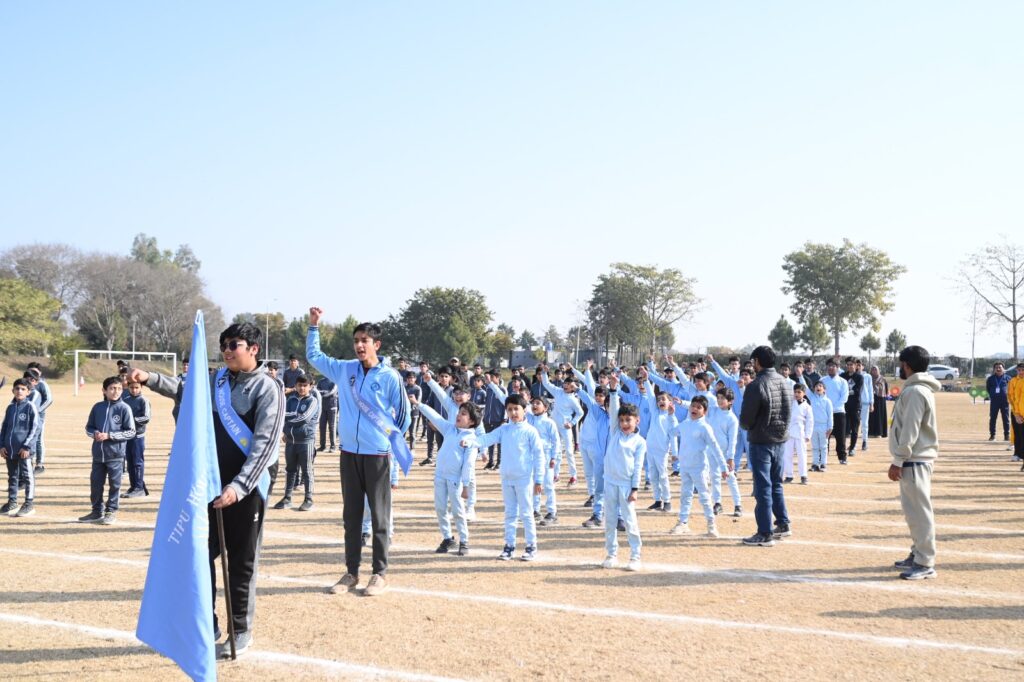
Islamabad: The 18th Sports Gala of AIMS Education System was held on Sunday, within the sprawling and lush green boundaries of Jinnah Complex, Islamabad, amid great fervor and passion, while strictly following the complete Islamic code of conduct. The mega event commenced with an impressive walk past of nearly 1,300 participants representing the main campus, branches and the Hifz section of AIMS Education System. The students entered the ground divided into five houses namely Tipu, Qasim, Ghaznavi, Ghouri and Khalid, led smartly by their respective house captains and head boys.
 Despite an overcast sky and chilling, windy weather, the students and staff made dedicated preparations for the day, and the harsh weather conditions could not undermine their enthusiasm and commitment. The event was graced by several distinguished guests, including His Excellency Ambassador Dato’ Mohammad Azhar Mazlan, High Commissioner of Malaysia to the Islamic Republic of Pakistan, Chairman AIMS Education System Mr. Almass Ayoub Sabir, Dr. Moazzam Munawar Sheikh, Executive Director of AIMS Education System, Qari Tariq Saeed ,Head of Awan-e-Quran, along with many other dignitaries and prominent personalities who attended to motivate the young learners.
 In his address, the Chief Guest, High Commissioner of Malaysia Dato’ Mohammad Azhar Mazlan, shared his views on the vision of the school and encouraged parents to work closely with the institution in providing a conducive environment and facilities for students actively involved in sports. He urged the guests and parents to mentor young athletes whenever required. The Chief Guest lauded the efforts of AIMS Education System for offering a wide range of sports activities and stressed the importance of maintaining a healthy balance between academics and sports. He also highlighted the achievements of the institution, receiving a loud round of applause from the audience. Dato’ Mohammad Azhar further admired the school’s emphasis on character building and noted that exclusive training programs for parents and teachers are rare, which AIMS Education System has adopted as a permanent feature of its educational framework.
 In addition, he expressed his keen interest in fostering institution-to-institution collaboration between AIMS Schools and Colleges and reputable Malaysian educational institutions, particularly in the areas of academic exchange, sports development, and capacity building. He encouraged educational leaders from both countries to explore opportunities for mutual cooperation to promote global exposure and holistic development for students.
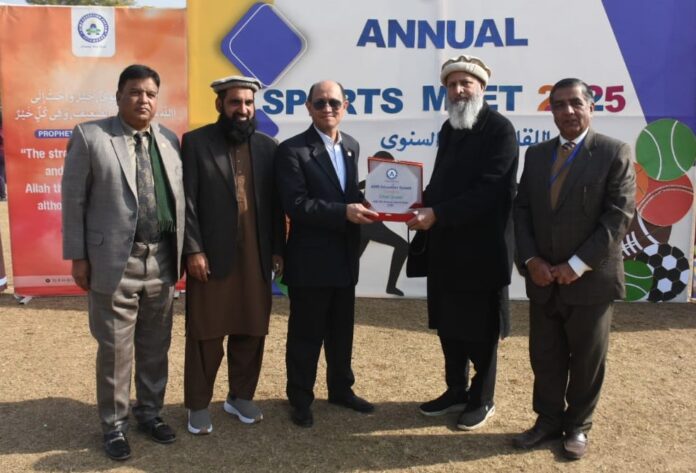
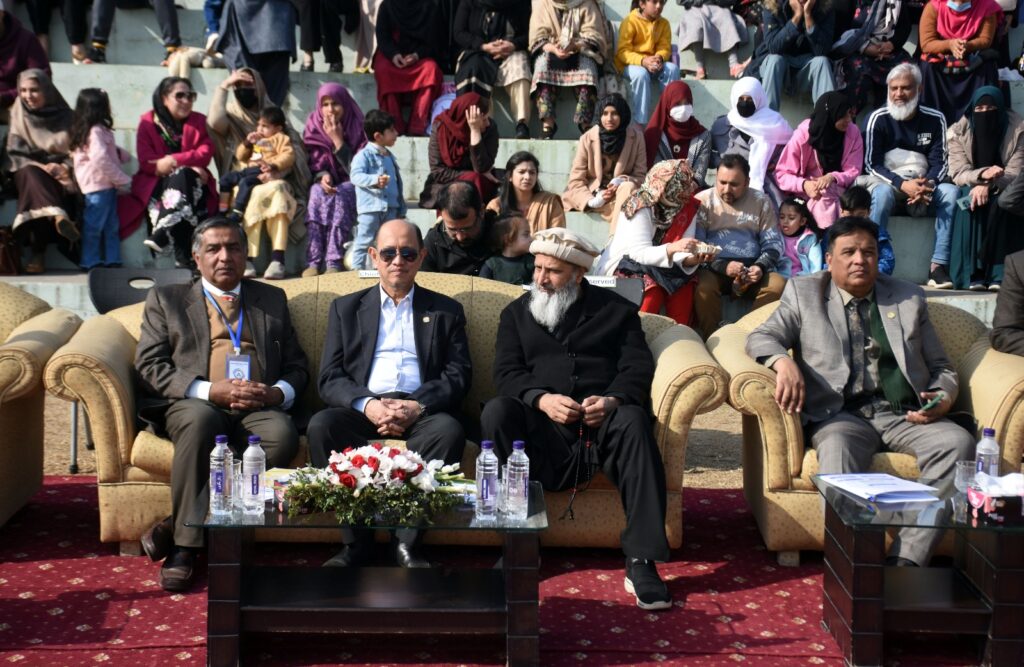 Chairman AIMS Education System, Mr. Almas Ayoub Sabir, presented souvenirs to the Chief Guest on the occasion. Mr. Almas Ayoub Sabir, whose brainchild is AIMS Education System, highlighted that the institution carries a legacy of more than 25 years of continuous efforts and is now expanding into a larger and stronger educational network.
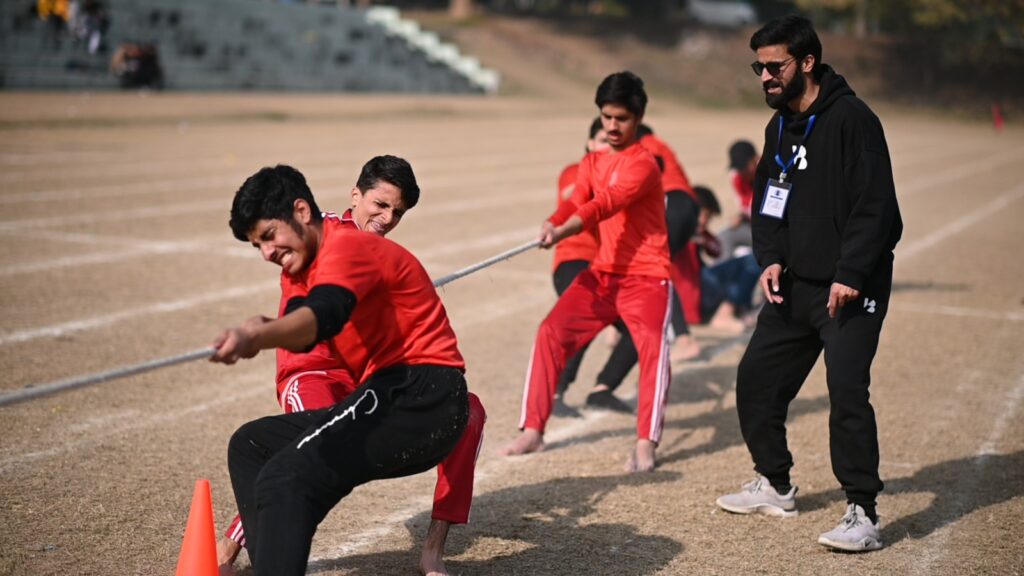
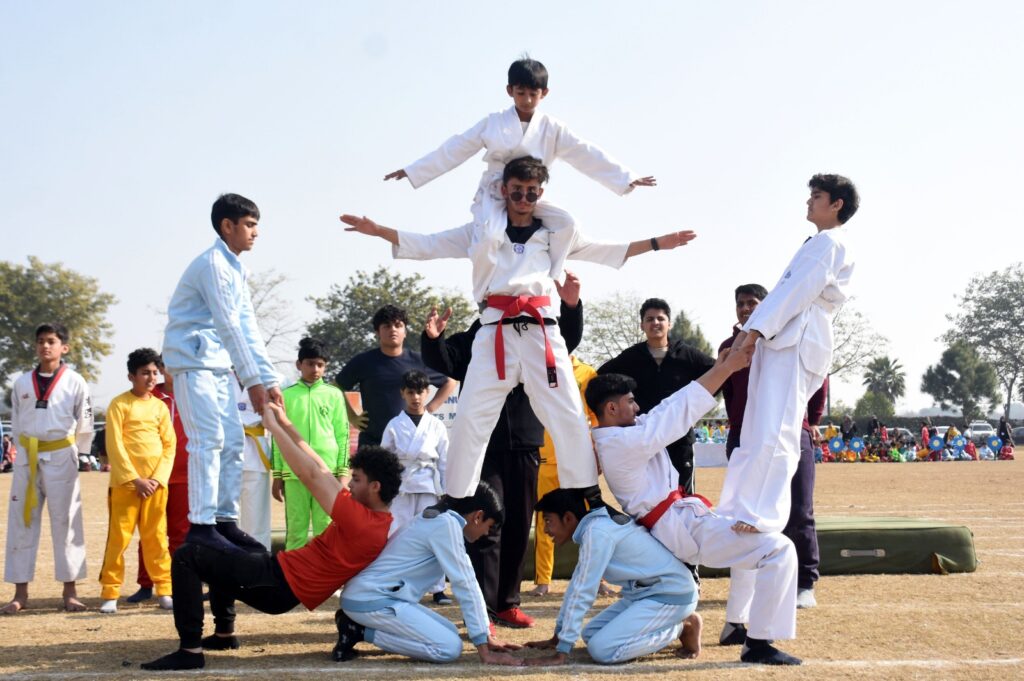 The highlights of the sports day included colorful 50m, 80m and 100m races of the Primary School students. The audience was filled with freshness and patriotism while witnessing a special segment titled “Our Blessed Pakistan” presented by the Montessori section, which emerged as one of the most memorable moments of the day. Pre-primary students delighted the audience with fun-filled races, including mixed animal race, kangaroo race, mixed vegetable race and the ever-popular win-the-chair race. The most colorful and eye-catching event was the “Blessed Pakistan Dress Up Dash,” which beautifully showcased the rich culture of Pakistan.
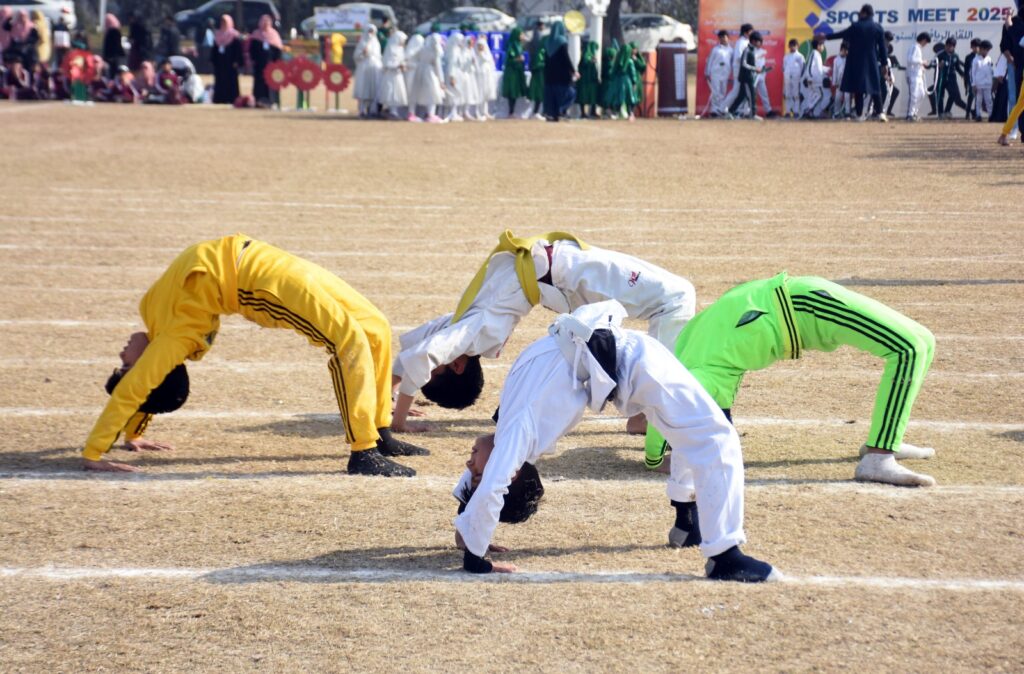 Girls from classes 4, 5, 6 and 7 presented an elegant P.T display and an impressive drill performance that captivated the audience. Breath-holding performances by the martial arts and gymnastics teams were highly appreciated by students and spectators alike. Fun-filled races for fathers were also organized, witnessing active participation from a large number of parents, which further added to the spirit of the event.
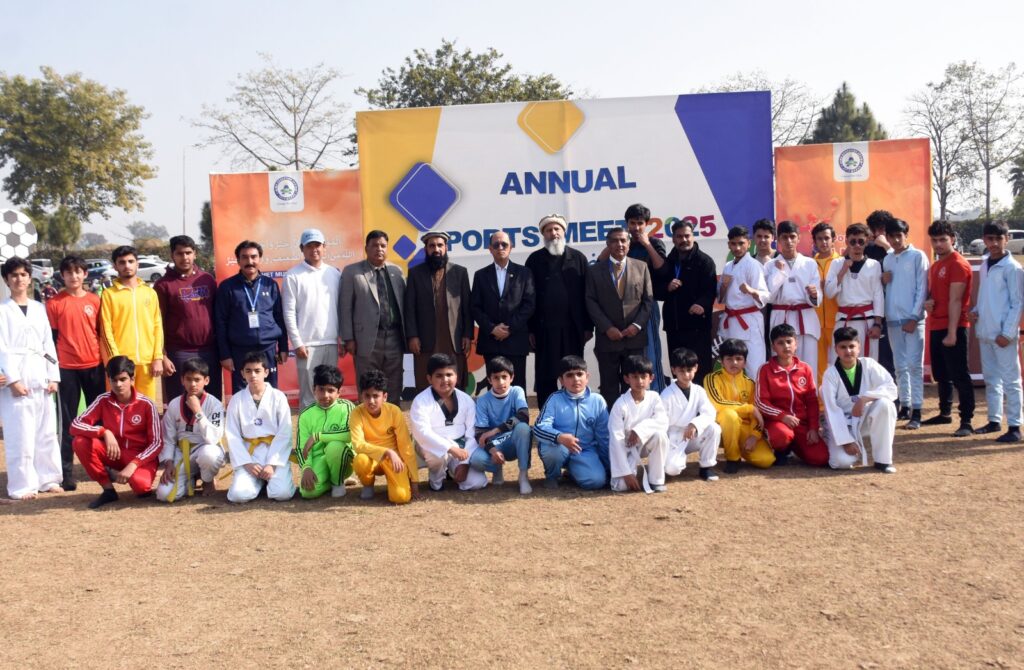 More than 2,000 trophies were distributed among the participants. The Chief Guest expressed his delight at seeing such a large number of young children participating enthusiastically and appreciated their efforts. He remarked that learning beyond the classroom through sports serves as a rejuvenating therapy for everyone. The colorful and memorable event concluded with a collective dua led by Qari Fida.
How Trump Opened the Polar Door to China
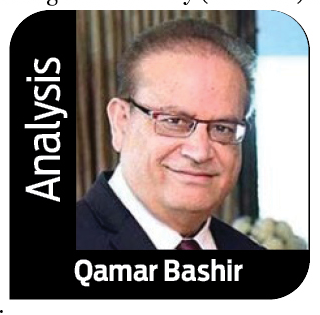
The Arctic, once a frozen frontier of quiet diplomacy and carefully balanced power, is rapidly becoming a theater of geopolitical drama. What makes this moment striking is not merely China’s growing presence in the polar north, but the pathway that has led it there. In a twist of strategic irony, policies designed in Washington to contain Beijing’s global reach appear to have instead nudged America’s closest allies toward deeper engagement with China—transforming the Arctic into a new symbol of a shifting world order.
For decades, Canada stood as one of the United States’ most dependable partners, sharing not only borders and security arrangements but also a sense of political alignment rooted in NATO, democratic values, and mutual defense. Canadian soldiers fought alongside American forces in distant theaters, reinforcing the idea of a partnership that went beyond transactional interests. Yet recent years have strained that bond, as a sharper, more unilateral American posture has unsettled long-standing assumptions about alliance and trust.
The shockwaves intensified when Washington floated the idea of exerting direct control over Greenland, framing the move as a preemptive step to block Chinese and Russian influence in the Arctic. While cast in the language of strategic necessity, the message that reverberated through Europe and North America was one of disregard for sovereignty and partnership. For Denmark and Greenland, the proposal felt less like an offer of cooperation and more like a declaration of intent, prompting unease across the Nordic region.
Against this backdrop, Canada’s reported openness to involving China in Arctic research and development takes on a deeper meaning. It is not simply about scientific collaboration or icebreaker technology; it signals a recalibration of strategic options. The Arctic’s future hinges on access, infrastructure, and year-round navigability, and in these areas, China has invested heavily. Its growing fleet of icebreakers, polar research stations, and logistical capabilities gives it a practical advantage in a region where technological capacity often matters as much as territorial proximity.
This development forms what some observers describe as a “double pincer” dynamic. On one side, China has cultivated research and commercial ties with Nordic countries under international law and bilateral frameworks. On the other, Canada’s engagement opens a transcontinental corridor of cooperation that links North America’s Arctic access with Europe’s northern gateways. The result is a network that extends China’s influence across the polar circle without the need for direct territorial claims, relying instead on partnership, investment, and technical expertise.
The strategic implications are profound. Climate change is steadily reducing ice coverage, shortening shipping routes between Asia, Europe, and North America by as much as 40 percent. What was once a seasonal passage is edging toward year-round viability, transforming the Arctic into a critical artery for global trade, energy transport, and mineral supply chains. Control over icebreaker fleets, ports, and monitoring systems becomes a form of soft power, shaping who sets the rules for access and security.
China’s Arctic engagement also dovetails with its broader Belt and Road Initiative, which has already linked more than 150 countries through infrastructure, logistics, and digital networks. The extension of this vision into polar waters reframes the initiative as not merely a land-and-sea project, but a planetary one—connecting continents through roads, ports, fiber-optic cables, and now, ice-cleared maritime corridors. For partner countries, the appeal lies in tangible investment and shared development rather than overt military alignment.
Europe’s role in this evolving landscape reflects its own reassessment of transatlantic ties. Leaders in Paris and Berlin have spoken openly about strategic autonomy, emphasizing the need to diversify partnerships in a world where U.S. policy can shift sharply with domestic politics. High-level visits to Beijing and renewed economic engagement signal a willingness to explore avenues of cooperation that Washington has discouraged, particularly in areas like research, energy, and infrastructure.
This recalibration is not driven by ideological conversion to China’s worldview, but by a pragmatic reading of interests. European states, facing energy transitions, supply chain vulnerabilities, and economic competition, see value in maintaining multiple channels of partnership. The Arctic, rich in rare earths, hydrocarbons, and strategic shipping lanes, becomes another arena where diversification seems prudent rather than provocative.
The ripple effects extend beyond the polar north. In the Middle East, China and Russia’s consistent calls for sovereignty and non-intervention have positioned them as counterweights to U.S. influence, particularly in countries wary of regime-change rhetoric. In Latin America, Beijing’s infrastructure financing and trade agreements have offered alternatives to traditional U.S.-centric economic models. Together, these trends paint a picture of a world where influence is increasingly earned through development and investment as much as through security guarantees.
For Washington, the challenge lies in reconciling the desire to protect national interests with the realities of alliance management in a multipolar era. Tariffs, threats, and public confrontations may signal resolve domestically, but they can also push partners to hedge their bets internationally. The Arctic case illustrates how strategic pressure, when perceived as overreach, can produce the opposite of its intended effect—encouraging allies to seek balance rather than alignment.
None of this suggests that the United States is losing its capacity to shape global outcomes. Its economic scale, technological leadership, and network of alliances remain formidable. But the nature of influence is evolving. In regions like the Arctic, where long-term investment, scientific cooperation, and infrastructure development determine access and authority, power is exercised quietly and incrementally rather than through dramatic declarations.
The deeper lesson may lie in the unspoken reality of international politics: every nation, whether it proclaims it or not, puts its own interests first. What differentiates successful strategies is not the assertion of primacy, but the ability to align national goals with the aspirations of partners. When cooperation feels mutually beneficial, alliances endure; when it feels conditional or coercive, alternatives emerge.
As the ice recedes and shipping lanes open, the Arctic will continue to draw the attention of powers near and far. It will test whether established alliances can adapt to new economic and environmental realities, or whether emerging networks of partnership will redefine the region’s governance. In this unfolding story, China’s growing presence is not solely the result of its own ambition, but also of the spaces created by others’ missteps.
The coming years will reveal whether Washington chooses to recalibrate—investing in polar infrastructure, engaging allies in shared development plans, and framing Arctic security as a collective endeavor rather than a zero-sum contest. Such an approach could rebuild confidence and reassert leadership without forcing partners to choose sides.
If not, the Arctic may become a lasting symbol of a broader global shift: a world where influence flows toward those who build, connect, and invest, rather than those who command and confront. In that sense, the frozen north is no longer just a remote frontier—it is a mirror reflecting the changing dynamics of power in the twenty-first century.
The writer is Press Secretary to the President (Rtd),Former Press Minister, Embassy of Pakistan to France,Former Press Attaché to Malaysia and Former MD, SRBC. He is living in Macomb, Michigan
Blaze rages for 10 hours at Gul Plaza; death toll rises to five

Sindh Rangers, 20 fire tenders, 4 snorkels taking part in operation; around 80 people still trapped
Spokesman Report
Karachi: Firefighters are still battling to control a massive blaze that broke out at Gul Plaza on M.A. Jinnah Road on Saturday night. Despite efforts, the fire remains uncontrollable even after 10 hours
According to media reports, the death toll in the fire has now climbed to five, while at least 20 people were injured, some in critical condition.
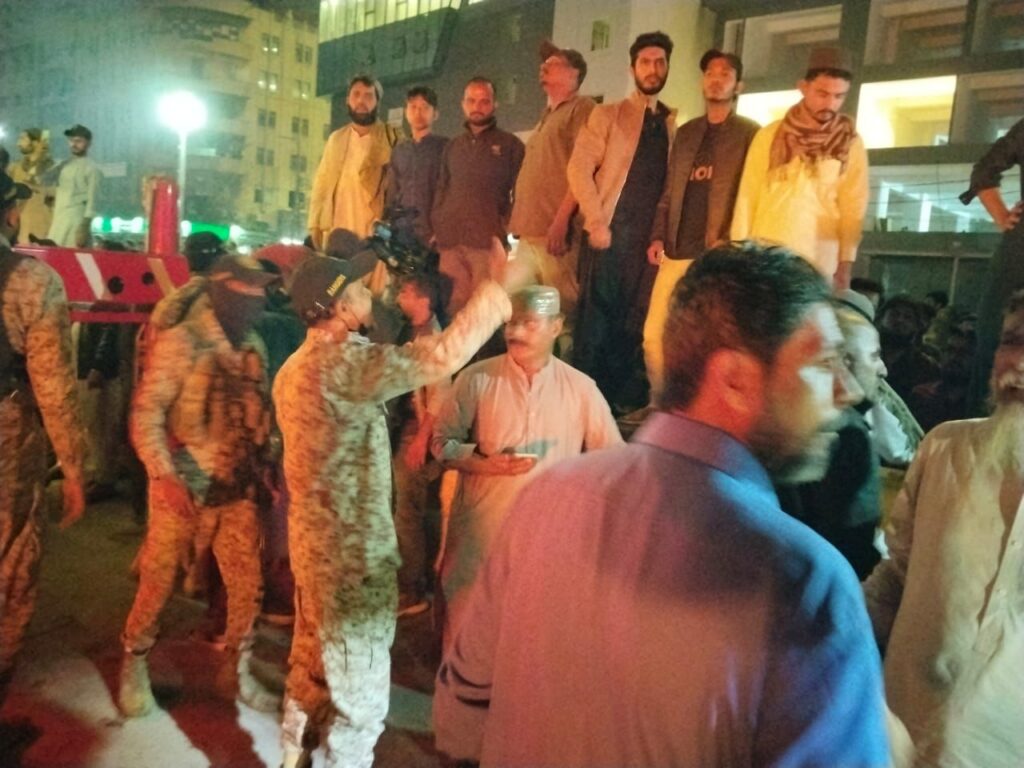 According to fire brigade officials, 20 fire tenders, 4 snorkels, and a water bowser were being used to control the fire. The Sindh Rangers and Pakistan Navy’s fire tenders are also assisting in the operation.
A part of the building’s pillar has collapsed due to the fire, while all the shops on the ground floor have been destroyed.
The KMC’s chief fire officer stated that the fire broke out around 10.15pm on Saturday and was soon categorised as a third-degree fire.
Rescue officials have reported that many individuals are believed to be trapped inside the shopping plaza.
The fire originated on the ninth floor, and soon spread to the ground and first floors, engulfing several stores.
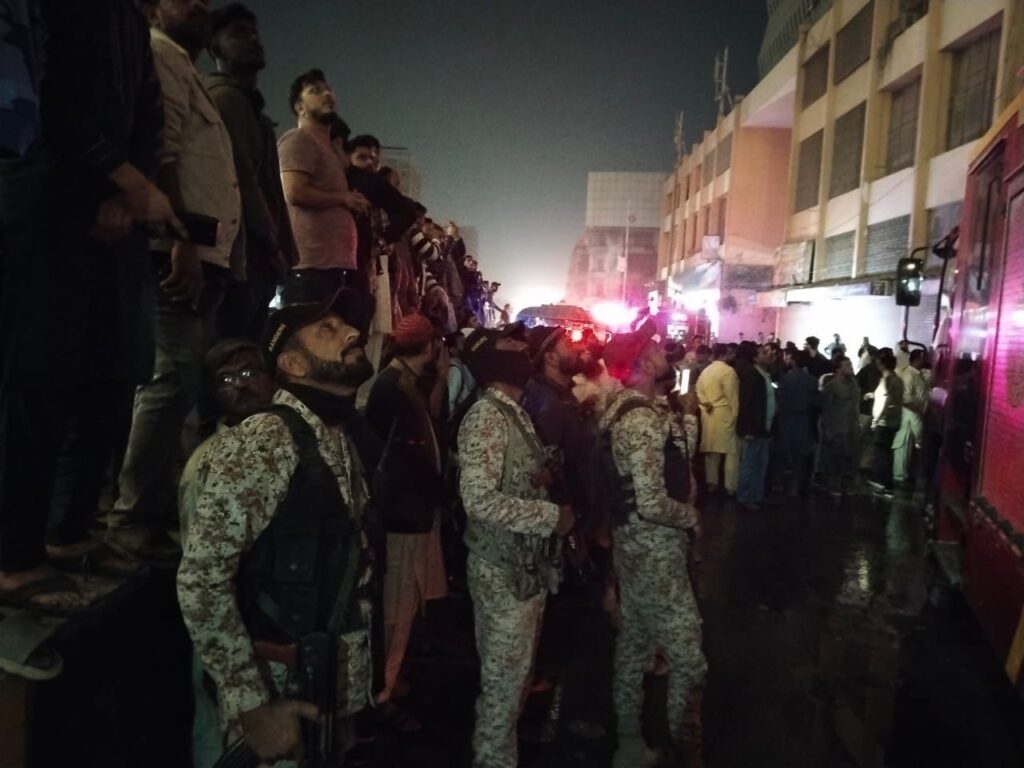 Gul Plaza, which consists of the ground, mezzanine and two additional floors, is one of the largest shopping centres in the area, with around 1200 shops.
Senior Fire Officer Arif Mansoori mentioned that firefighters have been unable to enter the building due to intense heat, which has made rescue efforts difficult.
The identities of four of the deceased have been confirmed as Faraz, Kashif, Aamir, and Shahroz.
The chief fire officer said that the fire spread to other floors rapidly after a powerful explosion inside the building. Authorities attribute the explosion to a gas leak.
During the rescue operation, two individuals were injured when the fire brigade’s ladders collapsed.
Traffic disruptions
Due to the fire, several roads in the vicinity, including M.A. Jinnah Road, Garden Chowk, and Anklesaria Chowk, have been closed.
Traffic has been diverted from Tibet Chowk towards Jubilee and from Anklesaria Chowk to Garden Chowk.
Sindh’s Interior Minister, Ziaul Hassan Lanjhar, has called for the opening of alternate traffic routes to ensure the safety of citizens and ordered an investigation to ascertain the cause of the fire.
He also instructed that firefighting vehicles and personnel be given clear access to the site.
A Sindh Rangers spokesperson said that their teams have reached the scene and are participating in rescue operations.
Rescue and relief operations
Tariq Qasim, the president of the Gul Plaza Traders’ Association, claimed that approximately 80 to 100 people are still believed to be trapped inside the building.
However, he clarified that all customers have been evacuated.
He claimed that the fire started at a shop selling artificial flowers, which quickly spread throughout the building.
Qasim estimated that the fire has caused billions of rupees in losses.
Karachi Mayor, Murtaza Wahab, expressed deep sorrow over the loss of life and assured that relief efforts were ongoing.
He emphasised that immediate assistance would be provided to the victims to prevent further casualties.
New Performance Metrics for Ambassadors: From Political Talk to Concrete Trade Deals
Spokesman Report
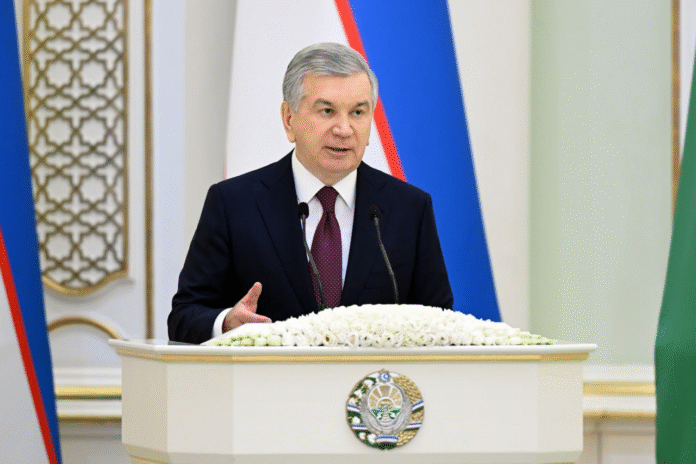
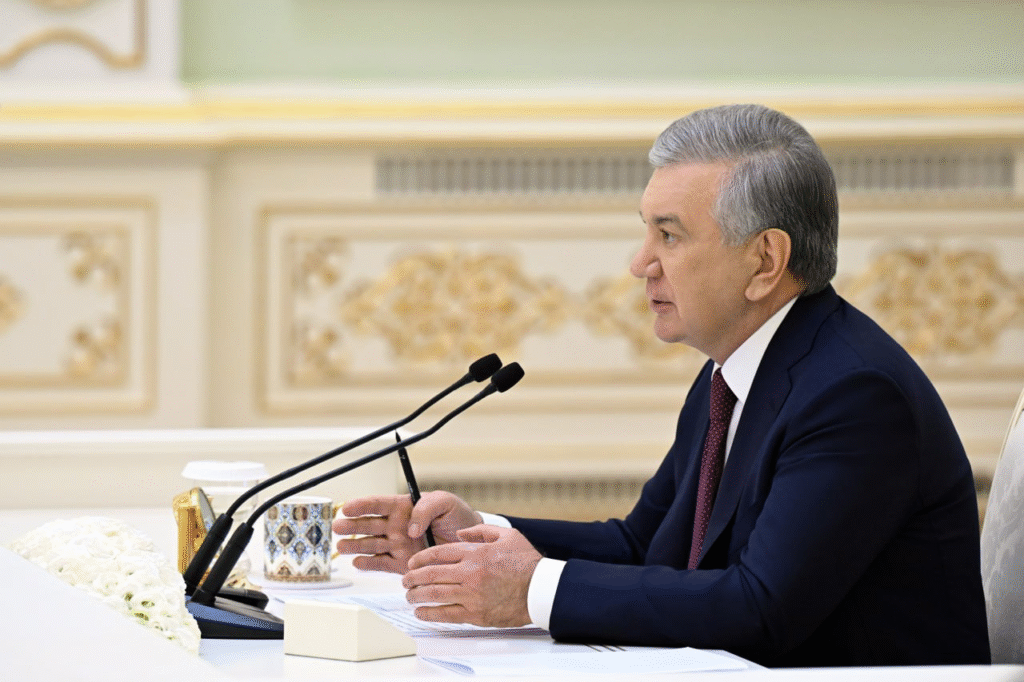
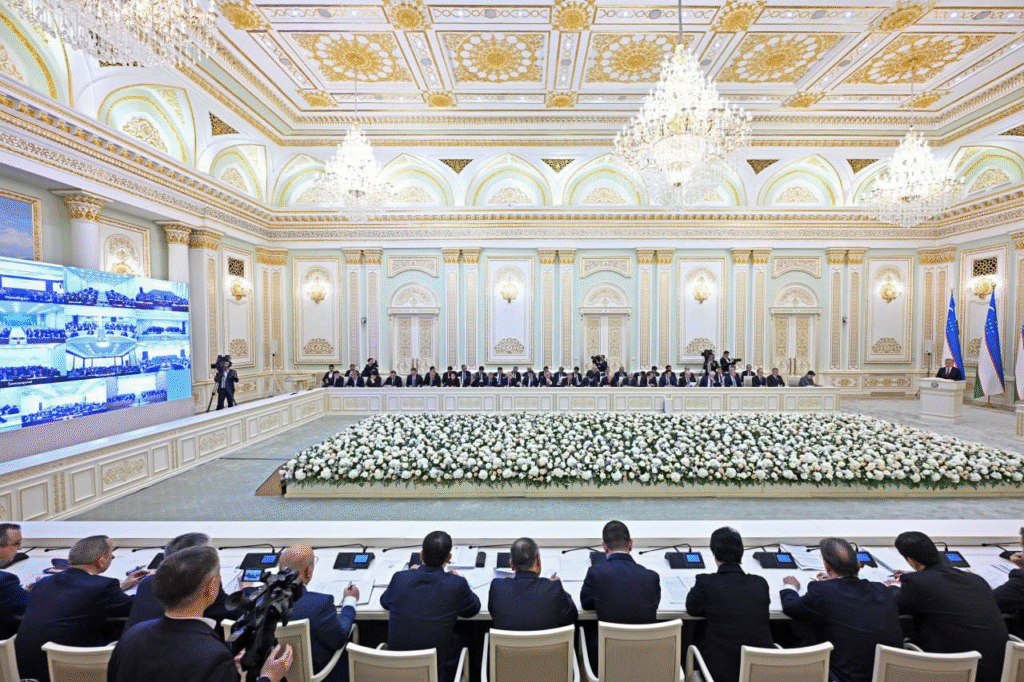
Islamabad: On January 15, an expanded meeting was chaired by President Shavkat Mirziyoyev on the activities of the Ministry of Foreign Affairs and diplomatic missions abroad.
Opening the session, the Head of our state noted that the meeting is taking place amid sharp geopolitical changes in the world and increasing threats to the sovereignty of states. In this regard, the need to critically assess current foreign policy activities and move to a renewed format for organizing the work of the Ministry of Foreign Affairs and foreign diplomatic missions was emphasized.
The President noted that 2025 had been a productive year for the country’s foreign policy. During the year, high-level visits were made to 26 foreign countries, and for the first time in recent history, visits to Uzbekistan were organized by the leaders of a number of countries. Multilateral dialogues in the “Central Asia Plus” format became productive. In recent years, strategic partnerships have been established with 11 countries, bringing the total number to 19, and allied relations have been built with Kazakhstan, Azerbaijan, and Tajikistan.
 – As a result of an open, pragmatic, thoughtful and proactive foreign policy, Uzbekistan is consistently strengthening its position as one of the global centres of peace and diplomacy, – emphasized the President.
Since 2017, 16 new diplomatic missions and consulates have been opened abroad, bringing their total number to 60, and the number of countries with which diplomatic relations have been established to 165. There has also been an increase in the number of staff and salaries of employees of embassies, consular offices, representative offices to international organizations, and employees of the Ministry of Foreign Affairs.
At the same time, a fundamental question was raised as to whether all diplomatic missions are making full use of the opportunities provided.
– In the current environment, an ambassador is not just a person who conducts political dialogue. An ambassador is a state representative who attracts investment and technologies, opens new export markets, launches transport and logistics corridors, increases tourist flows, creates conditions for legal labor migration and, most importantly, protects the rights of our citizens, – emphasized the President.
In this regard, it was noted that key performance indicators for ambassadors should include the volume of export revenues from the countries of residence, growth in tourist flows, and the effectiveness of organizing legal labor migration.
Particular emphasis was placed on the need to increase exports and investments by strengthening economic diplomacy.
 As part of bilateral and multilateral events in 2025, agreements were signed on investment projects and trade contracts totaling $160 billion. For the first time in history, foreign trade turnover exceeded $80 billion, exports reached $33,5 billion, and foreign investment exceeded $43 billion. Exports to 75 countries increased by almost $4,5 billion.
In view of this, the ambassadors have been tasked with expanding export deliveries to the Middle East, Europe, Asia, and Africa, as well as implementing specific projects in the fields of industry, agriculture, the chemical industry, the textile industry, greenhouse farming, and the service sector. At the same time, it was noted that Uzbekistan’s products remain insufficiently recognized in certain markets.
It was noted that the growth of logistics costs has a negative impact on the competitiveness of domestic products. In this regard, the need to diversify transit routes, optimize logistics chains, and develop additional proposals to reduce transportation costs when entering European markets was indicated.
In the agricultural sector, tasks have been set for researching and implementing water-saving technologies, modern agricultural technologies, and innovative greenhouse solutions. Along with this, measures have been outlined to expand export markets for chemical industry products, bring domestic manufacturers up to international standards and requirements, and organize specialized exhibitions and presentations.
The need to intensify trade and economic cooperation with the African continent as one of the promising new export destinations has been emphasized. To this end, a clear roadmap is to be developed with the participation of relevant ministries and foreign diplomatic missions.
It was noted that ambassadors should be directly interested in finding promising projects, attracting them, and implementing them in practice. In this regard, it was decided to introduce financial incentives for ambassadors who bring specific investment or export projects to a logical conclusion.
Criticism was levelled at the insufficient realisation of existing potential in a number of areas. In particular, it was noted that opportunities to attract international grants are not being fully exploited. It was noted that with closer and more systematic interaction between ministries, industry leaders, and ambassadors, it would have been possible to attract an additional $200-300 million in grant funds last year.
As noted, international organizations and donor countries announce grant programs worth approximately $200 billion annually. In this regard, the task has been set to implement a unified, systematic, and effective approach to working with grants.
In addition, the need to take concrete measures, together with the ambassadors to the United States, the United Kingdom, Germany, Switzerland, China, Japan, and Singapore, to attract leading foreign universities ranked in the top 100 worldwide as partners of Uzbek higher education institutions was emphasized.
It was noted that cooperation between regions and diplomatic missions in expanding foreign economic relations is still insufficient. The need for active participation of regional governors, together with ambassadors, in the systematic promotion of export-oriented products of the regions and in facilitating the entry of local enterprises into foreign markets was emphasized.
Providing Uzbek citizens with legal and high-paying jobs abroad was identified as another priority area. The expansion of the geography of organized labor migration was noted, while it was pointed out that in a number of countries, work in this area is not sufficiently effective, and relevant instructions were given in this regard.
It was emphasized that embassies and consulates should actively protect the rights and legitimate interests of citizens and provide qualified legal assistance in each specific case. The task has been set to abandon “office diplomacy”, strengthen work in the field, and establish direct dialogue with compatriots.
In the field of tourism, the need to further strengthen the role of ambassadors, introduce new approaches to promoting the country’s tourism and cultural potential, make effective use of visa-free regimes, and attract international outsourcing companies has been identified.
Issues related to expanding foreign policy ties, high-quality and timely preparation of high-level visits, retraining of diplomatic personnel, and the formation of a reserve of promising specialists were also discussed.
The intensification of foreign information policy and the improvement of the country’s international image through systematic work with foreign media and the implementation of special media projects were identified as priority tasks.
The need to update the Concept of foreign policy of the Republic of Uzbekistan, review its priority areas, and define clear tasks for protecting national interests and strengthening the country’s position in the international arena was emphasized.
As the President noted, the new concept should comprehensively reflect long-term strategic goals, the logic of internal reforms, as well as national interests in the areas of economic diplomacy, security, investment, exports, transport and logistics, water and climate issues.
In order to give proper recognition to the achievements of diplomats, it was proposed to establish the honorary title of “Honored Diplomat of the Republic of Uzbekistan”.
At the end of the meeting, President Shavkat Mirziyoyev emphasized: “The time has come for a new generation of diplomats – those who achieve concrete results and firmly defend the interests of Uzbekistan in the international arena”.
In the course of the session, reports and proposals of our ambassadors abroad were heard.

