News Desk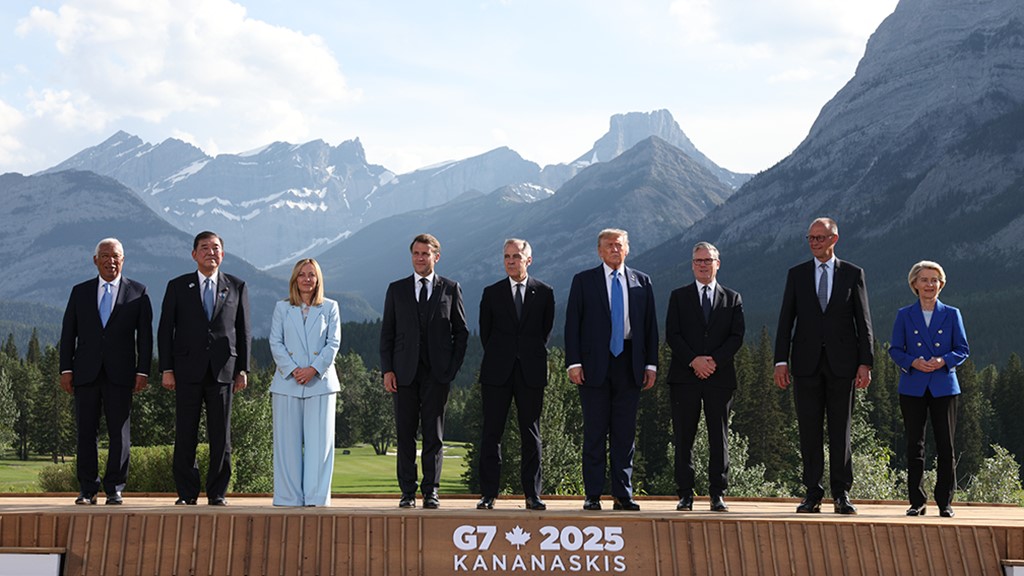
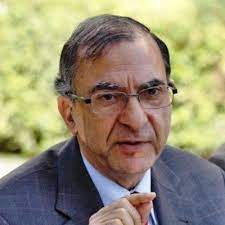 Dr. Ghulam Nabi Fai
A Summit in the Shadow of Silence
The 51st G7 Summit, hosted in Kananaskis, Alberta this June, brought together the leaders of the world’s most powerful democracies. Among the invited guests was Indian Prime Minister Narendra Modi — a leader whose government stands credibly accused of transnational repression and foreign interference, including within the very borders of the host country.
Prime Minister Mark Carney, in his concluding statement, affirmed that “The G7 Leaders underscored their resolve to ensure the safety and security of communities. They condemned foreign interference, underlining the unacceptable threat of transnational repression to rights and freedoms, national security and state sovereignty.” But that declaration rang hollow with the presence of Narendra Modi, whose record directly contradicts those principles.
Allegations Too Serious to Ignore
Dylan Robertson of The Canadian Press reported that Canadian intelligence officials have long identified Modi’s government as a key perpetrator of foreign interference. Last October, RCMP Commissioner Mike Duheme confirmed evidence linking Indian officials to criminal activity in Canada — including extortion, coercion, and homicide. The murder of Canadian citizen Hardeep Singh Nijjar was not just a tragedy; it was a violation of Canadian sovereignty. Ottawa expelled six Indian diplomats as a result.
The pattern continues beyond Canada. In November 2023, The Los Angeles Times reported that the United States thwarted an assassination attempt on Sikh leader Gurpatwant Singh Pannun. The FBI launched an investigation, raising concerns of Indian state involvement.
Modi’s Long Record of Rights Violations
This is not an aberration. In 2005, the U.S. denied Modi a visa due to his role in the 2002 Gujarat riots, citing “particularly severe violations of religious freedom.” That ban remained in place until he became Prime Minister.
The facts are clear: Narendra Modi has a well-documented history of human rights abuses — both past and present. And yet, in Kananaskis, G7 leaders looked away.
Canada’s Human Rights Legacy in Retreat
It wasn’t always this way. Canada once played a defining role in global human rights advocacy. John Humphrey, the Canadian jurist who authored the first draft of the Universal Declaration of Human Rights, envisioned a world built on dignity and justice. Canada’s General Andrew McNaughton was pivotal in passing UN Security Council Resolution 47 in 1948, promising the people of Kashmir a plebiscite to determine their political future.
That promise was never fulfilled. India reneged, suppressing Kashmiri aspirations through military occupation and political subjugation. Today, Kashmir remains one of the most militarized regions on earth, haunted by stories of enforced disappearances, torture, and repression.
No Peace Without Justice in Kashmir
Despite Modi’s claims of “development” in Kashmir, economic investment cannot erase the decades-long trauma experienced by its people. The violence, fear, and humiliation remain very real.
Former World Bank President James Wolfensohn was prescient when he stated that “peace and stability will not return to South Asia unless Pakistan and India sort out the Kashmir conflict amicably.” Renowned historian Stanley Wolpert echoed the sentiment, calling for a just and equitable resolution.
Even U.S. President Donald Trump — in his own unconventional way — acknowledged the centrality of Kashmir to regional peace. After brokering a ceasefire between India and Pakistan in May 2025, he wrote, “I will work with both nations to find a solution for Kashmir.” While Modi later dismissed Trump’s mediation, the message was clear: peace requires confronting the truth.
G7: Put Principles Before Profits
The G7 countries must decide what they truly stand for. Are they guardians of democratic values — or merely platforms for economic diplomacy?
By welcoming Modi without addressing these grave allegations, the G7 sent the wrong message: that trade trumps justice, and power outweighs principle. But ignoring Kashmir today only increases the risk of catastrophe tomorrow.
A Call for Leadership
India must live up to the democratic ideals it so often proclaims. And the world’s leading democracies must rediscover the moral courage that once defined them. Supporting peace, justice, and the right to self-determination in Kashmir is not just a regional imperative — it’s a global one.
The people of Kashmir deserve to chart their own future. The world cannot look away any longer.
Dr. Fai is also the Secretary General, World Kashmir Awareness Forum.He can be reached at: WhatsApp: 1-202-607-6435. Or. [email protected]