 Qudrat Ullah
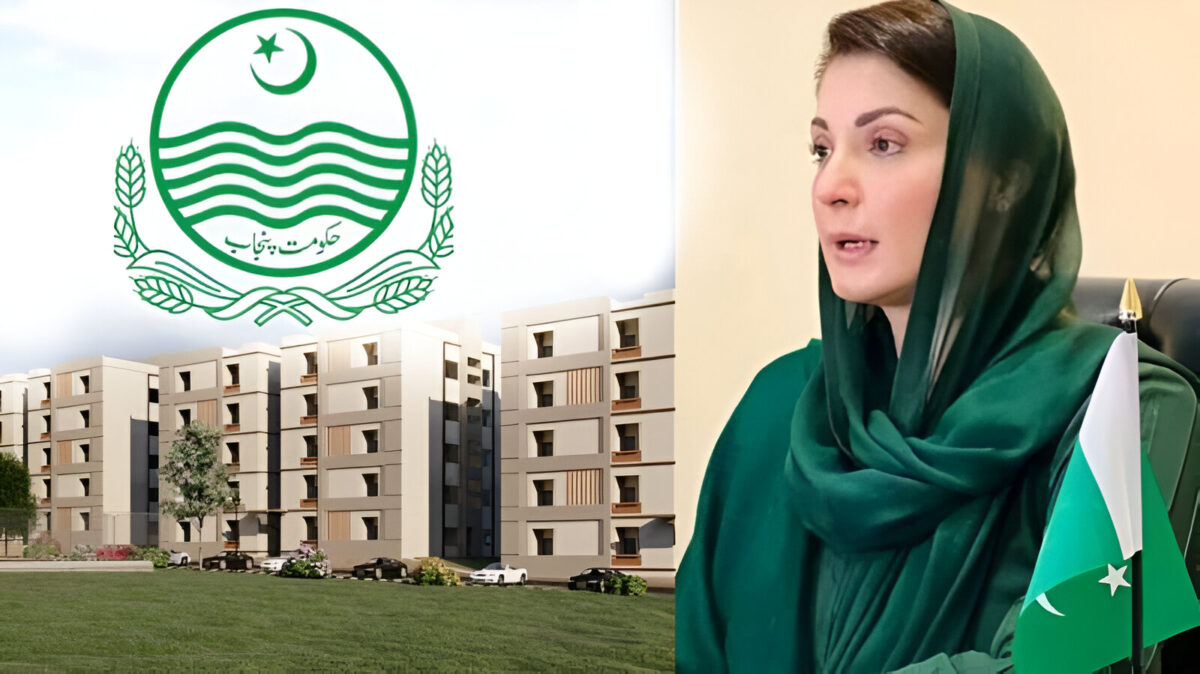
Chief Minister Punjab Maryam Nawaz Sharif has launched a housing drive that stands out for its ambitious scale and remarkable speed of execution, reflecting her strong commitment to public welfare. Under Apni Chhat, Apna Ghar and its companion scheme Apni Zamin, the government has sought to align a deeply popular cause—secure housing for the poor—with a delivery mechanism designed to be visible, measurable, and fast. In doing so, she is attempting to distinguish her tenure from predecessors whose promises often collapsed under the weight of bureaucratic inertia and political overstatement.
The twin programmes mark a shift from merely providing constructed houses to addressing the deeper structural issue of landlessness. Having already disbursed more than 50,000 loans within the first year, the chief minister has pledged to distribute free residential plots to the homeless poor, beginning with 2,000 plots across 19 towns. Beneficiaries will also be eligible for interest-free loans to build on their land. She has framed the commitment in personal terms, declaring it a “mission” close to her heart and promising that no family in Punjab will be evicted for an inability to pay rent.
Since its launch in late 2023, Apni Chhat, Apna Ghar has produced around 9,000 completed houses and supported the construction of 45,000 more. Loan disbursements are expected to reach 75,000 by the end of Aug 2025, with the programme aiming for 100,000 homes in 18 months and half a million over five years. The provincial government calculates that 2.5 million people will ultimately benefit. Yet demand has far outstripped supply: registrations have topped 1.5 million, and applications have crossed seven million. CM Maryam Nawaz Sharif has presented this rush as evidence of public trust in the scheme’s transparency and merit-based selection.
The housing drive is repeatedly linked to a broader provincial development agenda: Clinics on Wheels for mobile healthcare, water supply improvements in south Punjab and pothohar, and the transformation of 24,000 villages into “model settlements” with paved roads, upgraded sewerage, and refurbished schools and hospitals. This integrated framing is politically astute, situating housing within a comprehensive social uplift strategy.
CM Maryam Nawaz’s speeches have been rich in anecdotes. She recounts labourers who once carried bricks for others now building homes of their own, and families who began construction within weeks of receiving loans. The design is pointedly pro-poor: loans are entirely interest-free, repayable over nine years, with instalments capped at Rs15,000 per month. Repayments have already begun, with more than Rs1 billion returned to the programme—evidence, she argues, that beneficiaries value the opportunity and honour their commitments.
Her target—150,000 homes annually, half a million in five years—is both ambitious and achievable. By extending the programme to include free land under Apni Zamin, Apna Ghar, she aims to give even the poorest a permanent stake in society.
This avant-garde initiative resonates deeply with Islamic teachings. The Quran repeatedly enjoins believers to care for the underprivileged and vulnerable. In Surah Al-Baqarah (2:177), righteousness is described not only as ritual devotion but also as giving wealth “to relatives, orphans, the needy, the traveler, and those who ask.” The provision of housing addresses one of the most basic human needs, embodying the Qur’anic principle of securing dignity for the poor. In Surah An-Nisa (4:36), Muslims are commanded to “do good to parents, relatives, orphans, the needy, the near neighbour and the distant neighbour.”
The Holy Prophet Muhammad (Peace Be Upon Him) reinforced these injunctions with practical teachings. In a hadith recorded in Sahih Muslim, He said: “He is not a believer whose stomach is filled while his neighbour goes hungry.” If hunger invalidates faith, then homelessness carries an even heavier moral weight. Another narration in Musnad Ahmad records Him saying: “The best of you are those who are most beneficial to others.” Providing housing is among the greatest benefits, for it transforms lives. Early Islamic governance under Caliph Umar ibn al-Khattab reflected this ethos; he ensured that widows, orphans, and the landless had secure living arrangements, recognising shelter as part of haqq-ul-ibad—the rights of Almighty Allah’s creation upon the state.
Classical scholars, too, saw housing as a state duty. Imam Al-Ghazali, in Ihya Ulum al-Din, described governance as a trust (amanah) and warned rulers that neglect of the poor would bring divine accountability. Ibn Khaldun, in his Muqaddimah, stressed that social cohesion rests upon meeting the basic needs of the weakest citizens, arguing that secure ownership fosters stability and loyalty to the state. Punjab’s housing programme, in this light, is both a welfare initiative and an instrument of political legitimacy.
Viewed against Asian parallels, Punjab’s approach stands out. India’s Pradhan Mantri Awas Yojana sanctioned more than 12 million houses but was slowed by financing hurdles and land disputes. Bangladesh’s Ashrayan Project distributed over half a million homes, empowering women by granting joint ownership—something Punjab could emulate. Indonesia’s One Million Houses Programme relied heavily on developers, often sidelining the poorest. China focused on affordable rentals integrated with employment hubs. Punjab’s distinctive contribution is its mix of free land distribution, interest-free loans, and transparent verification—a design leaning strongly towards equity.
For the poor, home ownership brings benefits beyond shelter. It creates assets that appreciate in value, breaking cycles of tenancy and exploitation. Stable housing boosts school attendance, improves health outcomes, and provides a base for small-scale businesses. When integrated with schools, clinics, and water systems, new colonies can become self-sufficient communities rather than neglected ghettos. In Islamic moral reasoning, this is ihsan—excellence in serving humanity—elevating governance into an act of collective worship.
The risks, however, are significant. Sustaining such a scheme requires disciplined financial management and reliable repayment cycles. Economic shocks or widespread defaults could undermine momentum. Rapid construction risks quality compromises, while poor integration into municipal infrastructure could turn settlements into under-serviced enclaves.
Politically, the stakes are high. If the government meets its targets with transparency and quality, CM Maryam Nawaz will emerge as a leader who delivers on her promises. By framing the initiative as both development policy and moral obligation rooted in Islam, she has given it a legitimacy that transcends party politics. She often describes it as a “motherly promise” to the poor, aligning governance with compassion, which resonates deeply in Pakistan’s cultural and religious imagination.
If sustained with discipline and integrity, Apni Chhat, Apna Ghar can do more than house the homeless—it can reshape Punjab’s social landscape, redefine the state’s relationship with its weakest citizens, and fulfill the Qur’anic injunction to uplift the dispossessed. The wisdom of Islamic jurists, the precedents of the caliphs, and the injunctions of the Qur’an all converge on one point: the provision of secure housing is not charity but duty, not politics but justice. By placing housing at the heart of her government, CM Maryam Nawaz has set the foundation for a lasting legacy—one that promises a brighter and more prosperous future for Punjab.
(The writer is a Lahore-based public policy analyst and can be reached at [email protected])