 Syed Munir Ahmed
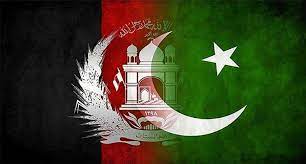
The question of whether Afghanistan will eventually accept Pakistan’s stance regarding the Tehrik-e-Taliban Pakistan (TTP) remains deeply uncertain, and increasingly urgent, as cross-border militancy continues to shape the strategic environment between the two neighbours. For Pakistan, the issue is straightforward: Afghan soil must not serve as a sanctuary for a group that has waged a relentless insurgency against Pakistan. For Kabul, the matter is far less simple, layered with ideological affinities, tribal linkages, internal political pressures and historical grievances that constrain its ability, and in some cases willingness to take decisive action.
Pakistan’s position has hardened over the past two years, particularly in response to a notable rise in TTP attacks. Islamabad views the Afghan Taliban’s takeover in 2021 as a turning point that inadvertently empowered the TTP, providing them with space, resources and psychological momentum. The pattern is visible: a spike in ambushes, targeted killings, attacks on security forces and cross-border infiltrations. Islamabad argues that these operations are orchestrated from inside Afghanistan, often with the knowledge of local commanders who either sympathise with the TTP or lack the capacity to restrain them. Pakistan’s national security establishment sees this as an intolerable situation — one that violates the basic principle of good-faith neighbourly conduct.
Kabul, however, maintains a public stance that there are “no TTP safe havens in Afghanistan,” a statement repeated frequently in response to Pakistani complaints. But Pakistan views these assurances as superficial and unverifiable. The Afghan Taliban’s reluctance to acknowledge TTP presence stems not only from ideological overlap — as both movements share a jihadist lineage — but also from domestic political realities. The TTP includes fighters who once fought alongside the Afghan Taliban, and many Afghan commanders are hesitant to turn against former mates. Moreover, multiple TTP leaders and fighters belong to border tribes whose loyalties blur the lines of state authority. Kabul fears that a heavy-handed crackdown could spark internal fragmentation, especially in the eastern provinces where local commanders hold considerable autonomy.
This internal complexity makes it difficult for the Afghan leadership to simply accept Pakistan’s demands, no matter how justified they may be from the standpoint of international law and bilateral security norms. Still, Pakistan believes that Kabul must rise above internal considerations and act as a responsible state actor. Islamabad insists that no sovereign country can accept cross-border attacks as a “tribal problem” or an unavoidable by-product of regional geography. For Pakistan, whose security forces have paid an extraordinarily high price in lives and resources, the expectation is clear: Afghanistan must prevent its territory from being used against Pakistan, with verifiable steps rather than symbolic statements.
The Istanbul talks earlier this year crystallised this problem. Pakistan entered the discussions with concrete proposals, including dismantling known TTP camps, handing over key TTP figures, and instituting joint border-monitoring mechanisms. But Afghan negotiators reportedly refrained from making firm commitments, repeatedly referring decisions back to Kabul. Pakistani participants privately described the Afghan stance as evasive — a sign that Kabul was unwilling or unable to confront the TTP issue at the level Pakistan expects. The talks ended without a breakthrough, prompting Islamabad to warn that its “patience has run its course” — a signal that Pakistan may consider unilateral action if diplomacy stalls indefinitely.
Another layer complicating acceptance is the unresolved issue of the Durand Line. Afghanistan’s refusal to formally recognise the border is not symbolic; it has practical consequences for border management, intelligence cooperation and counter-infiltration operations. From Pakistan’s view, the border is internationally recognised and non-negotiable, and its fencing, monitoring, and enforcement are indispensable for national security. Kabul’s rhetorical ambiguity on the Durand Line undermines cooperation and fuels mistrust, making Pakistan less confident that Afghanistan will adopt the strict border controls necessary to curb TTP movement.
Pakistan must therefore operate on dual tracks. A firm diplomacy paired with credible leverage. While Pakistan does not seek escalation, it cannot allow the status quo to persist. The state must retain the capacity to apply calibrated pressure, including political, economic and military tools, to convey that the TTP issue is not a matter that can be indefinitely postponed. However, Pakistan also understands the risks of an unrestrained kinetic approach. Airstrikes alone cannot resolve an insurgency rooted inside another sovereign state. Any military pressure must be carefully synchronised with diplomatic engagement and third-party mediation, possibly led by Qatar, Turkey or China, to prevent escalation into open conflict.
Even so, Pakistan is not without incentives it can offer. Afghanistan today faces a dire economic environment with frozen assets, limited recognition and humanitarian strain. Pakistan remains a critical trade and transit route for Afghan goods. Islamabad could tie progress on TTP dismantling to phased economic facilitation, streamlined border procedures, and broader diplomatic normalisation. A mutually beneficial framework could help recalibrate Kabul’s calculations. But such incentives make sense only if Afghanistan demonstrates verifiable steps such as reducing TTP cross-border operations, restricting leadership movement, and initiating a transparent monitoring mechanism.
Ultimately, the question of acceptance hinges on whether Kabul sees compliance with Pakistan’s security demands as a strategic necessity rather than a political burden. Pakistan’s argument is simple: peaceful coexistence is impossible while TTP militants attack Pakistan from Afghan soil. Afghanistan must make a clear choice between ambiguous tolerance and responsible state conduct. Pakistan cannot afford indefinite ambiguity.
For now, Afghanistan is unlikely to fully accept Pakistan’s stance on the TTP. But partial convergence is possible if Pakistan pursues a patient yet firm strategy, combining pressure, incentives, and verifiable mechanisms. Pakistan’s security concerns are legitimate, urgent and rooted in empirical reality. Unless Kabul acts decisively, Pakistan may be compelled to employ stronger measures. The window for a diplomatic solution remains open, but narrower than ever, and closing rapidly if words do not translate into action.
The writer is an Executive Director, Devcom Centre for Geopolitical Studies, development expert and policy analyst focused on regional cooperation and climate diplomacy. His email: [email protected]