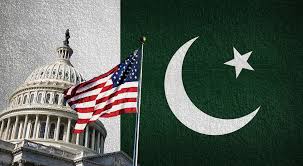
 What is striking about the recent analysis published by The Washington Times is not merely the optimism it expresses about Pakistan–United States relations, but the speed and scale of the transformation it describes. If the account is even partially accurate, 2025 will stand out as a year in which Washington quietly but decisively rewrote its South Asia playbook, moving away from an almost reflexive India-first posture toward a more complex, Pakistan-inclusive strategic vision. Such reversals are rare in U.S. foreign policy, which tends to change incrementally, and rarer still when they involve countries long burdened by distrust and fatigue in Washington.
For much of the past decade, Pakistan occupied an uncomfortable space in American thinking: too important to ignore, too problematic to embrace. Engagement was largely transactional, limited to counterterrorism coordination or crisis management, and often framed by suspicion. India, by contrast, was elevated as the natural democratic counterweight to China, courted through multilateral forums and strategic symbolism. The assumption in many U.S. policy circles was that New Delhi would mature into a regional stabilizer while Islamabad would gradually fade into managed irrelevance.
The Washington Times argues that this assumption began to unravel under the weight of reality. Internal political trends in India, concerns over civil liberties, diplomatic inflexibility, and questions about military effectiveness reportedly introduced doubts in Washington about the long-term sustainability of an India-centric regional order. At the same time, Pakistan began to reassert itself not through grand declarations, but through quiet, functional cooperation. The first thaw, according to the article, came via discreet counterterrorism exchanges that demonstrated capacity, discipline, and reliability rather than rhetoric. In a city like Washington, where performance often matters more than promises, this appears to have resonated.
Momentum accelerated in March 2025 when President Donald Trump, in a nationally televised address, offered unexpectedly warm remarks about Pakistan. The praise itself was brief, but its impact was magnified by context. Public approval from Trump, whose foreign policy instincts lean heavily on personal judgment and perceived strength, sent a signal through the U.S. bureaucracy that old assumptions were no longer fixed. Islamabad, the article notes, moved quickly, converting limited cooperation into broader diplomatic capital. Engagement deepened, and what had once been narrowly transactional began to look, at least tentatively, strategic.
The real inflection point, however, is located in May 2025, during a short but intense military confrontation between Pakistan and India. The Washington Times portrays this episode as decisive, not because of its duration, but because of what it revealed to outside observers. Pakistan’s military response is described as controlled, strategically focused, and asymmetrically effective, exceeding American expectations and challenging prevailing stereotypes. In Washington’s strategic imagination, the article suggests, Pakistan re-emerged in that moment as a serious regional actor capable of shaping outcomes rather than merely reacting to them.
Following that crisis, U.S. strategic mapping of South Asia reportedly shifted. Pakistan began to be seen less as a problem to be managed and more as an asset that could anchor a recalibrated regional approach. This reassessment coincided with internal changes within Pakistan’s military establishment, including modernization efforts, command restructuring, and the activation of a more integrated defense leadership model. Such reforms, long discussed but unevenly implemented in the past, were now viewed as consequential rather than cosmetic.
At the center of this narrative stands Syed Asim Munir, whose role the article treats with unusual emphasis. He is portrayed as embodying a blend of discipline, strategic restraint, and institutional control that reassured U.S. defense planners. The language attributed to American officials—calling him a “disciplined dark horse” and a “deliberate mystery”—is revealing. In Washington’s security culture, predictability in behavior often matters more than transparency in intent, particularly in volatile regions. According to the article, Munir’s leadership style fit that preference.
The symbolism that followed reinforced the perception of change. A White House luncheon, described as unprecedented for a Pakistani military chief, and a red-carpet reception at United States Central Command headquarters were read as signals of elevated trust and access. Equally important was Pakistan’s diplomatic tone after the May ceasefire. While India reportedly responded coolly to U.S. mediation efforts, Islamabad’s public acceptance and expressions of appreciation aligned neatly with Washington’s desire to be seen as an effective power broker.
Beyond South Asia, the article hints at broader implications. Pakistan is depicted as a potentially discreet and credible channel in dealings with Iran, and as a state whose regional reach could matter in calculations related to Gaza and the wider Middle East. Whether these expectations are realistic remains open to debate, but their mere articulation suggests a notable expansion of how Pakistan is being conceptualized in Washington.
To be clear, even The Washington Times acknowledges that this shift is not unconditional. Its durability will depend on the behavior of both Islamabad and New Delhi, as well as on the internal coherence of U.S. policy itself, which has a long history of oscillation in South Asia. Strategic favor in Washington is rarely permanent, and enthusiasm can fade as quickly as it forms. Yet the central claim remains striking: by the end of 2025, the era of reflexive India-first thinking had, at least temporarily, given way to a more balanced and pragmatic assessment of regional power.
If this account holds, Pakistan’s journey from diplomatic afterthought to emerging strategic partner would represent one of the more remarkable image reversals in recent U.S. foreign policy. It would also underscore a recurring lesson of international politics: states that combine timing, discipline, and strategic clarity can still reshape how they are seen, even in capitals where narratives often harden into dogma. Whether Pakistan can sustain this moment, and whether Washington can translate reassessment into consistency, are questions that remain unanswered. But for now, 2025 stands as a reminder that in geopolitics, doors thought permanently closed can still, under the right conditions, open again.