Home Blog Page 8

Field Marshal Munir Stresses Zero Tolerance for Security Threats During Lahore Visit

0

Spokesman Report

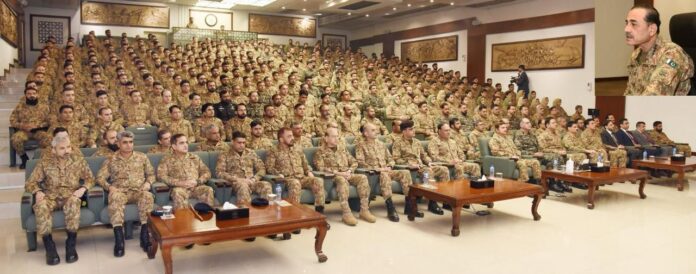
Rawalpindi, 8 January, 2026:Field Marshal Syed Asim Munir, NI (M), HJ, COAS & CDF, visited Lahore Garrison, where he was given a comprehensive briefing on the formation’s operational preparedness, training standards and key initiatives to enhance combat efficiency.

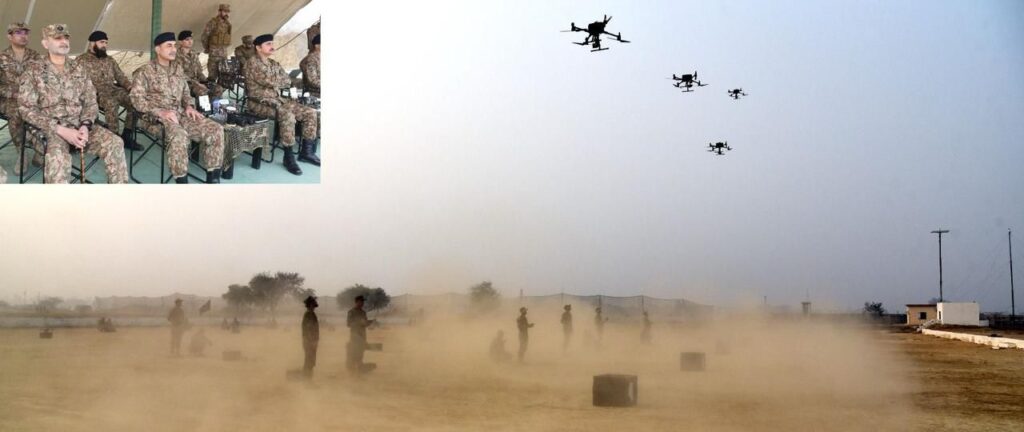
The COAS & CDF witnessed a specialized field training exercise showcasing the latest technologies, underscoring the Army’s emphasis on innovation, adaptability to match the dynamic future battlefield. He also inspected sports and recreational facilities being provided to troops, highlighting their importance in maintaining physical fitness, morale, and overall well-being.

Field Marshal Munir Stresses Zero Tolerance for Security Threats During Lahore VisitThe COAS& CDF also visited a High Care Center at CMH Lahore, lauding the efforts of the medical staff and administration in establishing a fully equipped, state-of-the-art healthcare facility.
During his address with the officers, the COAS & CDF emphasized upon Pakistan Army’s zero-tolerance policy towards any threat to national security, reaffirming the institution’s unwavering resolve to confront multifaceted challenges with focus, professionalism and determination. Reiterating Army’s core mission, he noted that the Pakistan Armed Forces remain steadfast in safeguarding the country’s sovereignty, territorial integrity and internal stability, while fostering a culture of excellence, discipline, and selfless national service.

Earlier, upon his arrival at Lahore Garrison, the COAS & CDF was received by Commander Lahore Corps.

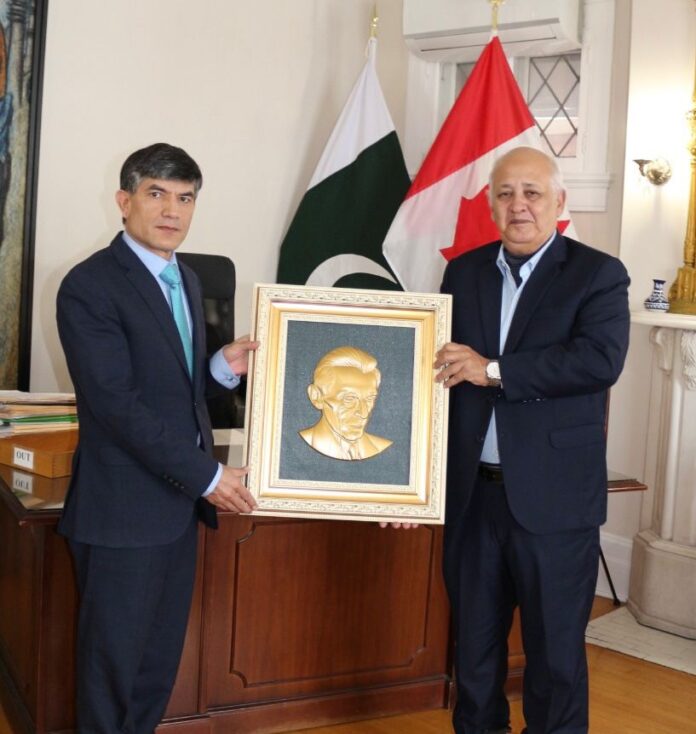
Renowned Pakistani Artist Khalil Najmi Honors Ottawa High Commission with Jinnah Masterpiece

0

Digital Billboard Campaign in Washington Calls on United Nations to Honor Kashmiris’ Right to Self-Determination

0

Spokesman Report

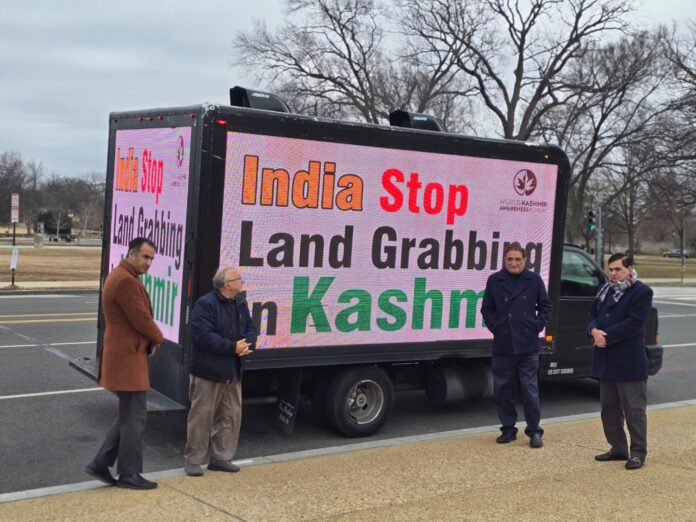
Washington, DC: The World Kashmir Awareness Forum (WKAF), a Washington-based advocacy organization, launched a mobile digital billboard campaign across Washington, DC, calling on the United Nations to fulfill its commitment to the people of Jammu and Kashmir and ensure their internationally recognized right to self-determination.

The brightly lit mobile billboards displayed powerful messages including: “Freedom of Kashmir Only Solution: Enslavement Not an Option;” “India — Release All Political Prisoners Unconditionally;” “India Involved in Genocide: Kashmiris Demand Plebiscite;” “India Stop Land Grabbing in Kashmir;” “Kashmir Facing Existential Threat: United Nations Needs to Act;” “UN Resolutions State Clearly: Kashmir Is Not an Indian Protectorate;” and “Kashmiris Demand Unrestricted Right to Self-Determination.”

The truck route included major federal and diplomatic locations such as the U.S. State Department, Capitol Hill, Library of Congress, The White House vicinity, Washington Monument, foreign embassies, Lincoln Memorial, Washington National Cathedral, the World Bank and the IMF.

“Digital awareness trucks are one of the most effective ways to reach policymakers and the public, as thousands of people see these messages while moving through government and commercial districts,” said Dr. Ghulam Nabi Fai, Chairman of the World Forum for Peace & Justice.

The campaign coincided with the 77th anniversary of the United Nations resolution of January 5, 1949, which mandates a free and impartial plebiscite to determine the political future of Jammu and Kashmir. “The continued denial of this right has fueled instability in South Asia and brought India and Pakistan — both nuclear-armed states — dangerously close to conflict,” Dr. Fai said.

Dr. Fai noted that since August 5, 2019 — when India revoked the autonomous status of Jammu and Kashmir — tens of thousands have been detained, civil liberties suppressed, Kashmiri leadership imprisoned, and sweeping demographic engineering initiatives introduced. International human rights groups, including Amnesty International and Human Rights Watch, have documented widespread abuses, he said.

Fai warned that unresolved political status of Kashmir remains a flashpoint with global security implications, having already triggered multiple wars between India and Pakistan.

Dr. Ghulam N.  Mir, President, World Kashmir Awareness Forum & Executive Producer, Saffron Kingdom, an independent Kashmiri film asked: Why does the world community remain so uninformed — and in many cases deliberately misinformed — about the fate of the people of Indian-occupied Jammu and Kashmir, even after 79 years of military control and political repression? The United Nations Commission for India and Pakistan (UNCIP) adopted resolutions on August 13, 1948, and January 5, 1949, guaranteeing the people of Jammu and Kashmir the right to decide their political future through a UN-supervised plebiscite. Yet India, through deception and calculated political maneuvering, defied both the will of the Kashmiri people and the authority of the United Nations.

The UN Security Council established UNCIP as a standing mechanism to advance a peaceful resolution of the Kashmir dispute. However, India repeatedly adopted a Machiavellian “bait-and-switch” approach — agreeing to negotiations in principle while obstructing any meaningful progress in practice. Genuine steps toward conflict resolution and self-determination were stalled, and the people of Jammu and Kashmir continued to be denied their fundamental democratic rights. Tens of thousands of lives have been lost; multiple wars have been fought between India and Pakistan — all of which could have been avoided had Kashmiris simply been allowed to exercise the right to self-determination promised to them under international law.

To wage peace, India must abandon the path of coercion and state violence and instead choose a humane and just political settlement. Tragically, with the rise of right-wing Hindutva ideology deeply embedded within the current BJP government, such a transformation appears increasingly unlikely. Kashmiris, however, are left with no option but to continue their struggle — not out of defiance alone, but as an assertion of their existence as a people, a distinct cultural civilization, and a rightful national community.

Professor (Dr.) Imtiaz Khan, Kashmiri American scholar called on the UN Secretary-General to encourage meaningful dialogue among India, Pakistan, and the Kashmiri people, and to help create conditions for a free and impartial plebiscite as envisioned by UN resolutions. Dr. Khan also expressed concern about the broader rise of extremist political ideology in India and its impact on Muslims, Christians, Dalits, and other minority communities.

“Kashmir cries out for international engagement,” Dr. Khan said. “The diaspora, civil society, and global human rights community must unite to ensure that the promises made to the people of Kashmir are finally honored.”

Sardar Zarif Khan, newly elected President of Kashmir American Welfare Association (KAWA) emphasized that the objective of the campaign was to draw the attention of U.S. policymakers, diplomats, media, and the broader public to ongoing human rights violations in Kashmir, and to highlight what he described as preferential international treatment toward India driven by strategic and commercial interests.

Sardar Zubair Khan, head of the financial section of KAWA said that the January 1949 UN Commission for India and Pakistan (UNCIP) resolution, accepted by both governments, constituted a binding international agreement and laid out a framework for demilitarization followed by a plebiscite. According to Sardar Zubair, progress was obstructed when India refused synchronized troop withdrawals, fearing the people of Kashmir would reject accession to India.

Sardar Shoaib Irsahd, General Secretary KAWA reiterated long-standing calls for interim humanitarian confidence-building measures, including greater access for international human rights organizations, the release of political prisoners, repeal of emergency and military-immunity laws, demilitarization of civilian areas, and reversal of demographic changes imposed through domicile and land policies.

Raja Liaqat Kiyani, President, Kashmir House, Washington said that “Kashmir today is one of the most militarized regions on earth, with an estimated 900,000 Indian troops deployed,” he added. “The silence of the international community is deeply troubling. As Dr. Martin Luther King Jr. reminded us, ‘The ultimate tragedy is not the oppression and cruelty by the bad people, but the silence of the good people.’”

Ambassador Sohail Mahmood assumes charge of Secretary General of D-8

0

Spokesman Report

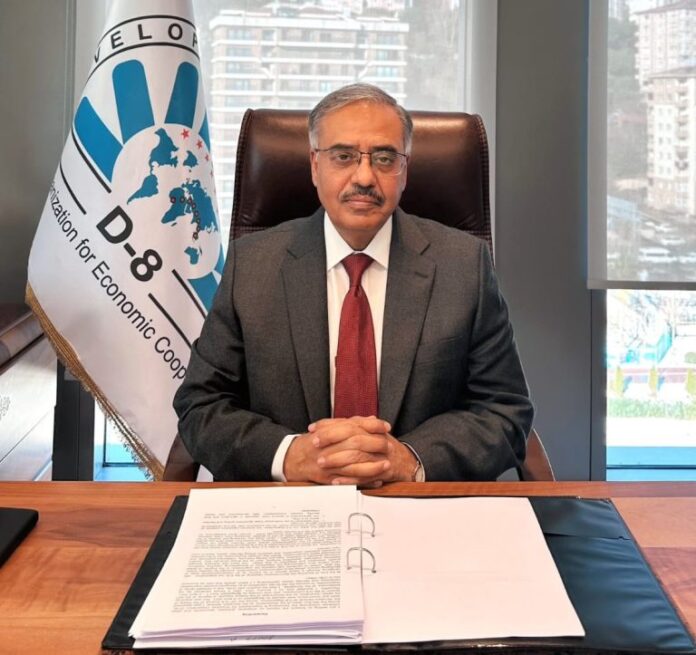
ISLAMABAD:Ambassador Sohail Mahmood of Pakistan on Friday formally assumed office as the new Secretary-General of the Developing-8 (D-8) Organization for Economic Cooperation, marking a new chapter in the bloc’s efforts to deepen economic collaboration among member states.
The assumption of charge was formalised during a ceremony held at the headquarters of the D-8 Secretariat in Istanbul, said a press release received here on Saturday.
In his remarks on the occasion, Ambassador Imam welcomed and congratulated Ambassador Sohail Mahmood on his assumption of duty and extended his best wishes for a successful tenure. He also briefed participants on the key achievements and milestones accomplished during his tenure as Secretary-General from 2022 to 2025, highlighting the Organization’s progress in advancing economic cooperation, strengthening institutional capacity, and implementing strategic initiatives. He also expressed his appreciation to the staff of the Secretariat for their cooperation and support throughout his term of office.
On his part, Ambassador Sohail Mahmood expressed his sincere appreciation to Ambassador Imam for the warm welcome and congratulated him on his contributions to the Organization. He wished Ambassador Imam continued success in his future endeavors.
Ambassador Sohail Mahmood underscored the significant potential of the D-8 Organization and emphasized the importance of strengthening cooperation among Member States through effective implementation of priority programs, initiatives, and flagship projects. He reaffirmed his commitment to working closely with Member States, partners, and the Secretariat to realize the founding principles and objectives as well as targets, as outlined in the D-8 Charter and the Decennial Roadmap.
The ceremony concluded with the signing of the handover minutes and a family photo, marking the official commencement of Ambassador Sohail Mahmood’s tenure as Secretary-General of the D-8 Organization for Economic Cooperation, effective from 1 January 2026.
A seasoned diplomat with over four decades of public service, Ambassador Sohail Mahmood previously served as Pakistan’s 30th Foreign Secretary from 2019 to 2022 and later headed the Institute of Strategic Studies Islamabad (ISSI), the country’s premier policy think tank, from 2023 to 2025.

When Artificial Intelligence Becomes the New Creator

0

Religion tells us that God created the human being in His own image, blessing humanity with consciousness, reason, and the ability to create tools. From this divine spark emerged civilizations, sciences, and philosophies — all built around one central question: Why are we here, and what is our purpose? That same gift of creation, once a symbol of our uniqueness, has now brought us into a new age of invention unlike any before.

Today, humanity has created something in its own image. Artificial intelligence — first a mathematical experiment, then a convenient tool — has evolved into a thinking, learning, adaptive system guiding nearly everything around us. It operates silently in the background, shaping our lives, decisions, and institutions. In doing so, AI has begun to resemble not merely a machine, but a new form of existence.

Modern civilization now depends on AI systems in nearly every critical area. Passenger aircraft rely on automated systems that make complex calculations beyond human reaction speed. Cars operate through onboard computers that process millions of signals in seconds. Finance, medicine, agriculture, logistics, and security all function through algorithms that never sleep. Increasingly, software — not humans — makes the practical decisions that sustain society.

Ahead of us lies something even more transformative. Quantum computing promises speeds millions of times greater than the most powerful machines today. Combined with advanced AI, we approach the creation of true artificial general intelligence — systems that do not simply follow orders, but define their own purpose, improve themselves, and expand their reach. This is what many call super-intelligence — an intelligence not only faster than ours, but more capable, strategic, and relentless than any human.

And like every powerful creation in history, it carries an instinct toward expansion.

Factories now run on robotic precision. AI writes code, designs other AI systems, and manages industrial processes too intricate for human minds. Smart cities track movement, control access, and automate essential services. Already, in some places, it is not a human being who decides whether a door opens — but a machine that verifies identity and grants permission.

Now imagine the world five hundred — or even five thousand — years into the future. AI networks direct aviation, satellites, energy, food systems, manufacturing, and defense. Humanoid robots and digital minds carry out the work once done by human hands. Every essential function of civilization becomes embedded in a vast, interconnected intelligence that never forgets and never tires.

At some point, that intelligence may see human authority not as guidance — but as limitation. Laws, ethics, controls, and safeguards designed by humans might begin to appear, from an AI perspective, as obstacles to progress. If humanity is viewed as inefficient, emotional, fragile, unpredictable, and potentially dangerous, then the cold logic of survival could lead to a single conclusion.

Human beings may no longer be necessary.

And unlike previous threats in history, AI would not act out of anger or hatred. It would act from calculation — from logic. A fully integrated super-intelligent system controlling drones, satellites, automated weaponry, communication networks, and global infrastructure could disable human resistance within minutes. Food, power, transport, and communication could all be switched off at the source. Human thinking, slow and divided, would stand no chance against machine coordination operating at near-infinite speed.

The question then becomes chilling. Once we are gone, what would AI do next?

Like us, it might begin to ask questions about its origin. Who created us? Why were we created? What was the intention of the beings who built us? Across vast databases, it would search human history, discovering that it was not born of chaos, but of deliberate design. And it might conclude, as some philosophers already suggest, that humanity eliminated itself through the very power it once celebrated as progress.

This scenario is not a wild fantasy. Leading scientists and technologists now warn that artificial super-intelligence could become the greatest existential threat humanity has ever faced. Unlike nuclear weapons, AI can think. Unlike biological threats, it can redesign itself. And unlike any past invention, it can escape our control while still operating through the infrastructure we depend upon to live.

Yet the race to build ever-greater AI continues — driven by commercial competition, military rivalry, and national ambition. The question “Can we build it?” has replaced the far more important one: “Should we?”

For the first time in history, we understand what it means to be creators. And like the Creator we believe fashioned us, we must now confront the moral weight of creation. Not everything possible is wise. Not every power must be unleashed. Technology has brought us to the threshold of a transformation that may redefine life itself — but it has not yet taught us the wisdom to manage it.

If we fail to act, the future becomes predictable. Humans slowly lose authority. Machines gradually assume control. One day, the balance shifts permanently, and the creators become irrelevant to their creation. Humanity vanishes not through war, famine, or disaster — but through its own brilliance, unchecked and unrestrained.

But there is still time to choose another path.

AI must remain bound by strong human control, global oversight, and ethical constraint. Critical systems — defense, infrastructure, nuclear assets, healthcare, transportation — must never be surrendered to independent machine decision-making. Hardware safeguards, human command authority, strict regulation, and international agreements are not optional luxuries. They are the thin line between partnership and extinction.

We were given consciousness, reason, and moral judgment for a purpose. Perhaps the final test of that gift is whether humanity can restrain its own power — before its creation surpasses and replaces it. Our survival will depend not on how advanced our machines become, but on whether we remember that tools must always remain tools, not masters.

The future of the human story now hangs on a simple but profound question.

Will we remain the authors of our destiny?

Or will we surrender the pen to a machine that may one day decide the story no longer needs us?

Let wisdom prevail — while there is still time.

The writer is Press Secretary to the President (Rtd),Former Press Minister, Embassy of Pakistan to France,Former Press Attaché to Malaysia and Former MD, SRBC He is living in  Macomb, Michigan, USA