Daily The Spokesman 14 January 2026 PDF
WHO and Gavi Equip Pakistan with 20 4x4s to Target Zero-Dose Children
Spokesman Report
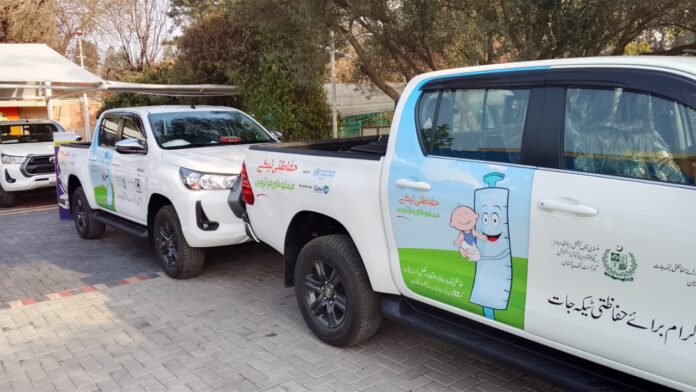
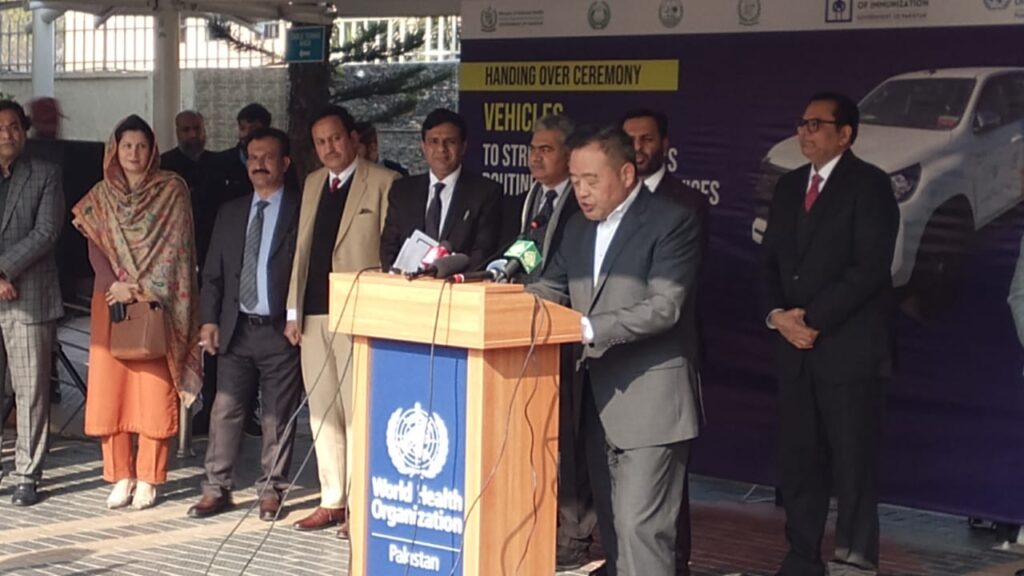
Islamabad, Pakistan – The World Health Organization (WHO today handed over 20 four-wheel-drive (4×4) vehicles to Pakistan’s Expanded Programme on Immunization (EPI) to enhance immunization activities and supervision in geographically challenging areas. The 4X4 cars will be assigned to 20 priority districts with a high concentration of children who have never been vaccinated (“zero-dose” children).
With financial support from Gavi, the Vaccine Alliance, the distribution plan allocates three vehicles each for Sindh, Punjab, Khyber Pakhtunkhwa, and Balochistan; two each for Pakistan-administered Kashmir (PAK), Gilgit-Baltistan and at the federal level; and one each for the Capital Development Authority (CDA) and Islamabad Capital Territory (ICT).
 The vehicles will address transport shortages that have previously hindered immunization performance in high-risk districts – particularly in remote areas – improving managers’ mobility to supervise field activities directly, verify micro-plans, and ensure that vaccines are available even in the most distant communities.
“We are thankful to WHO and Gavi for this support. Our ecosystem currently faces significant challenges regarding water, sanitation, and health infrastructure, putting the health of our population at large at risk. To effectively reduce the burden of diseases, it is vital that we ensure our children are vaccinated against 13 vaccine-preventable diseases. We must prioritize immunization because, ultimately, prevention is better than cure. These vehicles are to reach out to zero-dose children here in Pakistan, the underprivileged people, and those who do not have awareness,” said Federal Health Minister Syed Mustafa Kamal.
The new vehicles, aimed at improving governance oversight and supportive supervision, will support the Expanded Programme on Immunization teams to bridge the gap between urban centers and hard-to-reach populations. The primary goal is to identify and vaccinate “zero-dose” children.
“Reliable transport is essential for effective public health work. These vehicles will enhance regular supervision and resolve logistical issues on-site. WHO remains committed to partnering with Pakistan in strengthening its immunization systems to protect every child from vaccine-preventable diseases. In Pakistan, vaccines are protecting millions of children every year, and WHO will continue to partner with Pakistan and its people to build a healthier future for all,” said WHO Representative in Pakistan, Dr. Luo Dapeng.
The initiative follows an analysis that identified the need for health systems strengthening (HSS) in terms of field supportive supervision to improve immunization outcomes in priority areas with geographical barriers.
“This ceremony marks a significant step forward in Pakistan’s health systems strengthening. The vehicles you see before us will strengthen our services in our hard-to-reach and security threatened areas, ensuring that vaccines reach all our communities, and that no child is left behind. Let’s move forward together with purpose and unity ,” said Director General of the Federal Directorate of Immunization (FDI) Dr. Musa Khan.
In 1978, Pakistan launched its Expanded Programme on Immunization in partnership with WHO. Since then, every year, over 7 million children and 5.5 million pregnant mothers are protected with life-saving vaccines.
Globally, every ten seconds, vaccination saves a life. In the last 50 years alone, vaccines have saved 154 million lives.
Japan Pledges ¥2.91 Billion Grant for Child Health Upgrade in South Punjab
Spokesman Report
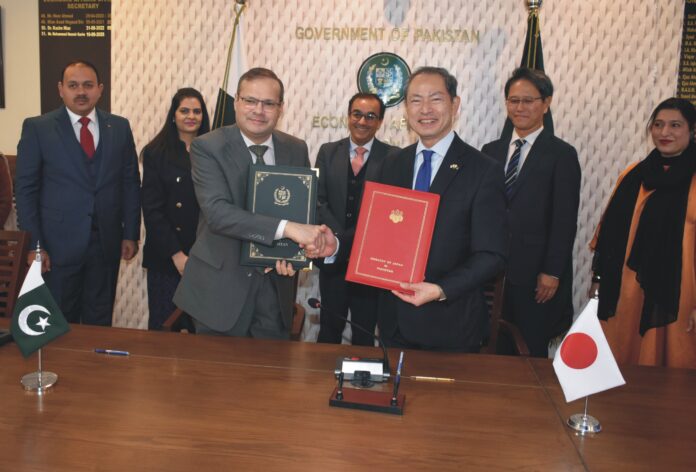
Islamabad: Japan has extended a grant aid of 2,910 million Japanese Yen to Pakistan for the Project for the Improvement of Child Health Care Facilities in South Punjab. Notes to this effect were signed and exchanged between H.E. Mr. AKAMATSU Shuichi, Ambassador of Japan to Pakistan and Mr. Muhammad Humair Karim, Secretary of the Ministry of Economic Affairs, in Islamabad on January 13th, 2026. Subsequently, Grant Agreement was also signed and exchanged between Mr. MIYATA Naoaki, Chief Representative of JICA Pakistan Office and Mr. Miran Mohiyuddin Soomro, Senior. Joint Secretary of the Ministry of Economic Affairs.
In this project, a new child health care facility will be constructed at Children Hospital Multan which is a public medical institution serving as the regional hub hospital in Multan district. The new facility will have the departments of Emergency, Pediatric ICU, Neonatal ICU, Surgery and Laboratory.
The objective of the project is to strengthen the diagnostic and treatment systems in the Children’s Hospital and the Institute of Child Health Multan. This project also seeks to improve its function as a specialized tertiary care hospital and a disaster response hub hospital in the region through the expansion of the facility and the provision of medical equipment. These improvements are necessary to provide the healthcare services for high-risk neonates, infants and children with serious illness or injuries. This project will contribute to improving the quality of healthcare services for children in south Punjab and neighboring provinces.
H.E. Mr. AKAMATSU Shuichi, Ambassador of Japan to Pakistan said: Today’s signing marks an important step in our continued cooperation to improve the quality of health services for children in Pakistan. I am confident that this project will make a significant contribution to pediatric health care in South Punjab and beyond.”
Mr. MIYATA Naoaki, Chief Representative of JICA Pakistan Office said: “This project will help in achieving the targets of sustainable development goals by reducing the infant mortality rates and raising the standard of pediatric emergency care”.
This project will also serve as a center of excellence meeting the requirement of a modern teaching hospital with international standards. It will not only alleviate the pressure of tertiary hospitals in other surrounding cities but also open up opportunities for families from all over southern part of Punjab, with improved accessibility and better chances of saving lives.
Finance Minister Meets Icoin Technology Delegation to Discuss Pakistan’s Emerging Digital Asset Framework
Spokesman Report
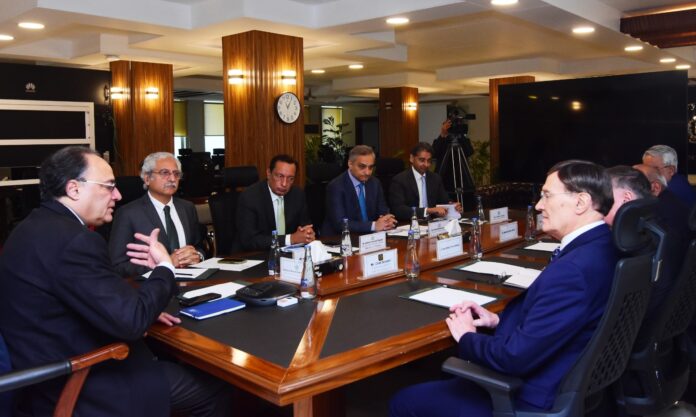
Islamabad: Federal Minister for Finance and Revenue, Senator Muhammad Aurangzeb, today held a meeting with a visiting delegation from Icoin Technology Inc. led by its Chairman and Chief Executive Officer, Mr. Chet Silvestri.
During the meeting, the Finance Minister briefed the delegation on the Government of Pakistan’s ongoing efforts to develop a structured and responsible framework for digital assets. He also apprised the delegation of the progress made toward the establishment of a Pakistan Crypto Council and the Pakistan Virtual Assets Regulatory Authority (PVARA), outlining the rationale, sequencing of policy actions, and the broader implications of these initiatives for market development, financial inclusion, transparency, and consumer protection.
The Minister highlighted Pakistan’s growing participation in global digital asset activity, as reflected in international analytics, and emphasized the government’s resolve to channel this activity into a well-regulated environment that safeguards users while encouraging innovation and investment.
The Finance Minister underscored that regulation was essential to balance opportunity with risk, particularly in light of increasing volumes of digital asset usage by Pakistani citizens. He noted that the evolving policy framework aims to provide clarity to market participants, align with international best practices, and ensure coordination among regulators, including the central bank, to enable orderly market development and institutional participation.
Mr. Chet Silvestri shared insights from the United States and Canadian markets, drawing on Icoin Technology’s experience of working with banks, exchanges, and large-scale consumer platforms. He outlined how regulatory clarity in mature markets has enabled traditional financial institutions to engage with digital assets through existing infrastructure, rather than reinventing core banking systems.
He explained the role of wallet-based middleware and switching technologies that allow banks to connect securely with exchanges, manage liquidity, enhance compliance, and offer digital asset services to customers through familiar banking applications.
The delegation highlighted the transformational potential of blockchain technology and stablecoins in modernizing financial infrastructure by enabling faster, lower-cost, and more transparent transactions, while maintaining regulatory oversight. Reference was made to recent legislative developments in the United States aimed at bringing coherence to digital asset regulation, particularly in relation to stablecoins and the integration of digital assets within the banking system.
The delegation emphasized that young and tech-savvy populations across markets are already engaging with digital assets and that regulated participation through banks helps retain activity within the formal financial system.
Discussions also covered Icoin Technology’s global engagements, including partnerships enabling large consumer bases to access digital asset services, and the company’s interest in exploring opportunities in Pakistan in collaboration with local partners. The delegation sought guidance on appropriate regulatory pathways, licensing requirements, and engagement mechanisms with relevant authorities, including banks and regulators.
The Finance Minister advised that, given the evolving nature of the regulatory landscape, initial engagement with interested banks and relevant institutions would be a constructive next step, alongside continued dialogue with regulators, including the State Bank of Pakistan.
He reiterated that Pakistan is at an early but important stage in shaping its digital asset ecosystem and welcomed knowledge-sharing and responsible investment aligned with national priorities.
Both sides agreed to maintain engagement, explore areas of cooperation, and continue exchanges aimed at supporting Pakistan’s efforts to build a transparent, inclusive, and well-regulated digital asset market.
Icoin Technology Inc. is a blockchain infrastructure company focused on developing an advanced hardware wallet system for cryptocurrency. The delegation also included Lt. Gen. (R) Terry Robling, Advisor to Icoin Technology, Mr. Mahmood Azhar Jabbar, Chief Executive Officer of Techaccess, and Mr. Tariq Hafeez Malik, Chief Technology Officer of Techaccess.
Indonesian Defence Minister Meets Field Marshal Asim Munir to Boost Bilateral Ties
Spokesman Report
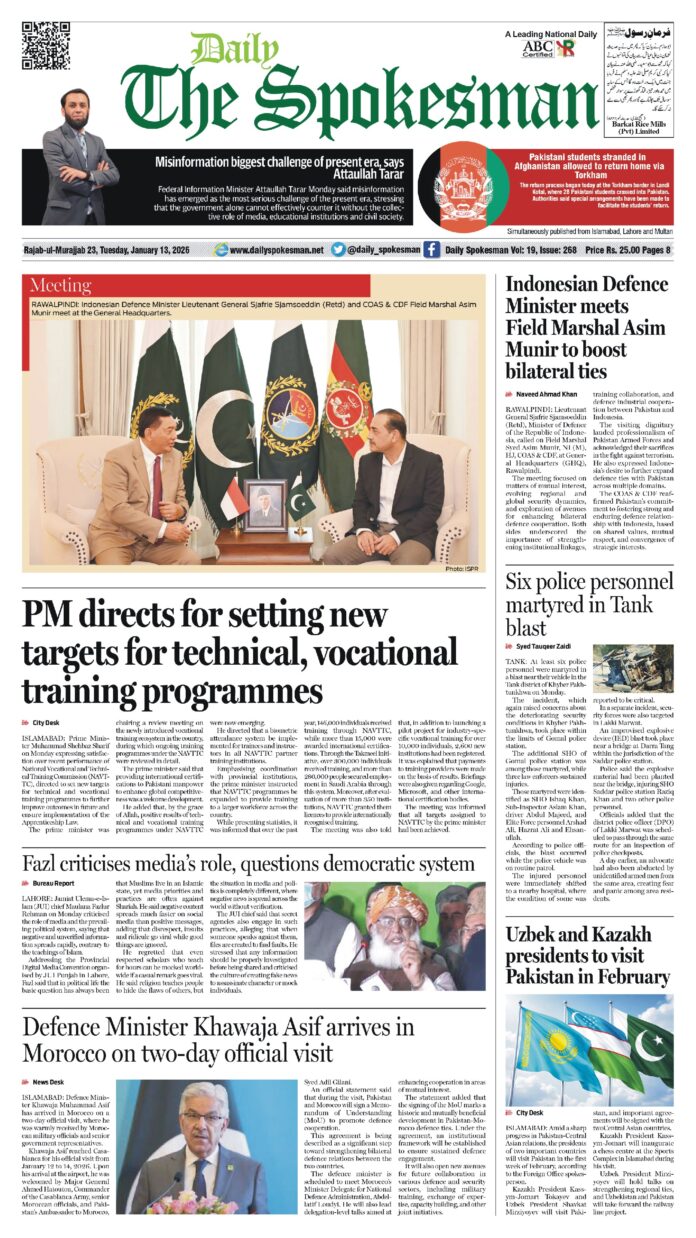
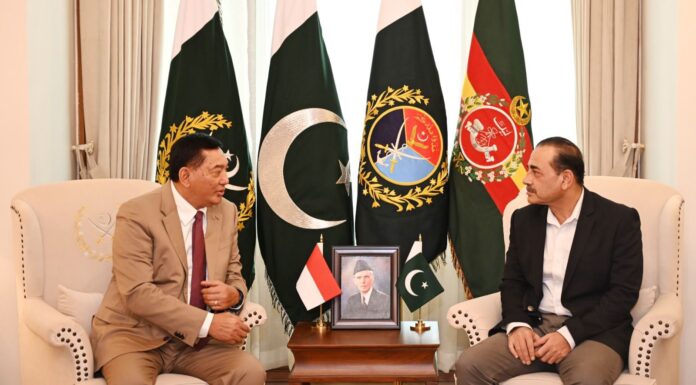
Rawalpindi:Lieutenant General Sjafrie Sjamsoeddin (Retd), Minister of Defence of the Republic of Indonesia, called on Field Marshal Syed Asim Munir, NI (M), HJ, COAS & CDF, at General Headquarters (GHQ), Rawalpindi.
The meeting focused on matters of mutual interest, evolving regional and global security dynamics, and exploration of avenues for enhancing bilateral defence cooperation. Both sides underscored the importance of strengthening institutional linkages, training collaboration, and defence industrial cooperation between Pakistan and Indonesia.
The visiting dignitary lauded professionalism of Pakistan Armed Forces and acknowledged their sacrifices in the fight against terrorism. He also expressed Indonesia’s desire to further expand defence ties with Pakistan across multiple domains.
The COAS & CDF reaffirmed Pakistan’s commitment to fostering strong and enduring defence relationship with Indonesia, based on shared values, mutual respect, and convergence of strategic interests.
Prime Minister Appoints Dr Kabir Ahmed Sidhu as Chairman SECP
Spokesman Report
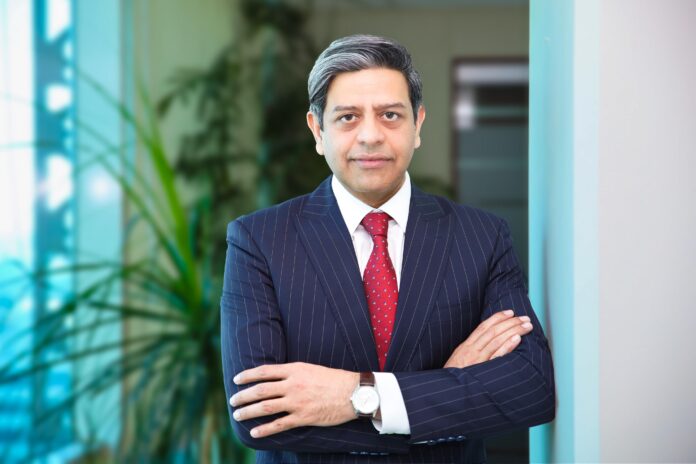
ISLAMABAD: The federal government has approved the appointment of Dr Kabir Ahmed Sidhu as the new Chairman of the Securities and Exchange Commission of Pakistan (SECP) with immediate effect. The decision was notified by the Finance Division.
Dr Sidhu currently serving as Chairman Competition Commission of Pakistan (CCP), where he led one of the most significant institutional turnarounds in the Commission’s history. When he took office in August 2023, the CCP was facing long-standing enforcement bottlenecks and a large backlog of litigation and enquiries.
Within two years, the Commission reduced its court case backlog by over 70 percent, with 434 cases decided out of 567 pending matters. This progress helped restore the regulator’s credibility and enforcement capacity. It developed precedent and jurisprudence of the CCP.
Dr Sidhu holds a Bachelor’s degree in Law, an LLM in Banking, Insurance and International Business Law, and a PhD from the University of Manchester. He also earned a postgraduate diploma in Civil Litigation from the Manchester Law Society and certifications in mortgage and financial advice from the London Institute of Banking and Finance. His doctoral research focused on the investor protection and regulation of stock exchanges in UK, US and Shariah Compliant stock exchanges.
With over 20 years of professional experience, Dr Sidhu has worked with insurance companies, law firms, and financial institutions in the UK, as well as government ministries in Pakistan. Prior to joining CCP, he served as a Senior Legal Consultant at the Ministry of Law. He has worked in privatisation Commission as a Senior Legal Consultant. He was a research associate with leading academics in UK universities.
During Dr Sidhu’s tenure at the CCP recovered approximately PKR 1.36 billion in penalties. In contrast, the Commission’s total recoveries in the last 20 years was merely 20 crore. The regulator also imposed over PKR 2 billion in fresh penalties through new enforcement actions.
His tenure saw a renewed crackdown on cartels and market abuse. Major investigations and actions were initiated against cartels in poultry, sugar, edible oil, telecom, and medical services. Several of these actions were upheld by the Supreme Court and the Competition Appellate Tribunal, providing strong judicial validation to CCP’s enforcement work.
Dr Sidhu also placed strong emphasis on consumer protection and deceptive marketing enforcement. The CCP imposed significant penalties on companies operating in real estate, FMCG, education, pharmaceuticals, and automobiles. These included Kingdom Valley, Friesland Campina, Unilever, Engro, Al-Ghazi Tractors, Hyundai Nishat, British Lyceum, and 3N Lifemed, sending a clear signal against misleading business practices.
A major institutional reform during his tenure was the launch of the Market Intelligence Unit (MIU), CCP’s first AI-powered surveillance arm. This initiative marked a shift toward data-driven, proactive detection.
On the market facilitation front, the CCP processed 139 mergers across 34 sectors. High-profile transactions included the PTCL–Telenor merger, Shell Pakistan’s sale to Wafi Energy, and several deals in financial services, energy, and logistics. The PTCL–Telenor merger order, in particular, was widely noted by stakeholders for balancing investment facilitation with competition safeguards.
CCP also set up centre of excellence in competition law. Its purpose was to carry out competition assessment studies to modernise legal and regulatory framework in every sector of the economy.
PPCBL Engages AlHuda CIBE for Islamic Banking Transformation
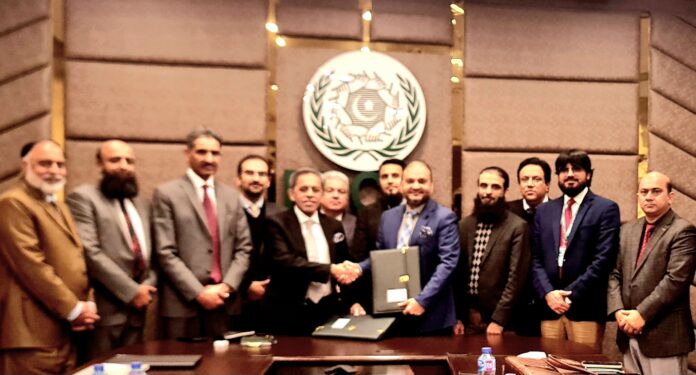
AlHuda CIBE and Punjab Provincial Cooperative Bank Limited Sign Advisory Agreement for Conversion from Conventional to Islamic Banking Operations
Spokesman Report
Lahore, Pakistan): AlHuda Center of Islamic Banking and Economics (AlHuda CIBE), a leading Islamic finance consultancy and advisory institution, has been formally engaged by Punjab Provincial Cooperative Bank Limited (PPCBL) to provide consultancy and advisory services for the conversion of the Bank’s conventional banking operations into Shariah-compliant Islamic banking operations.
The consultancy engagement was formalized through the signing of an agreement between Mr. Muhammad Zubair, Chief Executive Officer of AlHuda CIBE, and Mr. Shahraam Raza Bakhtari, President of Punjab Provincial Cooperative Bank Limited. The engagement marks an important step in PPCBL’s strategic journey toward Islamic banking.
Under this engagement, AlHuda CIBE will provide comprehensive advisory support covering the design and implementation of a Shariah governance, development of Islamic banking products, preparation of operational policies and manuals, regulatory alignment, and structured staff training and capacity-building programs to ensure a smooth and compliant transition.
Commenting on the engagement, Mr. Muhammad Zubair, CEO of AlHuda CIBE, stated that AlHuda CIBE is committed to serving the Islamic banking and finance industry and supporting financial institutions in their transition toward Shariah-compliant operations. He noted that PPCBL’s cooperative banking structure presents a unique opportunity to extend Islamic banking services to a wider segment of society. He expressed confidence that, with a well-planned and disciplined approach, PPCBL will successfully migrate toward Islamic banking operations.
Mr. Shahraam Raza Bakhtari, President of PPCBL, stated that the Bank has engaged AlHuda CIBE to support a gradual and structured transformation process. He emphasized that a key focus of this initiative will be strengthening staff capacity and institutional readiness so that Islamic banking is implemented in its true spirit. He reaffirmed the Bank’s commitment to completing the transition within the agreed timeframe, with the objective of becoming a fully-fledged Islamic bank.
Islamic banking in Pakistan continues to gain momentum, supported by a strong policy direction from the State Bank of Pakistan (SBP) and the Securities and Exchange Commission of Pakistan (SECP). Both regulators have introduced wide-ranging initiatives aimed at promoting a Shariah-compliant and interest-free financial system. These include the enhancement of Shariah governance, expansion of Islamic banking market share, development of Shariah-compliant liquidity management instruments such as Sukuk, and promotion of Islamic capital market and Takaful sectors. These measures align with constitutional and judicial directives to transform Pakistan’s economy in accordance with Islamic principles.
Islamic banking and finance promot transparent, and inclusive financial intermediation by emphasizing risk-sharing, asset-backed transactions, and real economic activity. By prohibiting interest (Riba) and excessive uncertainty (Gharar), Islamic finance enhances financial stability and supports sustainable economic development. These features make Islamic banking particularly relevant for cooperative and community-based financial institutions such as PPCBL.
The engagement of AlHuda CIBE as a consulting advisor reflects PPCBL’s commitment to aligning with national regulatory objectives and contributing to Pakistan’s broader transition toward a Shariah-compliant financial system before 2028. The initiative is expected to serve as a reference model for other banks considering conversion to Islamic banking operations.

