Home Blog Page 3

Tariff Wars and Territorial Fantasies: How Economic Coercion Is Replacing American Diplomacy

0

For generations, American leadership rested on a simple but powerful idea: strength gains legitimacy when it is exercised with restraint. The United States did not merely dominate the postwar world—it helped organize it. Alliances, trade systems, and security guarantees were built not as favors to others, but as pillars of American prosperity and global stability.

That tradition is now under stress.

Donald Trump’s foreign policy instincts—particularly his rhetoric about Greenland and his repeated use of tariffs against allies—signal a profound shift in how power is understood and applied. To many of America’s closest partners, these moves suggest that diplomacy is being replaced by coercion, and cooperation by pressure.

When President Trump publicly entertained the idea of acquiring Greenland, many Americans dismissed it as rhetorical excess. In Europe, however, the remark triggered alarm. Greenland is not a bargaining chip; it is an autonomous territory whose people possess the right to self-determination. The suggestion that sovereignty could be negotiated like a real estate transaction cut against the very principles the United States has long claimed to defend.

But Greenland was not an isolated incident. It was part of a broader pattern.

That same mindset has shaped Trump’s approach to trade, particularly his reliance on tariffs as a primary diplomatic tool. Tariffs, in theory, are economic instruments. In practice, when deployed aggressively against allies, they function as a form of economic warfare—meant not to negotiate mutual benefit, but to compel submission.

European leaders have not objected to fair trade or renegotiated agreements. What concerns them is the framing of allies as adversaries and trade as a zero-sum contest. When tariffs are threatened or imposed on partners who share security commitments, intelligence cooperation, and common democratic values, the message received is unmistakable: loyalty offers no protection.

This is a dangerous message.

Economic pressure has consequences beyond balance sheets. It reshapes political behavior. Faced with uncertainty about American reliability, allies begin to hedge. They diversify supply chains, pursue alternative markets, and explore security arrangements that reduce dependence on Washington. Over time, this weakens not just transatlantic ties, but America’s strategic influence itself.

Supporters of aggressive tariff policies often argue that toughness restores respect. History suggests the opposite. Power used without predictability breeds caution, not loyalty. Respect earned through partnership endures longer than compliance extracted through fear.

Some European officials have privately—and occasionally publicly—likened Trump’s approach to that of a strongman: threatening economic pain to extract political concessions. Such language reflects not hostility toward the United States, but deep anxiety about what American leadership is becoming. Allies fear a world in which rules are optional, commitments are conditional, and pressure replaces persuasion.

For American voters, this should not be a distant concern.

The international system that Trump disparages was not imposed on the United States—it was shaped by it. Open trade, stable alliances, and shared norms created decades of economic growth and relative peace. Undermining these structures in pursuit of short-term leverage risks long-term strategic loss.

Tariff wars do not occur in isolation. They escalate. Retaliation invites counter-retaliation. Markets react, investment slows, and political trust erodes. What begins as a negotiation tactic can easily become a cycle of economic hostility that damages all sides, including American workers and consumers.

The choice facing the United States is not between strength and weakness. It is between leadership and dominance. Leadership listens, negotiates, and persuades. Dominance demands, threatens, and punishes.

America has always been strongest when it chose the former.

Europe’s message is not anti-American. It is cautionary. Allies are signaling that the language of pressure—whether through tariffs or territorial insinuations—pushes the world toward fragmentation and instability. In an era already marked by rising authoritarianism and global uncertainty, that is a risk no responsible power should welcome.

The question is whether Americans will hear that warning in time.
Trump’s Bid for Greenland at Davos

0

Davos, the frostbitten alpine enclave carved into Switzerland’s high mountains, has long been more than a resort town. Each winter, it becomes a political and economic marketplace where presidents, CEOs, scholars, and strategists trade contracts, alliances, and narratives of power. Temperatures plunge far below freezing, yet inside the halls of the World Economic Forum, the climate of international relations often burns far hotter than the Alpine air outside.

This year, the world’s attention did not rest on climate pledges or investment forecasts. It centered on the arrival of U.S. President Donald Trump, whose speech was anticipated less as an economic update and more as a declaration of how Washington now intends to shape the global order.

Trump opened with triumph. He portrayed the United States as an economy in resurgence—investment surging, jobs expanding, inflation easing, and industrial capacity returning home. These claims are broadly aligned with recent U.S. data showing strong capital inflows into technology, defense, and energy sectors, alongside continued labor market resilience. But the applause quickly faded as Trump pivoted from domestic success to global power.

The real tremor came not from his economic optimism, but from his vision of security. At the center of his message stood Greenland.

For years, analysts speculated that American interest in Greenland stemmed from two forces reshaping the Arctic: the opening of polar shipping lanes as ice melts, and the presence of rare earth minerals essential for modern technologies. In Davos, Trump dismissed both assumptions outright. He made it clear, in unusually direct terms, that he neither needs Greenland’s minerals nor seeks control over emerging Arctic sea routes.

Instead, he framed Greenland as a cornerstone of what he described as a continental missile defense shield—“Golden Dome” over the Western Hemisphere. In his telling, the United States is building a layered system designed to detect, track, and intercept missiles from any direction, and Greenland’s geography, he argued, is indispensable to making that shield effective. Without Greenland, he suggested, the system would be incomplete—not only for the United States, but for Canada as well.

The message was stark: this was not about commerce or resources. It was about transforming the Arctic into a forward platform for hemispheric security. That declaration sent a ripple through European and North American delegations.

Denmark’s government has long and consistently rejected any notion of transferring Greenland. Danish Prime Minister Mette Frederiksen has publicly called the idea “absurd,” emphasizing that Greenland is not an object of transaction but a self-governing territory whose future lies in the hands of its people. Greenland’s own leadership has echoed this position, welcoming cooperation and investment, but insisting that sovereignty is non-negotiable.

French President Emmanuel Macron has framed the Arctic question as part of a wider European responsibility. He has warned against turning the polar region into a theater of militarization and great-power rivalry, arguing that Europe must defend both its territory and its principles through collective security, not through the logic of dominance.

Germany’s chancellor has taken a similar stance, stressing that the stability of the international system depends on respect for borders, multilateral institutions, and the rule-based order that emerged from the wreckage of the twentieth century. Berlin’s Arctic policy, like much of Europe’s, emphasizes environmental protection, scientific cooperation, and governance through international frameworks rather than unilateral security architecture.

Canada, placed directly under Trump’s proposed “dome,” found itself in an especially delicate position. Ottawa has repeatedly affirmed that Arctic defense must be managed through NATO, NORAD, and international law, not through territorial realignment. Canadian officials have consistently stated that security in the North is a shared responsibility among circumpolar nations, not a justification for redrawing sovereignty.

Even Russia, often cast as the primary strategic rival in the polar north, has responded with measured caution. While Moscow continues to expand its Arctic military and infrastructure footprint, its official statements warn against turning the region into a flashpoint for confrontation, arguing instead for stability through treaties and regional cooperation.

Trump’s response to this resistance was neither conciliatory nor ambiguous. He described American military power in sweeping terms, emphasizing precision, reach, and technological dominance. He portrayed the U.S. defense system as unmatched—capable of neutralizing adversaries’ air defenses, striking targets across continents, and shaping the battlefield before rivals can respond. The tone was not diplomatic. It was declarative.

Security, in this vision, does not flow from international law or collective institutions. It flows from capability. His criticism extended to the very architecture of global governance. He questioned the effectiveness of the United Nations, arguing that it has failed to prevent wars or enforce peace, and suggested that Washington would increasingly disengage from international bodies that do not align with U.S. strategic priorities. This echoed earlier American withdrawals from multilateral agreements and institutions, reinforcing the image of a superpower stepping away from the system it once helped build.

Inside Davos, the contrast could not have been sharper. European leaders spoke of interdependence, shared security, and the dangers of a world governed by raw power rather than negotiated norms. Policy analysts warned that transforming sovereignty into a strategic variable—something to be adjusted for defense planning—could unravel decades of diplomatic precedent.

Beyond the speeches and symbolism, the implications run deep.If security becomes transactional—granted in exchange for alignment rather than guaranteed by law—then smaller and middle powers face a narrowing set of choices. They can align themselves with a dominant power’s strategic architecture, or they can seek protection through alternative coalitions, regional defense pacts, and diversified economic networks.

This shift is already visible. Countries across Europe, Asia, and the Global South are exploring ways to reduce reliance on single markets, single currencies, and single security patrons. New trade corridors, regional financial arrangements, and defense dialogues reflect a world quietly preparing for a future where power is more fragmented and competition more explicit.

Trump’s Davos address suggested that the post–Cold War era of institutional globalism may be giving way to a new age of fortified blocs—where defense systems, trade networks, and political alliances align along hard lines of strategic interest rather than shared ideals.

The world now stands at a crossroads. One path leads toward renewed commitment to multilateralism, where power is constrained by law and cooperation tempers rivalry. The other points toward a landscape of competing spheres of influence, where technological dominance and military reach define who sets the terms of global order.

Davos, once a forum for consensus, has become a stage for confrontation. And as snow continues to fall on the Alpine peaks, the chill spreading across international relations may prove far more enduring than the winter cold. The question now confronting the world is no longer whether a new order is emerging—but whether it will be shaped by dialogue, or by the silent geometry of missile shields drawn across the sky.

The writer is Press Secretary to the President (Rtd),Former Press Minister, Embassy of Pakistan to France,Former Press Attaché to Malaysia and Former MD, SRBC .He is living in  Macomb, Michigan

January: A Month of Tragedy for Kashmir

0

Spokesman Report

Islamabad: January should have been a month of hope for the people of Kashmir. It was in January 5, 1949 when the United Nations established that the final status of the State of Jammu and Kashmir shall be determined in accordance with the will of the people, expressed through a free and impartial plebiscite conducted under the auspices of the United Nations.

And again in January 24, 1957 the United Nations Security Council reaffirmed that any action that (Kashmir) assembly may have taken or might attempt to take to determine the future shape and affiliation of the entire State or any part thereof, or action by the parties concerned in support of any such action by the assembly, would not constitute a disposition of the State in accordance with the above principle.”

Yet, for Kashmiris, January has instead become a month of mourning—a recurring reminder of unfulfilled promises and unpunished crimes. which establishes that the final status of the State of Jammu and Kashmir shall be determined in accordance with the will of the people, expressed through a free and impartial plebiscite conducted under the auspices of the United Nations,

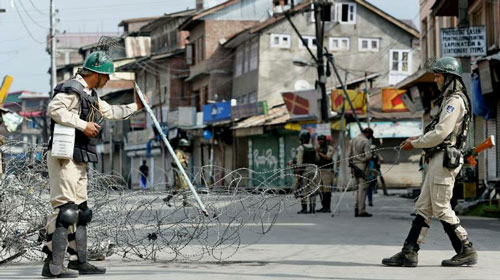
The most catastrophic of these tragedies occurred on January 21, 1990, at Gawkadal Bridge in Srinagar. On that day, the Central Reserve Police Force (CRPF) opened fire on peaceful demonstrators protesting the imposition of Governor’s Rule under Jagmohan—widely remembered by Kashmiris as the “Butcher of Kashmir.” Hundreds of unarmed protesters were trapped on the bridge as security forces cordoned it off from both sides and fired indiscriminately. With no avenue of escape, many people jumped into the icy waters of the Jhelum River.

Women, children, students, and passersby were among the dead. At least 50 civilians were killed, though eyewitnesses and survivors believe the actual toll was much higher. No independent judicial inquiry was ever conducted. No official was held criminally accountable. The case was quietly closed, records were destroyed, and justice was denied to the victims. This is the lived reality of Kashmir.

The Daily Kashmir Times quoted Manohar Lal, a Kashmiri Pandit residing near the Gawkadal area, who recalled: “Everyone was wailing, and blood was all around.” He added that many of those who sustained bullet injuries cried out in agony, and some even died in boats while being transported to hospitals. “I participated in the demonstration,” he said, “to register my silent protest against what happened before my eyes.”

Speaking to Kashmir News Agency, Manohar Lal further recounted how he heard the thuds of bullets from inside his home. “Then there were screams and cries. I peeped through my window, and what I saw still traumatizes me. I continue to suffer sleepless nights whenever I recall that incident.”

The documentary Saffron Kingdom, made by Arfat Sheikh, a Kashmiri-American filmmaker, powerfully documents the Gawkadal massacre and offers an essential, firsthand account that deserves to be seen by anyone seeking to understand the full scale of the tragedy.

The violence did not end there. On January 22, 1990, just one day after the Gawkadal massacre, ten more civilians were killed at Alamgari Bazar in Srinagar while protesting the killings at Gawkadal.

This was followed by the Handwara massacre on January 25, 1990, when 21 Kashmiri civilians were killed by the Border Security Force (BSF). Thousands had poured into the streets of Handwara to express solidarity with the people of Gawkadal and to demand accountability and justice. Eyewitnesses described scenes of horror—bodies lying motionless on the ground, survivors scrambling desperately to escape the gunfire.

January’s trail of blood continued in later years. On January 27, 1994, the Kupwara massacre claimed the lives of 27 innocent civilians. In the days preceding India’s Republic Day on January 26, soldiers of the Punjab Regiment warned local residents that they must participate in official celebrations or face consequences. Defying these threats, the people of Kupwara observed a complete shutdown. The following day, as shopkeepers reopened their businesses, Indian soldiers opened fire from multiple directions, killing at least 27 civilians.

Earlier, on January 6, 1993, the town of Sopore, known as the heart of Kashmir’s apple industry, witnessed another massacre. The BSF opened indiscriminate fire in the main bazaar, killing 43 civilians. Shopkeepers were prevented from fleeing; some were burned alive inside their shops. More than 250 shops and 50 homes were reduced to ashes.

Again, on January 19, 1991, 14 civilians were killed at Magarmal Bagh in Srinagar by the Central Reserve Police, some while they were inside their own shops.

Where is accountability? Where is the UN Charter? Where is the respect for UN Security Council resolutions that promised the people of Kashmir the right to decide their own future? These are the questions being asked today by the youth of Kashmir.

If the United Nations wishes to retain its credibility, then powerful states—including India—must be held accountable under international law. They must answer why justice has been systematically denied, and why UN resolutions—accepted by India itself—remain unimplemented.

The people of Kashmir ask for nothing more, and nothing less, than what was promised to them: the right to decide their own future.

History will judge not only those who committed these crimes, but also those who remained silent.

ILO Workshop Focuses on Regulating Private Employment Agencies Under Convention 181

0

Spokesman Report

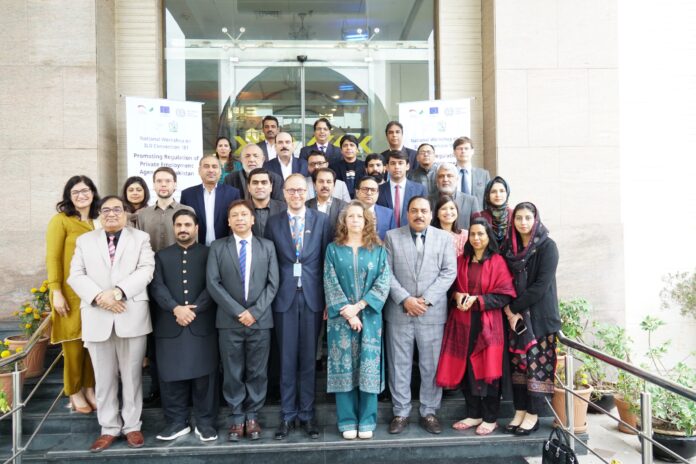
ISLAMABAD :Improving oversight of private employment agencies and advancing fair recruitment practices emerged as critical priorities for improving labour migration governance in Pakistan, participants at a national workshop on ILO Convention No. 181 emphasized. Convened by the International Labour Organization (ILO) in collaboration with the Ministry of Overseas Pakistanis and Human Resource Development (MOPHRD), the workshop enabled stakeholders to identify key regulatory and institutional gaps and build momentum for reforms aligned with international labour standards and national priorities.

The workshop was organized under the ILO’s project “Enhancing Partners’ Capacity on Decent Work and International Labour Standards for Labour Migration from Pakistan,” within the framework of Centres for Migration and Development (ZME) Pakistan, co-funded by the German Federal Ministry for Economic Cooperation and Development (BMZ) and the European Union (EU).
Pakistan is one of South Asia’s major labour-sending countries. According to the Bureau of Emigration and Overseas Employment (BEOE), more than 727,000 Pakistani workers migrated abroad in 2024, primarily to Gulf Cooperation Council (GCC) countries. Since 1971, over 10 million Pakistanis have accessed overseas employment through formal channels, generating billions of dollars in remittances that support economic stability and household resilience.

At the same time, labour mobility within Pakistan is extensive, with millions of workers moving across provinces each year through private employment agencies and labour contractors. While these intermediaries play an important role in connecting workers to jobs, weak regulation and uneven oversight expose workers to risks such as excessive recruitment fees, misinformation and unequal treatment, underscoring the need for a more coherent recruitment governance framework across both domestic and international labour markets

Geir Tonstol, Country Director of the ILO in Pakistan, noted that “ILO Convention No. 181, together with the ILO General Principles and Operational Guidelines for Fair Recruitment, offers practical tools to strengthen worker protection, promote transparency, and improve accountability of recruitment intermediaries across labour markets.”

Maria-José Poddey, Country Director of GIZ Pakistan, emphasized that “Promoting safe and regular migration remains a shared priority. Germany and the European Union are committed to supporting Pakistan in strengthening regular pathways that are transparent, skills-oriented, and grounded in mutual benefit. This workshop is therefore not a standalone event. It is part of a broader mission to strengthen migration governance and align Pakistan’s systems with international labour standards.”

Sohail Khwaja, Joint Secretary Emigration, MOPHRD, stated that “ILO Convention No. 181 on Private Employment Agencies provides an internationally recognized framework to regulate recruitment and placement services across sectors and labour markets. While ratification of an ILO convention is a sovereign national decision, this workshop marks an important first step in a broader advocacy and consultation process to examine the Convention’s provisions, assess regulatory gaps, and explore its relevance within Pakistan’s governance context.”

The workshop marked the first step in a broader ILO-led advocacy initiative, supported by German Development Cooperation and the European Union under the GIZ ZME programme, to enhance institutional capacities on decent work and international labour standards in the context of labour migration from Pakistan.

Convention No. 181 (C181) is an international labour standard developed by the ILO’s constituents (governments, employers and workers) and adopted at the International Labour Conference. It establishes a comprehensive framework for the registration, licensing and effective regulation of private employment agencies, and for the protection of workers who use their services.

Rotary International Fuels Pakistan Polio Fight with $9.9 Million WHO Grant

0

Spokesman Report

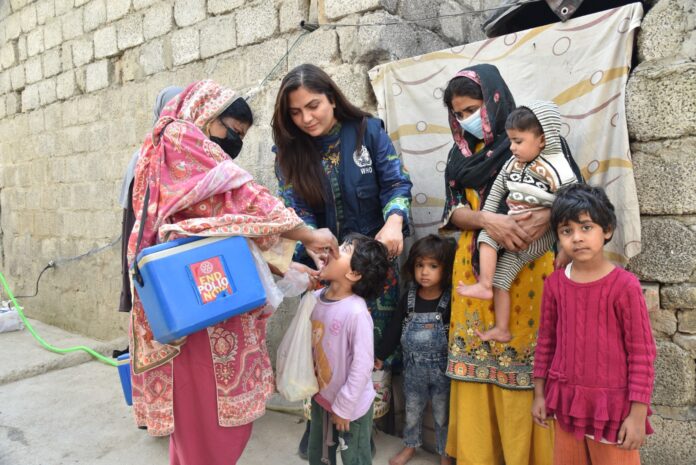
Islamabad, Pakistan – Rotary International has provided a grant of US$ 9.9 million to the World Health Organization (WHO) in Pakistan to support the vaccination of 27 million children against polio in high-risk districts. This partnership will reinforce the operations of the Government of Pakistan-led Polio Eradication Initiative, which conducts multiple nationwide door-to-door campaigns and subnational drives each year, reaching over 45 million children.

Rotary is a founding member of the Global Polio Eradication Initiative (GPEI) – a public-private partnership to eradicate polio worldwide led by national governments with six partners: WHO, Rotary International, the US Centers for Disease Control and Prevention, UNICEF, Gates Foundation and Gavi, the Vaccine Alliance.

Since the launch of Pakistan’s Polio Eradication Initiative three decades ago, Pakistan has reduced polio cases by 99.8% – from 20,000 cases in 1994 to 31 cases in 2025.

Globally, since 1988, the GPEI has brought down polio cases by 99.9%. As of today, wild poliovirus type 1 remains endemic only in two countries: Afghanistan and Pakistan.

To date, Rotary has contributed US$ 3 billion to global polio eradication efforts and nearly US$ 500 million to Pakistan, along with high-level advocacy and countless volunteer hours.

“Rotary’s support is the best example of how a partnership can protect millions of lives. WHO extends its deepest appreciation to Rotary for its continuing support as a founding partner of the Global Polio Eradication Initiative. Rotary’s long-standing commitment is crucial in our journey towards a polio-free world,” said WHO Representative in Pakistan Dr Luo Dapeng.

“Science indicates that ending polio in Pakistan and worldwide is within reach if we sustain the ongoing partnership and eradication efforts. However, the detection of wild poliovirus type 1 in Germany last November is a strong reminder that the cost of inaction would be far greater than the cost of action, since no country and no child will be safe until the virus is fully eradicated everywhere.”

The grant to WHO Pakistan is part of a larger US$ 14.9 million contribution to overall polio eradication efforts in Pakistan. With these funds, WHO will support polio immunization in high-risk districts of Balochistan, Sindh, Khyber Pakhtunkhwa and Punjab. The funds will be allocated to campaign operations, including human resources and incentives, training, transportation, supplies for frontline workers, vaccine carriers, and operational costs.

Field Marshal Munir Meets Police Leadership, Pledges Armed Forces Support

0

Naveed Ahmad Khan

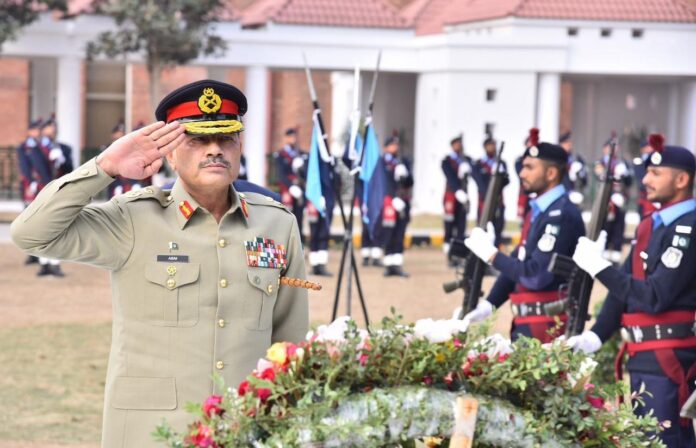
Rawalpindi:Field Marshal Syed Asim Munir, NI (M), HJ, COAS & CDF, visited the National Police Academy, Islamabad, where he interacted with officers of the Police Service of Pakistan. The Federal Minister for Interior, along with the Minister of State for Interior were also present during the visit.

Upon arrival, the Field Marshal was warmly received by the Commandant National Police Academy and was presented with a guard of honour by a smartly turned-out police contingent. The Field Marshal laid a wreath at the Police Martyrs’ Monument and offered Fateha, paying solemn tribute to the Shuhada of the Police who laid down their lives in the line of duty while safeguarding peace, upholding the rule of law, and ensuring public safety across the country. He acknowledged the supreme sacrifices rendered by police personnel in the face of terrorism, crime and internal security challenges.

During the visit, the Field Marshal was briefed on the School for High-Impact Elite Law Enforcement Development (SHIELD), as well as training programs and initiatives aimed at capacity building and modernization of the police. He also interacted with Cadet Assistant Superintendents of Police (ASPs), where he highlighted the pivotal role of the police as the first line of defence in safeguarding the lives, property, and honour of citizens.

While addressing Inspectors General of Police (IGPs), Additional IGPs, and senior police officials, he underscored the importance of inter-agency cooperation, modern policing practices and fostering public trust in law enforcement agencies. He emphasized that a strong, professional, and people-centric police force is indispensable for ensuring internal security and the rule of law. The Field Marshal remarked that the duty of the police to enforce law and order is a sacred trust and that the Armed Forces will always stand fully with the brave and proud police personnel of Pakistan.

The senior police leadership reaffirmed their commitment to further strengthening policing standards, enhancing professional capacity and advancing necessary institutional reforms to meet contemporary security challenges.

Al-Shifa Trust raised Rs35 million at a fundraising event

0
Spokesman Report
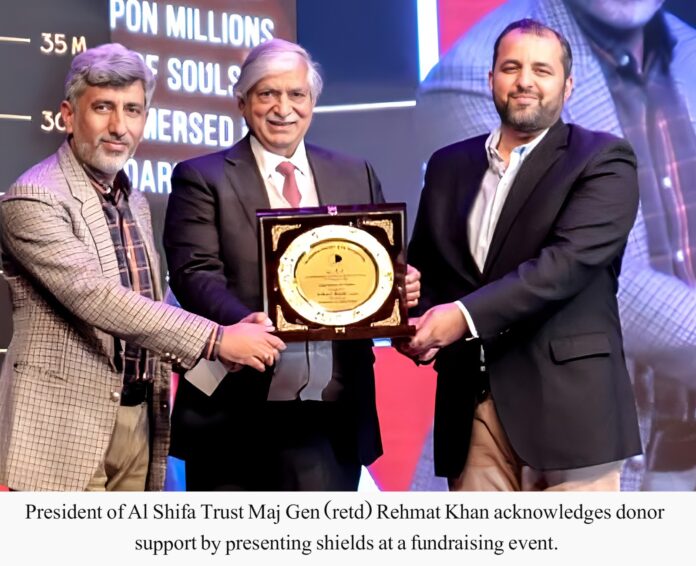
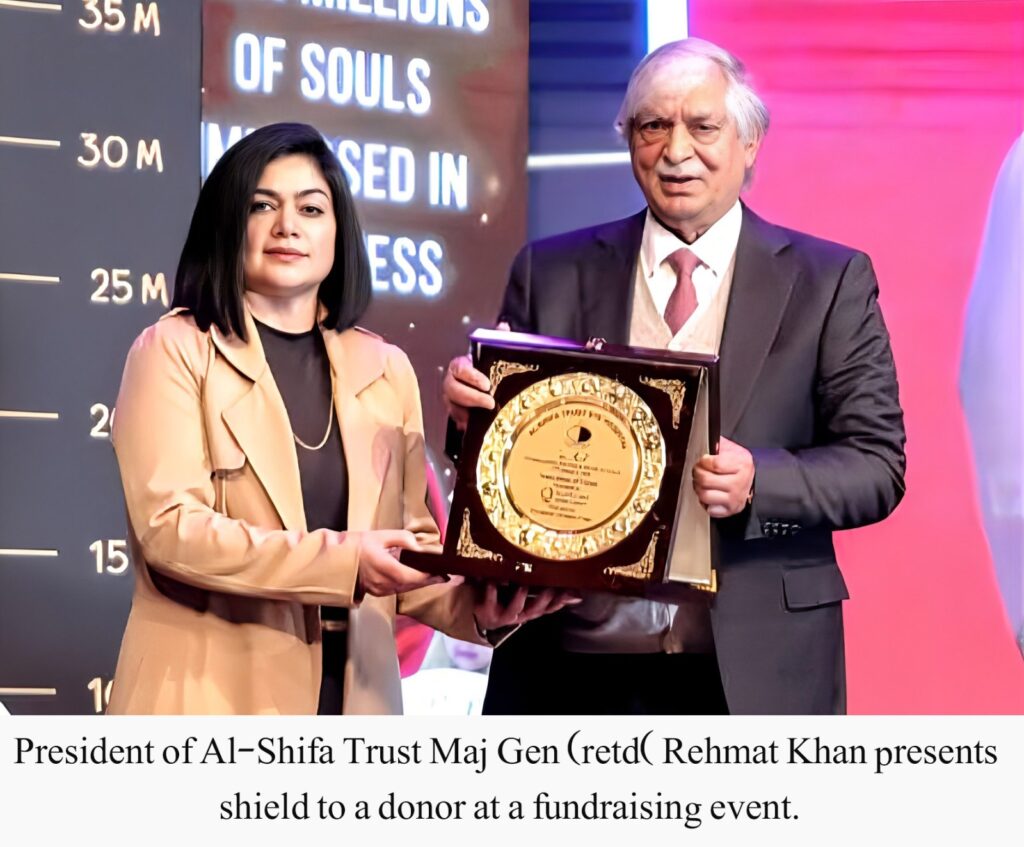
RAWALPINDI :Donors contributed around Rs35 million to Al-Shifa Trust Eye Hospital during a fundraising dinner titled “Noor Phir Sey” held at the Pakistan National Council of the Arts in Islamabad, the trust said.
The funds will support Trust’s free and subsidised eye care services thorough out the country.
The fundraising event combined charitable appeals with cultural and Sufi music performances and drew participation from corporate entities, philanthropists, and members of civil society. Several attendees also pledged to donate their eyes posthumously.
Al-Shifa Trust raised Rs35 million at a fundraising eventMajor contributors included leading corporations, foundations, and individual donors. President of the Al-Shifa Trust, Maj Gen (retd) Rehmat Khan, thanked individual and corporate donors for their support and said sustained philanthropy remained critical for addressing preventable blindness in Pakistan.
He said the trust had grown from serving around 25 patients daily in its early years to treating nearly 5,000 patients a day over the past three decades.
He added that the trust’s cross-subsidisation model allowed paying patients to finance free treatment for those unable to afford care. Nearly 80 percent of patients receive free treatment at its hospitals in Rawalpindi, Chakwal, Kohat, Sukkur, Muzaffarabad, and Gilgit. Lahore Eye Hospital is expected to begin operations by 2027.
Al-Shifa Trust raised Rs35 million at a fundraising eventHe informed that construction of the Haveli Lakha facility has been completed and that it will be inaugurated during the month of Ramadan. The total project cost is Rs162 million, with Rs122 million allocated to construction and Rs40 million to medical equipment.
Notable donors included OGDCL, Askari Bank, Bank of Punjab, Rupani Foundation, Dr. Tahira Idrees, and Group Capt. Imtiaz Ali Khan.
Pakistan’s blindness rate has declined from 1.78 percent in 1990 to about 0.5 percent today, attributing the improvement partly to expanded access to cataract surgery and early diagnosis.
Health experts note that much visual impairment remains avoidable in Pakistan, but rising costs and limited facilities strain rural households. Funds from “Noor Phir Sey” will expand surgical capacity, outreach, and subsidised treatment in underserved regions.