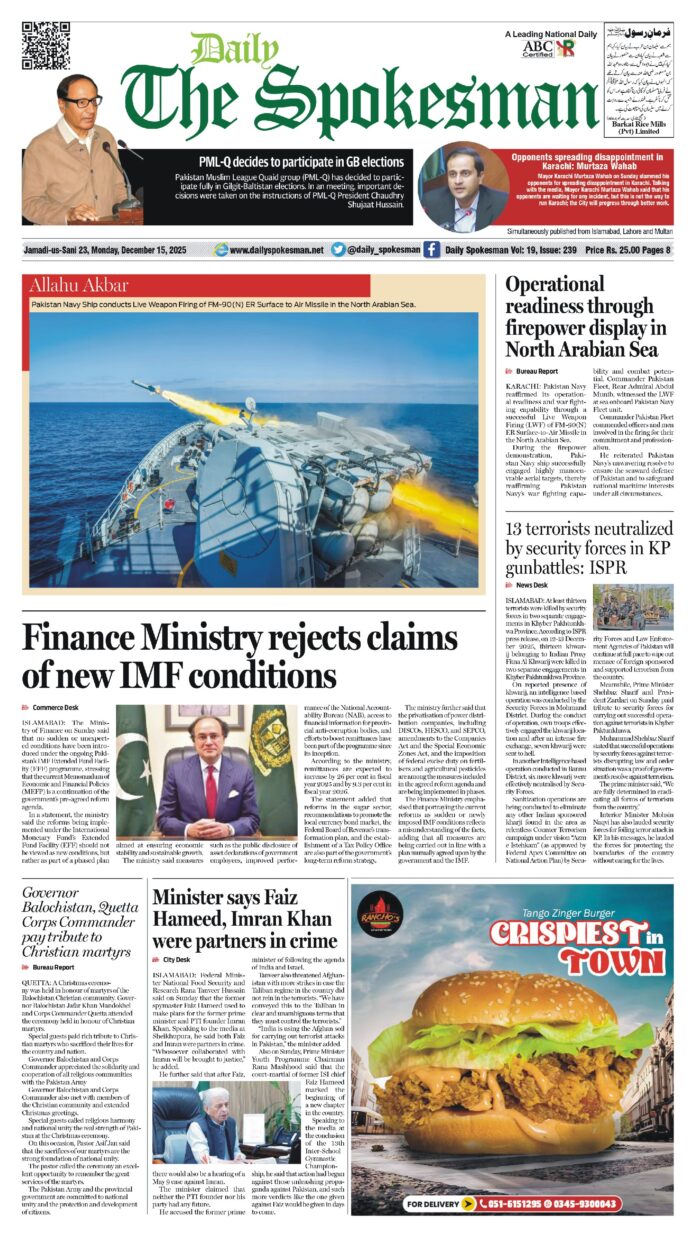
Daily The Spokesman 15 December 2025 PDF
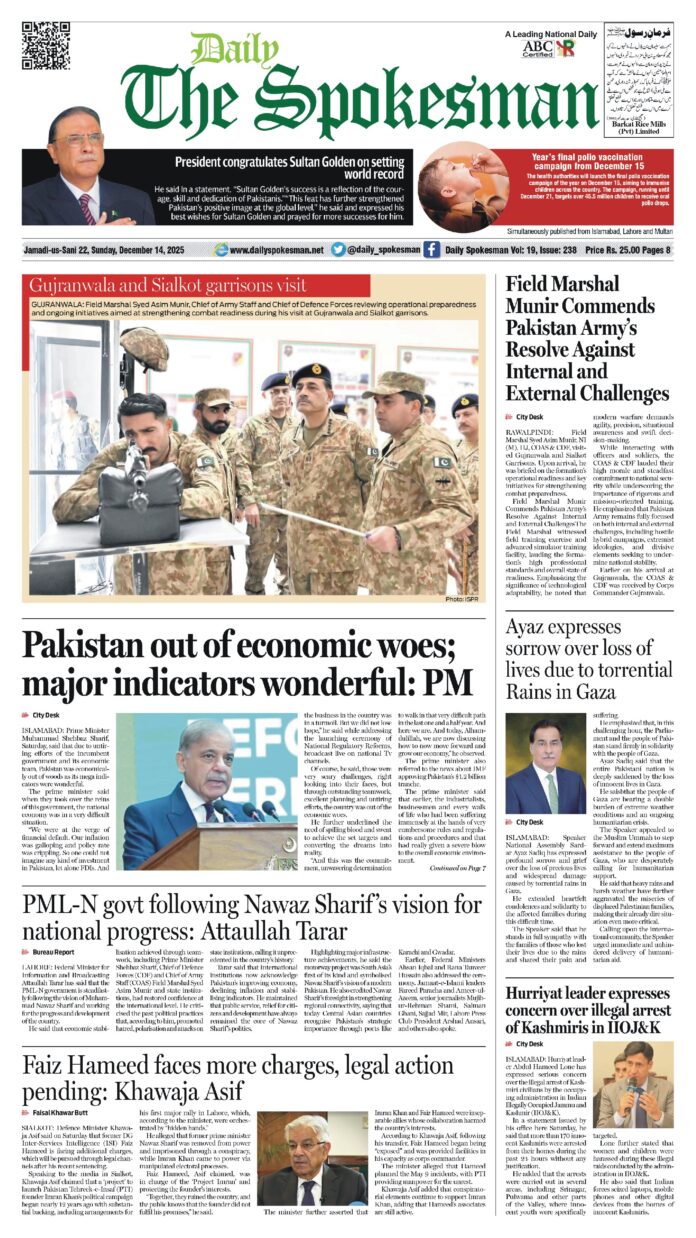
Field Marshal Munir Commends Pakistan Army’s Resolve Against Internal and External Challenges

Spokesman Report
Rawalpindi: Field Marshal Syed Asim Munir, NI (M), HJ, COAS & CDF, visited Gujranwala and Sialkot Garrisons. Upon arrival, he was briefed on the formation’s operational readiness and key initiatives for strengthening combat preparedness.
 The Field Marshal witnessed field training exercise and advanced simulator training facility, lauding the formation’s high professional standards and overall state of readiness. Emphasizing the significance of technological adaptability, he noted that modern warfare demands agility, precision, situational awareness and swift decision-making.
While interacting with officers and soldiers, the COAS & CDF lauded their high morale and steadfast commitment to national security while underscoring the importance of rigorous and mission-oriented training. He emphasized that Pakistan Army remains fully focused on both internal and external challenges, including hostile hybrid campaigns, extremist ideologies, and divisive elements seeking to undermine national stability.
Earlier on his arrival at Gujranwala, the COAS & CDF was received by Corps Commander Gujranwala.
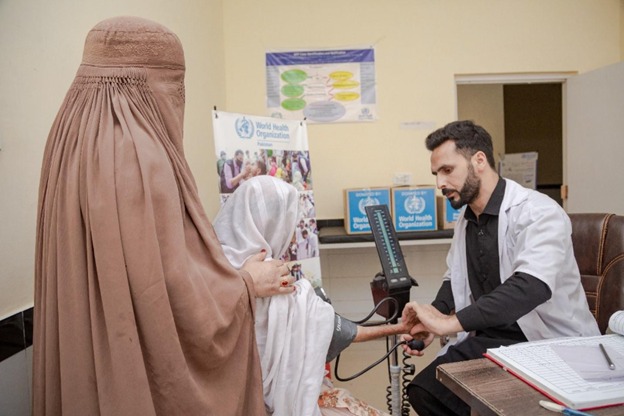
Pakistan extends universal health coverage to 51 million more people in the last decade: WHO report
Spokesman Report
Islamabad, Pakistan – Pakistan has expanded universal health coverage to an additional 51 million people over the last decade – from 87 million in 2015 to 138 million in 2023, according to a joint global report launched by the World Health Organization (WHO) and the World Bank Group ahead of Universal Health Coverage (UHC) Day 2025.
On the occasion of UHC Day, under the international theme “Unaffordable health costs? We are sick of it”, WHO praised the Government of Pakistan for the progress made over the past decade in collaboration with WHO and partners. As part of this partnership, since 2021, WHO has supported Pakistan in piloting a primary health care-oriented model of care to advance the universal health coverage package in 3 districts (Islamabad Capital Territory, Charsadda and Kotli), benefiting more than 1 million people.
The 2025 global monitoring report launched by WHO and the World Bank indicates that Pakistan has increased its service coverage index from 40 in 2015 to 56 in 2023. However, intensified concerted efforts will be required to meet the global target of 80 by 2030.
Despite progress, in 2024, over 14.8 million people still faced catastrophic health expenditures and 11.1 million were pushed below the $2.15/day poverty line across the country due to out-of-pocket medical costs, according to the last estimates of Pakistan’s Universal Health Coverage Monitoring Report elaborated by the Ministry of Health in collaboration with WHO and the British High Commission, Pakistan / Foreign, Common-Wealth and Development Office (FCDO).
“Today, on Universal Health Coverage Day, the World Health Organization reaffirms its commitment to work with Pakistan and its people to expand access to health care for all, no matter where they live or who they are. Despite progress, for millions of people, access to health care remains unaffordable,” said WHO Representative in Pakistan Dr Luo Dapeng.
“No one should be forced to choose between providing life-saving treatment to their daughter or their son because they cannot pay the medical bill. Today, and every day, WHO will stand with Pakistan and its people to build a healthier future for all”.
WHO will stand with Pakistan to address remaining challenges and continue expanding access to basic health services – with a particular focus on the most vulnerable – as a priority to achieve the 2030 Agenda and its Sustainable Development Goals (SDGs).
PODA Call for Ending Early Marriages to Promote Healthier Families
Spokesman Report
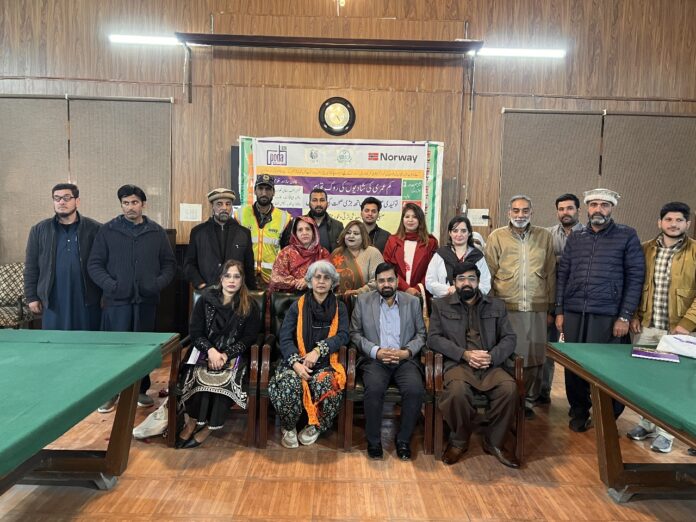
Murree,: Ending child marriages strengthens families, as girls who marry at an appropriate age are physically and emotionally mature, and possess the knowledge, skills, and resilience needed to manage new roles and responsibilities. These views were expressed during a workshop on reproductive health and the complications associated with early and child marriages. The session highlighted how early marriages negatively affect girls’ education, health, and overall wellbeing, emphasizing the need for community awareness and stronger legal protections.
Agha Zaheer Abbas Sherazi, Deputy Commissioner Murree, and Dr. Azhar Mehmood Abbasi, CEO District Population and Health Department, noted that early marriages deprive girls of their constitutional right to education and expose them to preventable pregnancy-related risks. They stressed that educated and healthy mothers contribute to healthier and more resilient future generations.
Dr. Mariam Ali Abbasi, Women Medical Officer and Incharge Family Planning, Health and Population Department, highlighted serious health complications linked with early marriages, including obstetric fistulas, high blood pressure, eclampsia, and pregnancy-related abnormalities. She emphasized that girls’ bodies are not physically prepared for early pregnancies, putting both mother and newborn at high risk.
Nabeela Aslam, Project Head at PODA, moderated the workshop and reiterated the demand to raise the minimum legal age of marriage for girls to 18 years in Punjab. She noted that Sindh, Balochistan, the Islamabad Capital Territory, and many Muslim-majority countries have already enacted laws setting 18 as the minimum age of marriage for girls, establishing an important precedent for protecting girls’ rights and wellbeing.
Participants recommended conducting more awareness-raising activities and educating parents and communities at all levels. They stressed the importance of involving key stakeholders—including religious scholars, community elders, lawyers, doctors, teachers, lady health workers, girls, and men—to build collective understanding and commitment to ending early marriages.
The workshop saw strong district-level support, with participation from Deputy Commissioner Murree Agha Zaheer Abbas Sherazi, Dr. Azhar Mehmood Abbasi, Deputy District Health Officer Dr. Nauman Shoukat, DEA Sidra Batool, and the Deputy Education Officer.
The activity was conducted by PODA under the project “Reduce Early Marriages to Enhance Gender Equality,” supported by the Royal Norwegian Embassy, Islamabad, with collaboration from the District Health and Population Department.
4th African Startup Conference in Algiers December 6-8, 2025
Spokesman Report
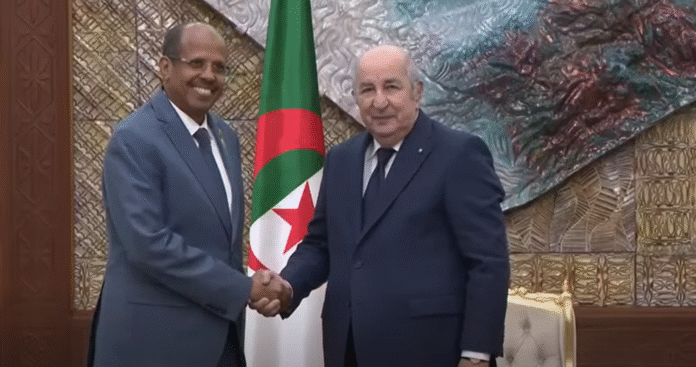
Islamabad: The 4th African Startup Conference, held under the High Patronage of the President of the Republic, H.E Mr. Abdelmadjid Tebboune, in Algiers from December 6-8, 2025, under the theme “Proud of Africa’s Entrepreneurs,” provided an opportunity for Algeria to reaffirm its continental leadership in the digital economy and its support for innovation and young African entrepreneurs.
Ministers, representatives of startups, and innovative project owners from across the continent discussed a range of topics, including the development of technologies and communications infrastructure, the expansion of startups, and the African innovation ecosystem, all with the aim of developing Africa’s digital economy.
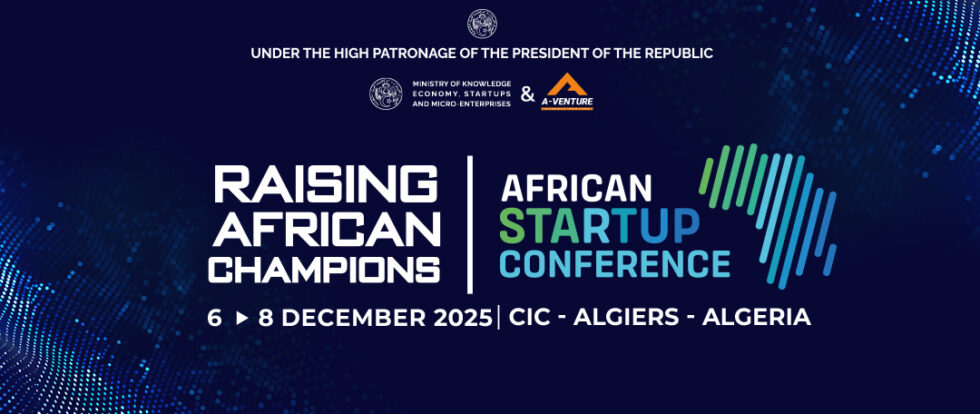 The conference culminated in the adoption by African ministers responsible for startups, entrepreneurship, and innovation of the “Algiers Declaration,” in which they expressed their commitment to supporting continental startups in expanding their activities into regional and international markets and enhancing their access to funding sources. They emphasized the shared will to support innovation and entrepreneurship and to empower startups to achieve success and sustainable growth for the continent. This prominent event was organized by the Ministry of Knowledge Economy, Startups, and Micro-Enterprises, and the public accelerator “Algeria Venture,” with the participation of more than 35 ministerial delegations, over 200 exhibitors from Africa and beyond, and more than 300 international experts. The conference was attended by over 150 investors, as well as a significant number of project holders, incubators, and entrepreneurs from the African diaspora.
Algeria: A Leading Destination for Innovation and Economic Integration in Our Continent:
In his opening address to the conference, Prime Minister Sifi Gharib highlighted the importance of this continental event, which he described as “the largest platform bringing together innovative youth” and a “renewed opportunity to exchange experiences and promote entrepreneurship in Africa.” He noted that the conference’s theme “clearly reflects the capabilities of our youth, who transform challenges into opportunities and aspirations into a knowledge-based and innovative economic reality.” He emphasized “the importance of empowering our emerging companies to expand continentally and build a unified African technology market, thereby attracting greater investment and showcasing African leaders capable of competing regionally and internationally.”
President Abdelmadjid Tebboune added, “The convening of this conference just three months after Algeria hosted the Intra-African Trade Fair (IATF 2025) underscores our deep commitment to serving Africa and reflects our desire for Algeria to be a leading destination for innovation and economic integration on our continent.”
The continental event, launched by Algeria in 2022, featured several parallel activities and specialized sessions on research and innovation, content creation, financial technology, and artificial intelligence, in addition to an exhibition showcasing the innovative capabilities of young Africans. The conference was also marked by the adoption, by African ministers responsible for the knowledge economy and startups, of the fourth “Algiers Declaration” on startup development. In this declaration, they affirmed their commitment to supporting continental startups in expanding their operations into regional and international markets and enhancing their access to funding sources, praising the vision of the President of the Republic, which champions innovation, economic integration, and African youth.
– Special attention was given to the contribution of the diaspora in promoting entrepreneurship:
The conference, with Rwanda as the guest of honor, also culminated in the ratification of the tax framework for startups, innovation, and research and development on the continent, aiming to create supportive environments for startups. Furthermore, the African ministers responsible for the communications and information technology sector, under the auspices of the African Telecommunications Union, adopted the Algiers Declaration on “Fair, Secure, and Responsible Digital Platforms in Africa.” The conference provided an opportunity to highlight Algeria’s efforts in the knowledge economy. In recent years, Algeria has worked to build a comprehensive system to support startups, enabling the growth of over 13,000 startups through a flexible legal framework, an incentive-based tax system, an open environment for innovation, and significant investments in technological and research infrastructure. The goal is to reach 20,000 startups by the end of 2029. During the conference, the Minister of Environment and Quality of Life, Kaouthar Krikou, announced the launch of an Algerian-African training program for young people across the continent in the field of ecology, aimed at encouraging their engagement in environmental entrepreneurship. This initiative is being undertaken in collaboration with the Ministry of Knowledge Economy.
Representatives of numerous African startups participating in the exhibition held alongside the conference emphasized Algeria’s pioneering role in developing the startup ecosystem on the continent in recent years, both through the initiation of this conference and the launch of the African Startup Fund. The conference provided an open space for Algerian startups to compete and showcase their innovative projects in various fields, such as agriculture, the environment, computer science, and the internet. The presentations focused on the advanced solutions offered by Algerian startups, reflecting the vitality of the startup ecosystem in Algeria and its ability to meet the needs of the local and regional market.
– Building a Unified African Technology Market:
The continental meeting featured presentations of Algerian social media platform projects developed by Algerian startups. These platforms offer alternative interactive spaces that respect the specific needs of Algerian users and support local content, while also promoting innovation in digital technology. The role of Algerians living abroad in advancing the national startup ecosystem and the knowledge economy was also emphasized, highlighting their significant contribution to the development of the first national strategy in artificial intelligence. The importance of strengthening communication and cooperation between Algerian talents both within the country and abroad was also underscored.
President Abdelmadjid Tebboune concluded his speech by emphasizing “the importance of enabling our emerging institutions to expand continentally and build a unified African technology market, which will attract greater investments and highlight African pioneers capable of competing regionally and internationally.”
World Bank Announces New Project to Improve Urban Services and Resilience in Punjab

Spokesman Report
ISLAMABAD, December 12, 2025 – The World Bank’s Board of Executive Directors approved yesterday, $400 million in financing for a new project that will provide safely managed water, sanitation and basic hygiene services, and help improve the institutional and financial performance of local urban administration in Punjab province.
The Punjab Inclusive Cities Program (PICP) will support the improvement and rehabilitation of water supply networks, sewerage systems, and wastewater treatment plants, provide stormwater drainage, and enhance the capacity of local governments to sustainably deliver services and increase revenues in 16 secondary cities in Punjab. The program will also support the improved performance of solid waste management systems in Punjab, including for sanitary disposal of waste.
“Reducing child stunting is essential for Pakistan’s future. Through the Punjab Inclusive Cities Program, we are investing in safe water, sanitation, and hygiene services to break the cycle of malnutrition and disease that holds back so many children from reaching their full potential,” said Bolormaa Amgaabazar, World Bank Country Director for Pakistan. “In collaboration with the Punjab Government, the program represents a significant step forward in improving urban infrastructure and strengthening local institutions, thereby laying the foundation for healthier communities and a more prosperous Pakistan.”
PICP aims to deliver improved water, sanitation, hygiene and drainage services to approximately 4.5 million people and improved solid waste management services to an additional 2 million people. The Program will help reduce healthcare costs by lowering waterborne disease, lower child stunting rates, and strengthen the capacity of urban local governments to deliver sustainable services.
“The program complements infrastructure investments with capacity building and revenue generation, helping to ensure that service delivery is well sustained,” said Amena Raja, Senior Urban Specialist for the World Bank. “It will also help Punjab’s cities better withstand floods and droughts, ensuring urban development is both environmentally responsible and resilient to climate change.”
The program also delivers important gender benefits by prioritizing hiring women especially in decision-making roles, establishing gender complaint desks, and providing targeted capacity building to help female workers develop new skills and advance. Community campaigns also promote better hygiene practices at the household level to support improved health outcomes. The program aims to mobilize private capital to support water and sanitation services in secondary cities in Punjab.
The new program aligns with Pakistan’s national development priorities and provides support to ongoing provincial programs including the Punjab Development Program and the Suthra Punjab Program. It is the second phase of the World Bank-supported Pakistan Urban Water, Sanitation and Hygiene Services Multiphase Programmatic Approach.
Legal Proceedings Conclude as Faiz Hameed Receives 14-Year Sentence; Rights to Appeal Confirmed by Court
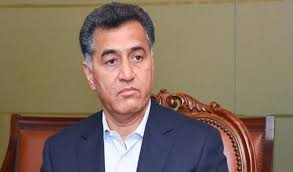
Naveed Ahmad Khan
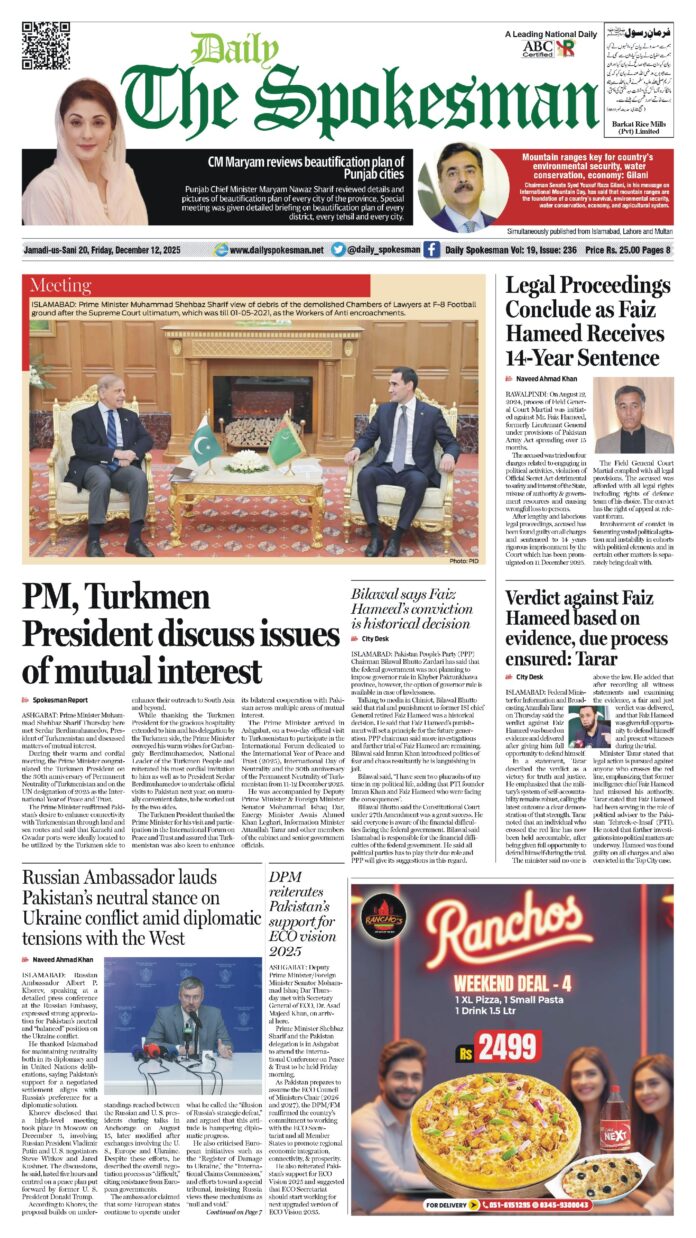
Rawalpindi:On August 12, 2024, process of Field General Court Martial was initiated against Mr. Faiz Hameed, formerly Lieutenant General under provisions of Pakistan Army Act spreading over 15 months.
The accused was tried on four charges related to engaging in political activities, violation of Official Secret Act detrimental to safety and interest of the State, misuse of authority & government resources and causing wrongful loss to persons.
After lengthy and laborious legal proceedings, accused has been found guilty on all charges and sentenced to 14 years rigorous imprisonment by the Court which has been promulgated on 11 December 2025.
The Field General Court Martial complied with all legal provisions. The accused was afforded with all legal rights including rights of defence team of his choice. The convict has the right of appeal at relevant forum.
Involvement of convict in fomenting vested political agitation and instability in cohorts with political elements and in certain other matters is separately being dealt with.
