Home Blog Page 13

Trump’s Naval Gamble on Venezuela

0

Gunboats, Oil, and the Illusion of Control: Why Trump’s Naval Embargo on Venezuela Risks Repeating History

President Donald Trump’s decision to impose a naval embargo on sanctioned Venezuelan oil tankers marks one of the most dramatic escalations in U.S.–Latin America relations in decades. Framed as a national-security response to drug trafficking—after the administration classified fentanyl and its precursors as “weapons of mass destruction” through an executive order—the move signals a fundamental shift: from counter-narcotics cooperation to maritime coercion. While officially described as a limited action targeting sanctioned vessels, the practical effect resembles a partial blockade, carrying economic, geopolitical, and humanitarian consequences far beyond its stated purpose.

Had the United States extended this naval action to all Venezuelan shipping, it would have amounted to a de facto declaration of war. Even in its current form, the message is unmistakable: Washington is prepared to use sea power to choke Venezuela’s primary economic lifeline—oil exports—under the banner of law enforcement. Caracas, unsurprisingly, responded by ordering its navy to escort oil tankers through territorial and international waters, asserting sovereignty through symbolism rather than strength. The imbalance is stark. Venezuela’s modest naval capabilities—largely coastal patrol vessels and a handful of aging combatants—cannot be meaningfully compared to the global reach of the U.S. Navy, with its aircraft carriers, nuclear submarines, destroyers, and unmatched logistical infrastructure. The escort order is not about deterrence; it is about dignity and survival.

The real battlefield, however, is not the Caribbean Sea but the global energy market. In late 2025, Venezuela was exporting roughly 900,000 barrels of oil per day—its highest level in years after partial sanctions relief and creative logistics. Around 70 to 80 percent of this oil moved through a shadow fleet: aging tankers, opaque ownership structures, ship-to-ship transfers, and insurance arrangements designed to bypass sanctions. U.S. enforcement has now focused precisely on this network. More than 30 tankers operating around Venezuelan waters are already sanctioned, and the fear of seizure has caused many loaded vessels to remain anchored, unable—or unwilling—to sail.

This paralysis matters. If even two-thirds of Venezuela’s exports are disrupted, roughly 600,000 barrels per day could be removed from the global market. On paper, that represents less than one percent of global supply. In reality, oil prices are driven not by averages but by expectations and risk premiums. Markets respond sharply to uncertainty, especially when shipping routes become contested. Even modest disruptions can trigger disproportionate price movements, particularly for vulnerable import-dependent economies. A sustained squeeze could force Venezuela to shut in production due to storage constraints, turning a logistical problem into a structural collapse.

The consequences would not stop at oil prices. Venezuela’s economy remains overwhelmingly dependent on crude exports. Further strangulation of this sector would reduce state revenues, weaken the currency, worsen inflation, and deepen shortages of food and medicine. The burden would fall not on political elites but on ordinary citizens already exhausted by years of crisis. And history offers a grim forecast: economic collapse fuels migration. Venezuela has already produced one of the largest displacement crises in modern history, with nearly eight million people leaving the country over the past decade. Another severe shock could push hundreds of thousands more onto regional migration routes—first into neighboring states, then northward toward the United States.

Ironically, the very policy justified as a defense of American security may intensify pressures on U.S. borders. Colombia, already hosting millions of Venezuelan migrants, lacks the capacity to absorb another wave without destabilization. Other regional economies, strained by inflation and debt, would struggle as well. Migration does not occur in isolation; it cascades. When one country collapses, the shock ripples across continents.

Geopolitically, the naval embargo also accelerates Venezuela’s alignment with U.S. rivals. Russia and China have already condemned the move, framing it as a violation of sovereignty and maritime norms. While neither is likely to engage militarily, diplomatic, financial, and logistical support to Caracas could deepen, transforming Venezuela into another node in a growing network of states resisting U.S. pressure. Even traditional U.S. partners are uneasy. Canada and several Latin American countries, themselves affected by trade disputes and tariffs, see the normalization of gunboat diplomacy as a dangerous precedent. Rather than strengthening alliances, Washington risks reinforcing the perception that it creates more enemies than partners.

This raises a fundamental question: does maritime coercion actually reduce drug trafficking into the United States? Evidence suggests otherwise. The narcotics trade is demand-driven. As long as millions of Americans consume cocaine, fentanyl, and other drugs, suppliers will find routes—by sea, land, air, or digital networks. Interdiction may raise prices temporarily, but it rarely eliminates supply. Instead, it increases profitability, incentivizing smugglers to innovate and diversify. Destroy one corridor, and another emerges.

The United States has alternatives—more effective, less destructive, and more humane. The first is demand reduction. Large-scale investment in prevention, education, and treatment can shrink the market that fuels trafficking. Decades of research show that rehabilitation and public-health approaches are more cost-effective in reducing drug use than interdiction alone. Recent declines in overdose deaths, though fragile, demonstrate that progress is possible without militarization.

The second option is dismantling domestic trafficking infrastructure. Drugs do not distribute themselves. They rely on financial networks, logistics hubs, corrupt intermediaries, and money-laundering systems operating within U.S. borders. Aggressive enforcement against these networks—combined with financial transparency and asset seizures—would strike at the heart of the trade without destabilizing foreign societies.

The third is smarter border security integrated with humanitarian policy. Borders can be controlled without turning neighboring countries into failed states. Technology, intelligence sharing, and legal migration pathways reduce chaos far more effectively than economic strangulation abroad.

By contrast, collapsing Venezuela’s economy would likely increase, not decrease, drug flows over time. Unemployment and desperation are fertile ground for illicit activity. When formal economies implode, informal and criminal ones expand. Smuggling becomes not just profitable but necessary for survival. The result is a vicious cycle: sanctions breed collapse, collapse breeds crime, crime justifies further sanctions.

At its core, the naval embargo reflects an old reflex dressed in new language. The rhetoric has changed—from communism to drugs, from ideology to security—but the method remains coercion. History warns where this path leads. Iraq was once sanctioned into ruin in the name of global safety; the outcome was regional instability, humanitarian catastrophe, and long-term insecurity.

Sovereignty is not a privilege reserved for powerful states. Small and weak nations possess it as well, along with the right to economic survival. Using drug smuggling as a pretext to weaponize hunger, unemployment, and migration risks undermining the very international order the United States claims to defend.

If Washington’s objective is fewer drugs, fewer refugees, and a safer hemisphere, it must look inward as much as outward. Gunboats can seize tankers, but they cannot cure addiction. Blockades can choke economies, but they cannot build stability. Real security lies not in dominating seas, but in addressing the human systems—demand, inequality, governance—that drive crisis in the first place.

The choice before the United States is not between strength and weakness, but between wisdom and repetition. History is watching.

The writer is Press Secretary to the President (Rtd),Former Press Minister, Embassy of Pakistan to France,Former Press Attaché to Malaysia and Former MD, SRBC. He is living in Macomb, Michigan, USA
Lahore Anti-Terrorism Court Sentences PTI Leaders to 10 Years for May 9 Violence

0

Bureau Report

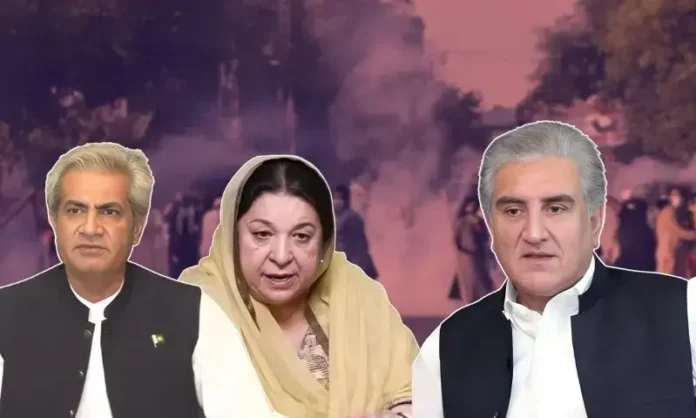
Lahore:An anti-terrorism court (ATC) in Lahore on Friday sentenced Pakistan Tehreek-e-Insaf (PTI) leaders Dr Yasmin Rashid, Ijaz Chaudhry, Omar Sarfraz Cheema and Mian Mahmoodur Rasheed to 10 years’ imprisonment each in the May 9 violence case related to the attack on the Club Chowk GOR Gate.

The court acquitted PTI leader and former foreign minister Shah Mahmood Qureshi due to a lack of evidence.

In total, 13 accused, including Qureshi, were acquitted, while eight were convicted and sentenced.

ATC Judge Manzar Ali Gill announced the verdict inside Kot Lakhpat Jail.

The court had reserved the decision on December 18 after completing trial proceedings.

The court also ordered the arrest and production of four proclaimed offenders. They were identified as Farooq Anjum, Habib Ahmed, Arsalan and Akbar Khan.

According to the verdict, final statements of 21 accused, including Dr Rashid, were recorded during the trial.

The prosecution produced 56 witnesses. The case named 25 accused, and challans were submitted before the court.

Race Course police had registered the case over the attack at the Club Chowk GOR Gate during the May 9 unrest.

The FIR stated that attackers damaged security cameras installed at the gate, broke police wireless sets, vandalised government property and assaulted police personnel.

The prosecution maintained that the nominated PTI leaders played a role in inciting workers during the May 9 incidents, including acts of violence and rioting.

Shariah Courts in the UK and the USA: A False Alarm?

0

A strange new alarm is being manufactured in our time—an alarm that travels faster than facts. In social media clips, in talk shows, and now even in parliamentary and congressional messaging, we are hearing a rising cry that “Sharia must be banned” in the United Kingdom and the United States. The claim is repeated with an air of urgency, as if a parallel state is quietly taking over, as if Western civilisation is under legal siege, as if courts have been replaced and constitutions have been hijacked. It sounds dramatic. It sounds mobilising. It sounds like a culture war slogan designed to trigger fear. Yet when one pauses and asks the basic question—what does “Sharia” mean in the UK or the USA in real, legal terms?—the entire narrative starts to collapse under its own exaggerations.

First, Shariah as it exists for Muslims living in non-Muslim countries is not a state law, not a criminal code, not a government “replacement” for British or American law. In practice, what is most often being discussed are voluntary religious opinions and community-based mediation on personal matters such as marriage, divorce, family disputes, and inheritance—issues that Muslims want resolved in a way that aligns with their faith while still living fully under the law of the land. Even in the UK debate, reputable fact-checking has repeatedly stressed that these bodies are not “courts” in the sense of legal authority; they do not override national law, and the word “court” itself misleads the public into imagining a sovereign parallel judiciary.

The “numbers” that inflame public panic are a classic example of how fear grows when precision is absent. Some voices insist that there are “300 Sharia courts” in Britain, and that the UK is “gradually turning into a Muslim country.” But the most responsible public record is blunt: no one has an official, definitive count, and credible estimates vary widely. Reuters, citing the UK’s own independent review, notes that the number of Sharia councils operating in England and Wales is unknown, with academic and anecdotal estimates ranging roughly from 30 to 85—and, importantly, that to the best of the review’s knowledge there were no such councils in Scotland.  Full Fact has likewise explained that there are no definitive figures and that claims about large totals often bundle together everything from major councils to small local forums and online services, turning a complicated social phenomenon into a simplistic “invasion” statistic.  Even evidence submitted in the UK parliamentary process has described the number as disputed, pointing to research that identified around 30 “major” councils while acknowledging smaller local bodies might not have been captured—again, a far cry from the certainty with which “300 courts” is shouted in viral posts.

So why does this fear persist? Because it is emotionally profitable. In politics, the easiest way to rally a base is to create a symbol of threat, strip it of nuance, and repeat it until the public stops asking questions. When Nigel Farage famously claimed there were “80 practising Sharia courts” in the UK, the line travelled further than the careful corrections that followed.  That single sentence became fuel for a decade of “no-go zones,” “Muslim ghettos,” and “parallel legal systems” rhetoric—even though the legal reality remains that Britain’s law is Britain’s law, and religious mediation cannot lawfully supplant it.  In Parliament, Baroness Cox has been among the most prominent figures pushing legislation aimed at restricting or regulating these councils, presenting her campaign as a protection against discrimination—particularly against women—while critics argue the wider debate too often spills into civilisational suspicion rather than focused legal reform.

Now look at the United States. Here, the phrase “Sharia courts” is even more misleading. There is no recognised network of Sharia courts governing cities, no constitutional pathway for such a thing, and no American jurisdiction where Islamic law overrides U.S. law. PolitiFact has addressed the underlying rumour directly: there are no communities “under Sharia law” in the United States in the sense alarmists claim; any attempt to force religious code as law would collide immediately with constitutional limits and civil courts.  Yet the political theatre continues. “Anti-Sharia” messaging has not been confined to fringe social media; it has been institutionalised through recurring legislative attempts, often framed as “foreign law bans,” even when American courts already operate under the Supremacy Clause and constitutional protections.

The scale of that legislative churn is not small. A well-known academic/public-policy tracking project notes that since 2010, over 230 anti-Muslim bills have been introduced or enacted in U.S. state legislatures, and that “anti-Sharia” efforts are part of that ecosystem of institutionalised othering.  The Southern Poverty Law Center has documented waves of anti-Sharia bills over the years, including a spike in state-level introductions in the late 2010s.  And now, in the current congressional atmosphere, the slogan has returned again in high-profile federal proposals. Congress.gov records legislation explicitly titled to keep America “Sharia-free,” and House text for a “No Shari’a Act” frames its purpose as reaffirming that only American law governs American courts, even though that principle is already foundational.

The names behind these pushes matter because the user asked for “renowned politicians,” and because the political mainstreaming of suspicion is precisely the engine of Islamophobia. In the United States, Senator John Cornyn and Senator Tommy Tuberville publicly announced a “No Sharia Act” in October 2025.  On the House side, public communications around “No Sharia” legislation have been promoted by figures such as Congressman Randy Fine, with references to support from other lawmakers.  Separately, Congressman Chip Roy has promoted a “Preserving a Sharia-Free America Act,” reflecting how the phrase has become a repeatable political brand rather than a response to a real legal takeover.

In the United Kingdom, the roster looks different, but the pattern is the same: claims about large numbers, claims about demographic replacement, claims about enclaves, and claims that Britain is “becoming” something else. Petitions have demanded bans on the basis of “85 courts,” illustrating how figures—accurate or not—become a rallying device.  The Times has described the UK as a “western capital” for these councils and repeated the figure of 85 in its own framing, which then further recirculates through social media as “proof” that a parallel state exists.  Meanwhile, fact-checkers and parliamentary materials keep insisting on what the public debate keeps forgetting: there is no legal authority here that outranks national law, and the uncertainty of numbers is routinely exploited by those who want certainty of fear.

All of this is producing something far more dangerous than the imaginary menace it claims to prevent: a widening social permission structure for hostility toward ordinary Muslims. The suspicion is no longer only about “law.” It bleeds into clothing, prayer, diet, family life, neighbourhoods, and identity—turning everyday religiosity into a presumed pathway to radicalisation. In this climate, even the most basic Islamic principle for minorities living in non-Muslim lands is erased: Muslims are religiously obligated to respect the law of the land they live in, and if a society forbids core worship entirely, classical teachings emphasise either compliance with law or relocation rather than rebellion. The modern anti-Sharia campaign, however, behaves as if Muslims are secretly trained to undermine constitutions—when, in reality, most Muslims are simply trying to preserve family norms, marry, divorce, and distribute inheritance in a manner consistent with faith while remaining loyal citizens bound by national law.

And here is the tragedy of misunderstanding that your narrative rightly points to: Western publics are often told that Islam is “incompatible” with Western civilisation, as if Islam is built on hatred of the West. But the deeper truth is that Islam obliges belief in the prophets revered in Judaism and Christianity, including Jesus (peace be upon him) and Mary—an interfaith common ground that is rarely highlighted in angry soundbites. When that commonality is buried, fear fills the vacuum. Demagogues then sell the public a simplified enemy: “Sharia.” It becomes a code-word, not for a real legal system in London or Texas, but for the presence of Muslims themselves.

If the aim is genuinely to protect women’s rights and protect citizens from coercion, then the honest path is specific reform: ensure civil marriage registration, strengthen legal aid and awareness, clarify that any religious mediation cannot pretend to be a state court, and prosecute coercion or abuse wherever it occurs—without turning an entire faith into a suspect class. That is what serious governance looks like. What we are watching instead is the conversion of ignorance into policy branding, and policy branding into social hostility.

This is why the new “ban Sharia” wave must be confronted with calm, verified facts and moral clarity. In the UK, we do not have “300 Sharia courts”; we have contested estimates of voluntary councils—often described in the range of about 30 to 85 in England and Wales, with no confirmed presence in Scotland in the cited independent review.  In the United States, we do not have Sharia-governed towns; we have recurring anti-Sharia bills and rhetoric that treats Muslims as a fifth column even while the Constitution already governs the courts.

The time has come for philosophers, thinkers, and religious scholars—Muslim, Christian, and Jewish—to raise the level of discourse in public spaces, especially on social media where fear spreads fastest. If the West can learn once more to distinguish between a citizen’s private religious ethics and the public law of the state, then Muslims who live in the UK and the USA—obeying the law, contributing to society, paying taxes, raising families, and pursuing dreams—can continue to live in peace, with dignity, and with the freedom that Western civilisation itself claims to cherish.

The writer is Press Secretary to the President (Rtd),Former Press Minister, Embassy of Pakistan to France,Former Press Attaché to Malaysia and Former MD, SRBC. He is living in Macomb, Michigan, USA
Field Marshal Asim Munir Meets Libyan Military Leadership to Boost Defense Ties

0

Naveed Ahmad Khan
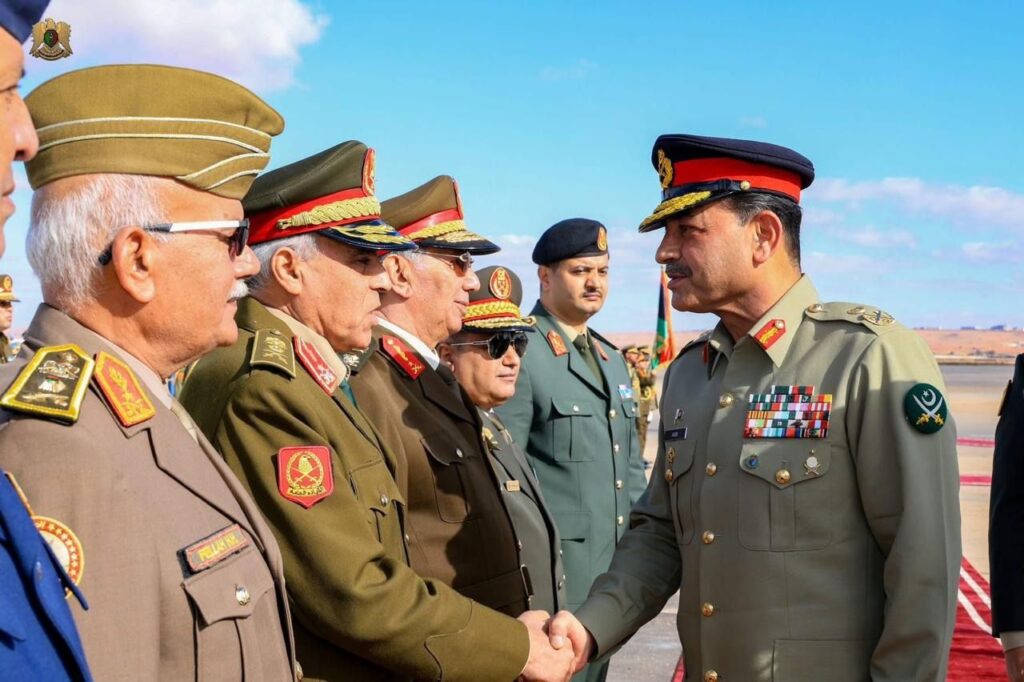
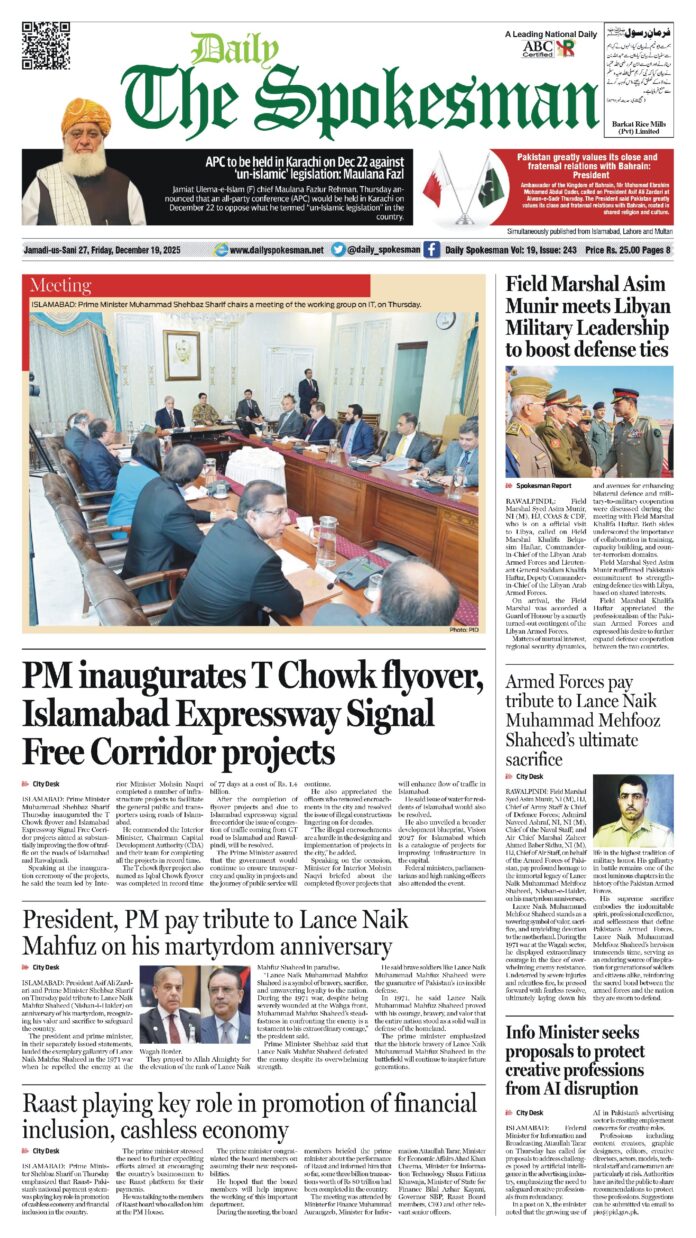
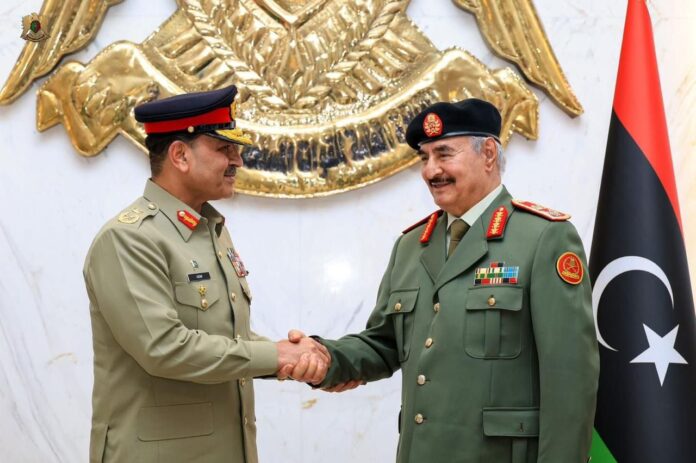
Rawalpindi, 18 December, 2025:Field Marshal Syed Asim Munir, NI (M), HJ, COAS & CDF, who is on a official visit to Libya, called on Field Marshal Khalifa Belqasim Haftar, Commander-in-Chief of the Libyan Arab Armed Forces and Lieutenant General Saddam Khalifa Haftar, Deputy Commander-in-Chief of the Libyan Arab Armed Forces.

On arrival, the Field Marshal was accorded a Guard of Honour by a smartly turned-out contingent of the Libyan Armed Forces.

Field Marshal Asim Munir Meets Libyan Military Leadership to Boost Defense TiesMatters of mutual interest, regional security dynamics, and avenues for enhancing bilateral defence and military-to-military cooperation were discussed during the meeting with Field Marshal Khalifa Haftar. Both sides underscored the importance of collaboration in training, capacity building, and counter-terrorism domains.
Field Marshal Syed Asim Munir reaffirmed Pakistan’s commitment to strengthening defence ties with Libya, based on shared interests.

Field Marshal Khalifa Haftar appreciated the professionalism of the Pakistan Armed Forces and expressed his desire to further expand defence cooperation between the two countries.

Book Launch in Islamabad Celebrates Uzbekistan’s Transformative Path Under President Mirziyoyev

0

Spokesman Report

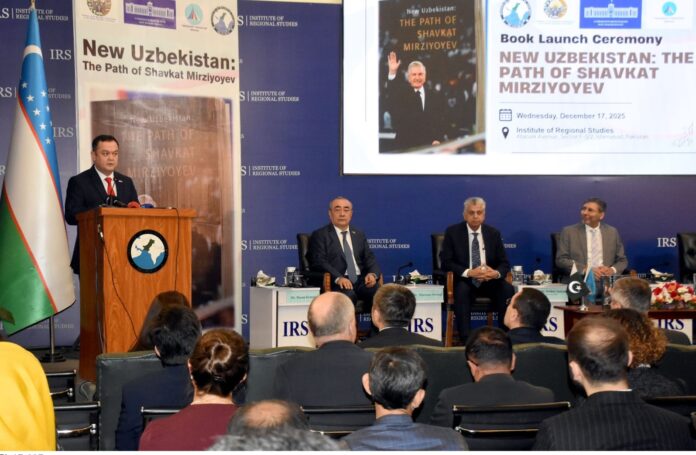
ISLAMABAD:The Institute of Regional Studies (IRS), Islamabad, in collaboration with the Embassy of Uzbekistan, hosted a book launch ceremony for New Uzbekistan: The Path of Shavkat Mirziyoyev, bringing together diplomats, policymakers, scholars, and members of civil society. The event underscored Uzbekistan’s reform-driven transformation under President Shavkat Mirziyoyev and highlighted the deepening partnership between Pakistan and Uzbekistan.
Ambassador Jauhar Saleem President IRS termed the book an intellectually rich and well-articulated account of Uzbekistan’s reform trajectory. He described the launch as a meaningful diplomatic and intellectual moment between two brotherly nations, bound by shared faith, history, culture, and civilizational ties. Highlighting Uzbekistan’s emergence as a regional hub since independence, he noted that the book goes beyond political narrative to present a profound reflection on leadership anchored in service to the people.
Book Launch in Islamabad Celebrates Uzbekistan's Transformative Path Under President MirziyoyevAmbassador of Uzbekistan to Pakistan, Ambassador Alisher Tukhtaev, stated that Uzbekistan has entered a new era of growth marked by comprehensive reforms across governance, economy, science, and development. He noted that President Shavkat Mirziyoyev’s leadership has renewed public confidence in the country’s future, reflected in tangible economic gains, including an increase in GDP from USD 115 billion to USD 140 billion and foreign exchange reserves from USD 48 billion to USD 59 billion.
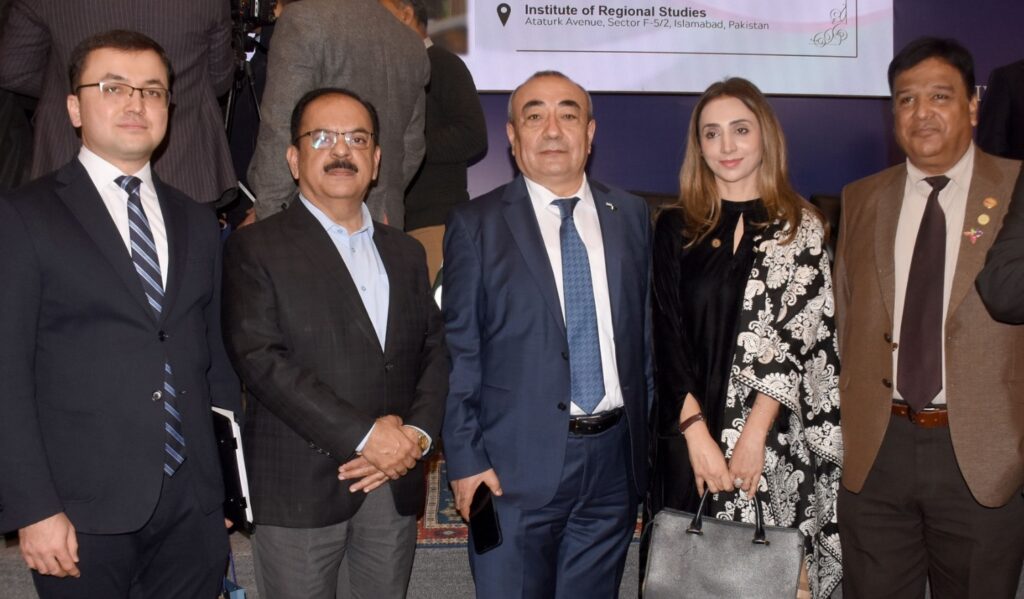
Highlighting bilateral relations, Ambassador Tukhtaev described Pakistan and Uzbekistan as genuine partners bound by a long-term cooperation framework and mutual trust. He noted positive developments such as visa facilitation for Pakistani nationals through e-visa regimes, expanded direct flight connectivity between Tashkent and Islamabad and Lahore, with Karachi to be added next year, and growing trade volumes expected to rise from USD 404 million in 2024 to USD 450 million this year.
Mr. Hassan Irmatov, Member of the Senate Committee of Uzbekistan, described the book as a leadership-oriented and analytical work that provides insights into contemporary governance and state transformation. Recalling the book’s earlier launches in the United States and at the United Nations Headquarters, attended by senior lawmakers, UN officials, and civil society representatives, he termed the Islamabad launch an important milestone in the book’s growing international outreach and a reflection of strengthening Pak–Uzbek relations.
Book Launch in Islamabad Celebrates Uzbekistan's Transformative Path Under President MirziyoyevMr. Eldor Tulyakov, Executive Director of the Development Strategy Center, elaborated on the profound transformation of Uzbekistan’s public administration over the past eight years. He emphasized that governance reforms have redefined the relationship between the state and citizens, placing human dignity at the center of policymaking. Transparency, participatory budgeting, institutionalized accountability, and service-oriented governance were highlighted as key pillars of reform.
Spokesperson to President of Pakistan and former Information Minister, Mr. Murtaza Solangi, emphasized the deep cultural, historical, and geographical affinities between Pakistan and Uzbekistan. He noted that the two countries are connected by shared heritage, linguistic similarities, and close physical proximity, with vast untapped potential for cooperation in education, agriculture, technology, culture, and trade. He described Uzbekistan’s reform momentum as a “third renaissance” rooted in history, driven by openness, innovation, and a youthful demographic, stressing that enhanced regional connectivity with Central Asia is both timely and necessary.
The event was well attended by senior diplomats, government officials, scholars, journalists, and students.

Kenya marks 62nd Jamhuri Day in Islamabad, Reaffirms strong ties with Pakistan

0

By Naveed Ahmed Khan                                       Photo by Sultan Bashir 

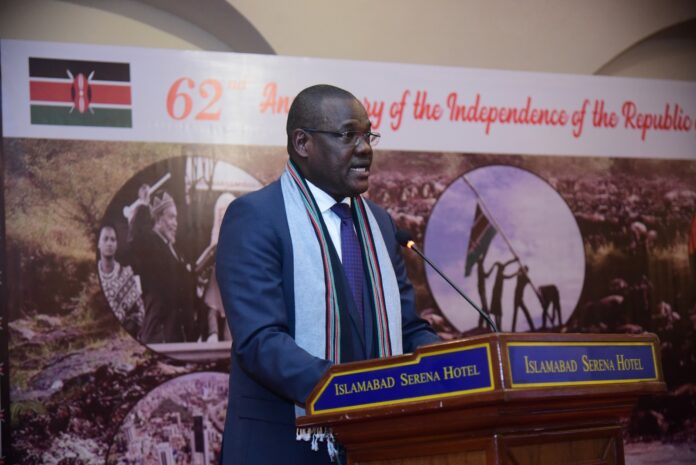
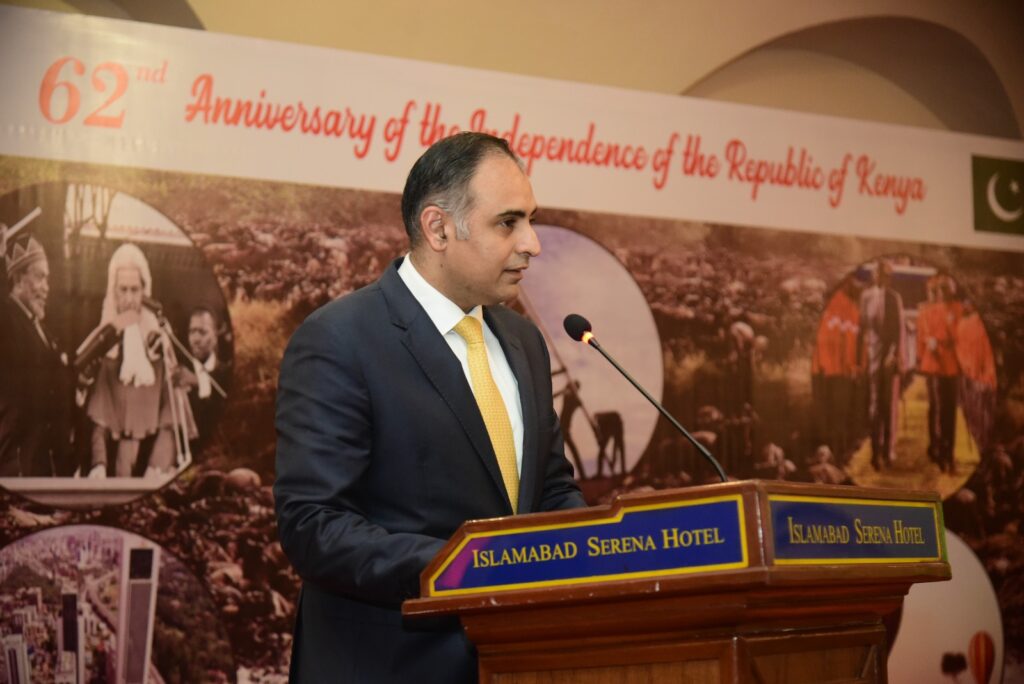
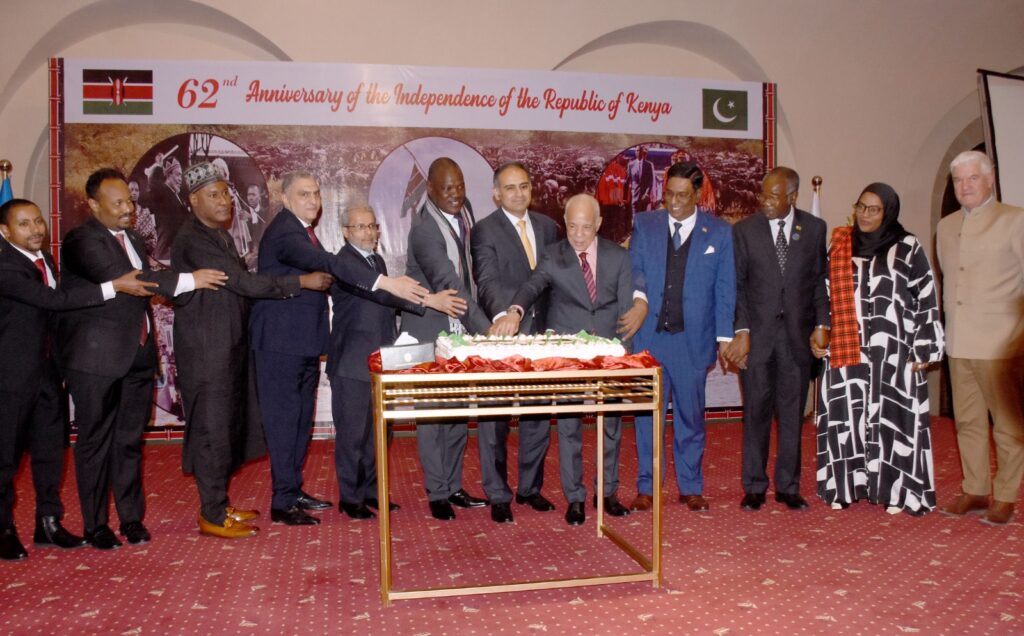
Islamabad — Minister of State for Finance and Railways Bilal Azhar Kiyani has described Kenya as a close and valued partner of Pakistan in Africa, emphasizing that Pakistan attaches great importance to its relations with Kenya. He was speaking as the chief guest at the 62nd Jamhuri Day celebrations held at Serena Hotel, Islamabad, hosted by the High Commission of Kenya in Pakistan.

Kenya marks 62nd Jamhuri Day in Islamabad, Reaffirms strong ties with Pakistan

Lt. Gen. (Rtd.) Peter M. Njiru, High Commissioner of Kenya to Pakistan, along with his team, warmly welcomed the guests. Ambassadors, High Commissioners, businessmen, media representatives, and friends of Kenya were present at the event.

Conveying the best wishes of the people and government of Pakistan to the people and government of Kenya, the Minister of State highlighted the growth in bilateral cooperation across various sectors. He expressed Pakistan’s keen interest in further strengthening mutual engagement to enhance trade and investment volumes. He noted that Pakistan has held single-country exhibitions in Nairobi and has recently successfully concluded an intergovernmental dialogue aimed at boosting bilateral cooperation.

Kenya marks 62nd Jamhuri Day in Islamabad, Reaffirms strong ties with Pakistan

The Minister suggested that both countries explore new avenues of trade beyond traditional commodities such as tea, rice, and textiles. He reiterated that Pakistan’s “Look Africa” policy places Kenya as a major partner on the continent.

In his welcome address, High Commissioner Lt. Gen. (Rtd.) Peter M. Njiru highlighted the significance of Jamhuri Day and thanked the guests for joining the celebration of this auspicious national occasion.

“Kenya attained its independence on 12th December 1963, a day we celebrate with pride,” he said. “This celebration is a significant moment in Kenya’s history, reminding us of the sacrifices made by our forefathers who laid down their lives for our independence.”

Kenya marks 62nd Jamhuri Day in Islamabad, Reaffirms strong ties with Pakistan

He added that the day also provides an opportunity to reflect on the aspirations of the nation’s founders and to honor those who laid the foundation of the country, as well as those who continue to contribute to Kenya’s remarkable developmental journey.

The theme for this year’s Jamhuri Day is ‘Tourism, Wildlife and Meetings, Incentives, Conferences and Exhibitions (MICE)’. The High Commissioner said the theme reflects Kenya’s natural heritage, cultural richness, innovation, and its position as a premier destination for global gatherings and dream holidays.

Highlighting Kenya’s post-independence progress, he said that 62 years on, the country continues to enjoy stability, democratic maturity, and economic vitality. Kenya remains committed to inclusive development, regional and global peace initiatives, climate resilience, and shared prosperity for all its citizens.

“Kenya has experienced a significant transformation,” he noted. “Our growth is driven by the resilience, creativity, and determination of our people. Today, Kenya stands as a regional economic hub, with major progress in agriculture, manufacturing, tourism, technology, and services.”

Kenya marks 62nd Jamhuri Day in Islamabad, Reaffirms strong ties with Pakistan

He further said that major infrastructure upgrades have strengthened Kenya’s position as a gateway to East and Central Africa, while its expanding digital economy has earned it the nickname “Silicon Savannah” due to leadership in fintech innovation.

The High Commissioner underscored Kenya’s role as a key player in Pan-Africanism and global citizenship, actively contributing to peace, security, and development frameworks under the United Nations, African Union, East African Community, and other regional bodies.

Addressing climate change, he said Kenya is a leader in adaptation and mitigation, with around 93 percent of its electricity generated from renewable sources such as geothermal, wind, and solar energy. The country has also prioritized low-carbon, climate-resilient investments and promotes partnerships in science, technology, and innovation.

On bilateral relations, the High Commissioner said Kenya highly values its cordial and longstanding relations with the Islamic Republic of Pakistan, which are based on mutual respect, cooperation, and shared values. He acknowledged Pakistan’s contribution to Kenya’s development and said bilateral relations continue to expand across multiple sectors.

“Pakistan remains one of Kenya’s most important trading partners, particularly in tea and rice,” he said, adding that there is immense potential in horticulture, pharmaceuticals, textiles, light engineering, maritime security, port development, and the blue economy. Cooperation in education, health, digital innovation, and skills development continues to strengthen people-to-people ties.

He reaffirmed Kenya’s commitment to enhancing trade relations and attracting Pakistani investment, highlighting the country’s favorable investment climate, political stability, strategic location, and business-friendly regulatory framework. He encouraged Pakistani businesses to explore opportunities in Kenya’s key sectors.

Concluding his remarks, the High Commissioner appreciated the hospitality extended by Pakistan to the Kenyan community and reaffirmed Kenya’s commitment to hosting Pakistani citizens living in Kenya. He also briefed the audience on Kenya’s investment opportunities and conducive policies, inviting Pakistani business leaders and tourists to explore the country.