Home Blog Page 12

Standard Chartered and IFC Partner to Fuel Pakistan’s Agri-Value Chain Resilience

0

Spokesman Report

Karachi: IFC announced its first PKR denominated investment via an unfunded Partial Credit Guarantee of up to PKR 33.6 billion (approximately US$120 million equivalent) to support a long-term PKR-denominated financing from Standard Chartered Bank Pakistan Limited to Engro Fertilizers Limited (Engro Fertilizers). This financing will enable Engro Fertilizers to strengthen the agri-value chain in Pakistan by mobilizing local capital. The investment—aimed at strengthening Pakistan’s agriculture sector and bolstering food security—also benefits from a first loss counter guarantee from the IFC-Canada Facility for Resilient Food Systems.

This engagement marks IFC’s first local currency investment in Pakistan, thus expanding access to long-term financing solutions in both local and foreign currency, critical for economic growth particularly in important sectors such as agriculture and micro, small, and medium enterprises. By leveraging PKR-denominated financing, Engro Fertilizers, one of Pakistan’s leading fertilizer producers, is championing the use of domestic capital to enhance operational resilience. The financing will help Engro Fertilizers make capital investments in maintenance of facilities and turnarounds, enabling uninterrupted supply of urea and other fertilizers to meet national demand. The funding will also support farmer programs, ensuring continuity of initiatives that complement Engro’s core mission of reliable production.

The agriculture sector is contributing 24 percent of Pakistan’s GDP, 70 percent of its exports, and 40 percent of its employment, making it vital for long-term growth. Yet systemic challenges—inefficient supply chains, underfunded farmer programs, low literacy, and rising input costs persist. This investment will help address some of these gaps.

“Engro has always strived to solve Pakistan’s most pressing issues meaningfully. Using local capital to strengthen local value chains reflects our commitment to the country and to our farmers – the backbone of Pakistan’s economy – through reliable fertilizer production. We are grateful to our partners, IFC and Standard Chartered Bank, for enabling us to advance this mission,” said Engro Fertilizers CEO, Ali Rathore.

 “This investment reflects the strength of our partnership with Engro Fertilizers and Standard Chartered Bank and our shared commitment to provide innovative solutions to address challenges in a sustainable manner. Through this project, we are opening new pathways for local currency long-term financing that support growth and financial resilience to manage country risk in a sector vital to the country’s economy,” said Ashruf Megahed, Regional Industry Head, Manufacturing, Agribusiness & Services, Middle East and Central Asia at IFC

 Commenting on the occasion, Rehan Shaikh, CEO & Head of Coverage, Standard Chartered Pakistan stated, “At Standard Chartered we are committed to financing solutions that enable sustainable growth and long-term resilience across Pakistan’s economy. This partnership with IFC and Engro Fertilizers reflects our shared vision of strengthening food security and supporting one of the country’s most critical value chains. Standard Chartered is keen to continue working with IFC to replicate this successful structure across its network.”

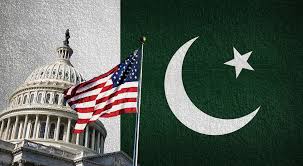
Pakistan’s Strategic Re-Entry: How 2025 Became a Turning Point in U.S. South Asia Policy

0

Pakistan’s Strategic Re-Entry: How 2025 Became a Turning Point in U.S. South Asia PolicyWhat is striking about the recent analysis published by The Washington Times is not merely the optimism it expresses about Pakistan–United States relations, but the speed and scale of the transformation it describes. If the account is even partially accurate, 2025 will stand out as a year in which Washington quietly but decisively rewrote its South Asia playbook, moving away from an almost reflexive India-first posture toward a more complex, Pakistan-inclusive strategic vision. Such reversals are rare in U.S. foreign policy, which tends to change incrementally, and rarer still when they involve countries long burdened by distrust and fatigue in Washington.

For much of the past decade, Pakistan occupied an uncomfortable space in American thinking: too important to ignore, too problematic to embrace. Engagement was largely transactional, limited to counterterrorism coordination or crisis management, and often framed by suspicion. India, by contrast, was elevated as the natural democratic counterweight to China, courted through multilateral forums and strategic symbolism. The assumption in many U.S. policy circles was that New Delhi would mature into a regional stabilizer while Islamabad would gradually fade into managed irrelevance.

The Washington Times argues that this assumption began to unravel under the weight of reality. Internal political trends in India, concerns over civil liberties, diplomatic inflexibility, and questions about military effectiveness reportedly introduced doubts in Washington about the long-term sustainability of an India-centric regional order. At the same time, Pakistan began to reassert itself not through grand declarations, but through quiet, functional cooperation. The first thaw, according to the article, came via discreet counterterrorism exchanges that demonstrated capacity, discipline, and reliability rather than rhetoric. In a city like Washington, where performance often matters more than promises, this appears to have resonated.

Momentum accelerated in March 2025 when President Donald Trump, in a nationally televised address, offered unexpectedly warm remarks about Pakistan. The praise itself was brief, but its impact was magnified by context. Public approval from Trump, whose foreign policy instincts lean heavily on personal judgment and perceived strength, sent a signal through the U.S. bureaucracy that old assumptions were no longer fixed. Islamabad, the article notes, moved quickly, converting limited cooperation into broader diplomatic capital. Engagement deepened, and what had once been narrowly transactional began to look, at least tentatively, strategic.

The real inflection point, however, is located in May 2025, during a short but intense military confrontation between Pakistan and India. The Washington Times portrays this episode as decisive, not because of its duration, but because of what it revealed to outside observers. Pakistan’s military response is described as controlled, strategically focused, and asymmetrically effective, exceeding American expectations and challenging prevailing stereotypes. In Washington’s strategic imagination, the article suggests, Pakistan re-emerged in that moment as a serious regional actor capable of shaping outcomes rather than merely reacting to them.

Following that crisis, U.S. strategic mapping of South Asia reportedly shifted. Pakistan began to be seen less as a problem to be managed and more as an asset that could anchor a recalibrated regional approach. This reassessment coincided with internal changes within Pakistan’s military establishment, including modernization efforts, command restructuring, and the activation of a more integrated defense leadership model. Such reforms, long discussed but unevenly implemented in the past, were now viewed as consequential rather than cosmetic.

At the center of this narrative stands Syed Asim Munir, whose role the article treats with unusual emphasis. He is portrayed as embodying a blend of discipline, strategic restraint, and institutional control that reassured U.S. defense planners. The language attributed to American officials—calling him a “disciplined dark horse” and a “deliberate mystery”—is revealing. In Washington’s security culture, predictability in behavior often matters more than transparency in intent, particularly in volatile regions. According to the article, Munir’s leadership style fit that preference.

The symbolism that followed reinforced the perception of change. A White House luncheon, described as unprecedented for a Pakistani military chief, and a red-carpet reception at United States Central Command headquarters were read as signals of elevated trust and access. Equally important was Pakistan’s diplomatic tone after the May ceasefire. While India reportedly responded coolly to U.S. mediation efforts, Islamabad’s public acceptance and expressions of appreciation aligned neatly with Washington’s desire to be seen as an effective power broker.

Beyond South Asia, the article hints at broader implications. Pakistan is depicted as a potentially discreet and credible channel in dealings with Iran, and as a state whose regional reach could matter in calculations related to Gaza and the wider Middle East. Whether these expectations are realistic remains open to debate, but their mere articulation suggests a notable expansion of how Pakistan is being conceptualized in Washington.

To be clear, even The Washington Times acknowledges that this shift is not unconditional. Its durability will depend on the behavior of both Islamabad and New Delhi, as well as on the internal coherence of U.S. policy itself, which has a long history of oscillation in South Asia. Strategic favor in Washington is rarely permanent, and enthusiasm can fade as quickly as it forms. Yet the central claim remains striking: by the end of 2025, the era of reflexive India-first thinking had, at least temporarily, given way to a more balanced and pragmatic assessment of regional power.

If this account holds, Pakistan’s journey from diplomatic afterthought to emerging strategic partner would represent one of the more remarkable image reversals in recent U.S. foreign policy. It would also underscore a recurring lesson of international politics: states that combine timing, discipline, and strategic clarity can still reshape how they are seen, even in capitals where narratives often harden into dogma. Whether Pakistan can sustain this moment, and whether Washington can translate reassessment into consistency, are questions that remain unanswered. But for now, 2025 stands as a reminder that in geopolitics, doors thought permanently closed can still, under the right conditions, open again.

Former MNA Kunwar Qutubuddin Honors UBG Secretary General at Industry Gathering

0
Former MNA Kunwar Qutubuddin Khan, Chairman of Lakeshore Towers, presenting a flower bouquet to Secretary General United Business Group, Zafar Bakhtawari, during a brunch hosted in honor of Bashir Jan Mohammad, Founder of the Westbury Group and Chairman of Dalda Foods, while Sheikh Abdul Razzaq, Chief Executive of Latif Group of Industries, is also seen in the picture.

Former MNA Kunwar Qutubuddin Honors UBG Secretary General at Industry Gathering

 2025: A Year of Reframed Governance in Punjab

0

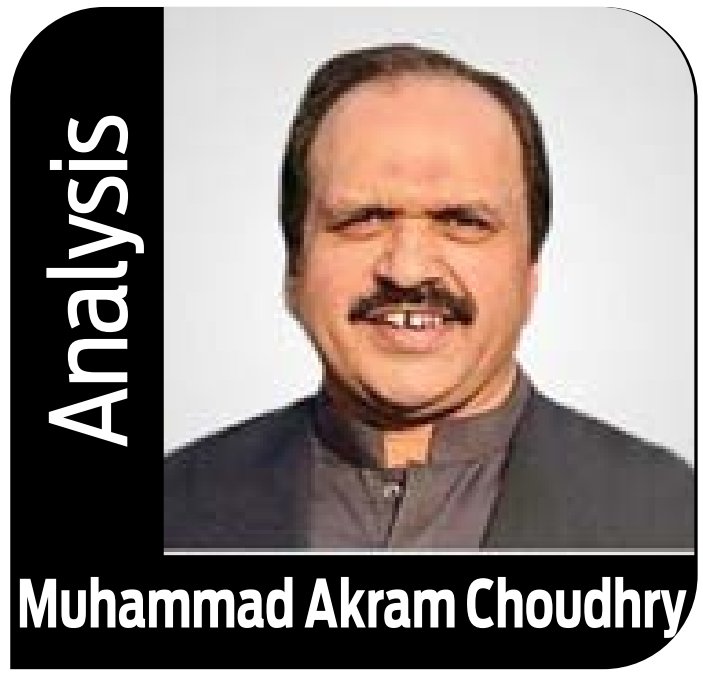
Qudrat Ullah

Punjab’s journey through 2025 has unfolded as a year in which governance was not merely asserted but demonstrated. Under Chief Minister Punjab Maryam Nawaz Sharif, the administration steadily moved away from ceremonialism toward a results-oriented approach that placed citizens’ everyday needs at the centre of policy. The tone of governance was purposeful, defined by urgency in delivery, institutional reform and a conscious effort to rebuild public trust in the state’s capacity to serve. In a province as large and complex as Punjab, that shift alone carries political and social significance.

The most visible impact of this approach has been in the areas of social welfare and housing, where the government addressed one of the most pressing concerns of middle- and low-income households: securing shelter. Through Apni Chhat Apna Ghar, families were offered interest-free loans on manageable monthly instalments, transforming home ownership from a distant aspiration into a realistic possibility. Alongside this, Apni Zameen Apna Ghar provided free residential plots to landless citizens, particularly in underserved districts. These initiatives did more than construct houses; they restored stability, encouraged long-term planning and reinforced the idea that the state can be a partner in personal progress rather than a distant authority.

The broader social protection framework reflected a similar sensitivity to dignity and inclusion. Programs such as the Himmat Card for persons with disabilities and the Bewa Sahara Card for widows offered predictable financial support coupled with access to essential services. Rather than treating vulnerability as a footnote, these initiatives acknowledged it as a central policy concern. The Punjab Dhee Rani Program, aimed at supporting underprivileged families during marriages, further demonstrated an understanding of social realities where cultural obligations often impose heavy financial strain. By addressing these pressures directly, the government reduced social stress while preserving respect and honour for beneficiaries.

Agriculture remained a cornerstone of the provincial agenda in 2025, approached not as a legacy sector but as one requiring modern solutions. The Kisan Card expanded farmers’ access to interest-free credit tied to agricultural inputs, reducing dependence on informal borrowing and increasing productivity. Mechanisation initiatives such as the Green Tractor Scheme and the establishment of Green Agri Malls provided farmers with modern tools, quality seeds and fertilisers at regulated prices. Equally significant was the solarisation of agricultural tube wells, a reform that lowered operational costs for farmers while aligning the sector with environmental sustainability. These interventions collectively signalled a shift from short-term relief toward long-term resilience in rural economies.

Energy reforms extended beyond agriculture to households as well. Free and subsidised solar panel schemes for low-consumption consumers addressed both affordability and energy security. At a time when rising power costs have strained household budgets, these measures offered tangible relief while promoting clean energy adoption. They also underscored a policy direction that views environmental responsibility as compatible with economic pragmatism rather than in conflict with it.

Education and youth empowerment stood out as defining themes of the year. The Honhaar Scholarship Program removed financial barriers for high-achieving students, covering tuition and transport costs across public and private institutions. The Punjab Laptop Scheme 2025 emerged as a particularly consequential intervention. By providing free laptops to deserving students, the Punjab government took a decisive step toward bridging the digital divide. The program aims to improve digital literacy and help students achieve academic success by granting access to modern technology, recognising that competitiveness is inseparable from digital access. Complementing this, the CM Internship Program and the E-Bike Scheme addressed employability and mobility, reinforcing the idea that education policy must engage with real-world constraints faced by students.

Healthcare reforms in 2025 reflected both ambition and structural clarity. Administrative integration of health-related departments sought to reduce duplication and improve service coordination. On the ground, expanded community clinics, upgraded hospitals, and the launch of specialised facilities in oncology and cardiology improved access to care. The introduction of air ambulance services for emergency evacuations in remote areas marked a significant step toward equitable healthcare delivery, ensuring that geography does not determine survival.

Public service delivery underwent a quiet but meaningful transformation. The Dastak Program, which delivers essential government services directly to citizens’ doorsteps through a digital platform, challenged the long-standing culture of bureaucratic snafus. By reducing procedural friction and human discretion, it strengthened transparency and efficiency. Meanwhile, the Suthra Punjab campaign addressed sanitation and waste management at scale, recognising that governance credibility is shaped as much by cleanliness and order as by grand development projects.

As the year progressed, the government’s focus on inclusion became increasingly visible, particularly in its engagement with non-muslim Pakistanis. In 2025, the Punjab government made deliberate efforts to celebrate diversity and promote interfaith harmony. The launch and expansion of the Minority Card provided quarterly financial assistance to underprivileged minority families, offering concrete economic support rather than symbolic reassurance. Budgetary allocations for minority welfare were significantly enhanced, scholarships for minority students were expanded, and job quotas were actively reaffirmed.

With Christmas approaching, the provincial government’s outreach to the Christian community has carried particular resonance. Official celebrations, public messages from the chief minister, special grants, and support for Churches and community institutions have reinforced the message that religious minorities are equal stakeholders in the social fabric. These gestures, backed by policy and funding, signal a governance philosophy that views inclusion not as an obligation imposed by law but as a strength that enriches society.

What ultimately distinguishes Punjab’s performance in 2025 is coherence. Welfare schemes, economic reforms, service delivery innovations and minority inclusion initiatives appear interconnected rather than isolated. There remains no shortage of challenges, yet the direction is clear. Performance monitoring, accountability and continuous oversight have become part of the governance vocabulary, suggesting that political ownership now extends beyond announcements to outcomes.

As Punjab prepares to enter a new year, the legacy of 2025 lies in its reframing of expectations. Citizens have seen that governance can be responsive, inclusive and practical. Chief Minister Maryam Nawaz Sharif’s year in review is not defined by a single flagship project, but by a sustained effort to align state capacity with public need. In that alignment lies the promise of a more confident, cohesive and forward-looking Punjab.

The writer is a Lahore-based public policy analyst and can be reached at [email protected]

CM Maryam Nawaz Sharif Meets HC of Mauritius to Pakistan, H.E. Munsoo Kurrimbaccus

0

Spokesman Report

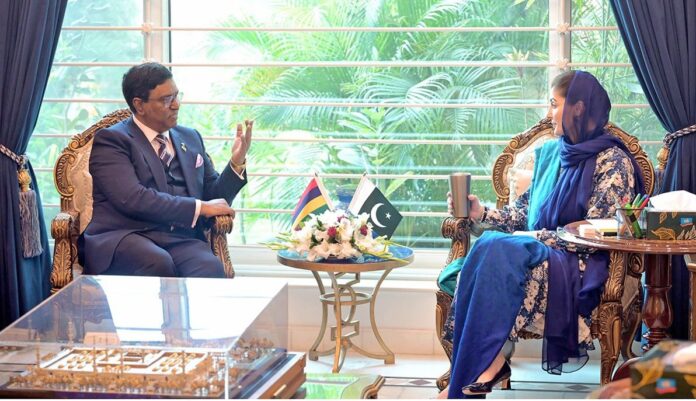
Lahore:Chief Minister Punjab Maryam Nawaz Sharif warmly welcomed and met H.E. Munsoo Kurrimbaccus, High Commissioner of Republic of Mauritius to Pakistan. She stressed on the importance of promoting business-to-business contacts, and mutual visits of trade delegations, besides organizing business exhibitions to showcase quality products of both countries. She also expressed her determination to strengthen trade and economic cooperation with Mauritius, and agreed to further enhance mutual relations in the fields like education, tourism, agriculture, and people-to-people exchanges. Both leaders also agreed to increase cooperation in the fields of halal food, technology and human resources. She extended her best wishes for H.E. Munsoo Kurrimbaccus, and expressed determination to provide all possible support for investment in blue economy. She also showed determination to further increase exports of rice, textiles and pharmaceutical products to Mauritius.

Chief Minister Punjab expressed her commitment to support Mauritius’ established technology in productive cultivation and sugar industry. She welcomed Mauritius’ investment in Punjab’s tourism sector, and appreciated its tireless efforts against drugs and for youth development. She paid tribute to the Mauritius High Commissioner for his remarkable diplomatic services due to which Pakistan and Mauritius enjoy a long-standing friendly relations based on cultural ties and mutual respect. She noted that there are opportunities for cooperation in human capital development, especially in higher education and professional skills. She flagged that sectors like agriculture, textiles, pharmaceuticals, and light engineering have vast trade potential.

Chief Minister Maryam Nawaz Sharif said that more than one lakh youth are being transformed into skilled workforce through the Skill Development Programme. She added that in recent years, bilateral trade between Pakistan and Mauritius has witnessed an encouraging growth. Punjab is rich in opportunities in agro-processing, textiles, pharmaceuticals and value-added food products. She highlighted that Climate Resilient Vision Action Plan Green investment, environmental protection are being promoted, and a gradual transition to forest conservation, green transportation and green energy reflects our commitment.

Chief Minister Punjab said that Punjab is a rich and diverse tourism hub. In the heart of Lahore, Shahi Qila, Badshahi Masjid, Shalimar Gardens, Noor Mahal Tomb and other religious tourist destinations have become centers of attention of the tourists both local and foreign. She added that Punjab has faced challenge of devastating floods with great courage, and is encouraging foreign investment in its tourism sector. She said that they would welcome technical cooperation from Mauritius in sugarcane production and value addition. H.E. Munsoo Kurrimbaccus said that promoting tourism activities will bring Pakistan’s true positive image to the world.

World Bank Greenlights $700 Million to Bolster Pakistan’s Fiscal Health and Service Delivery

0

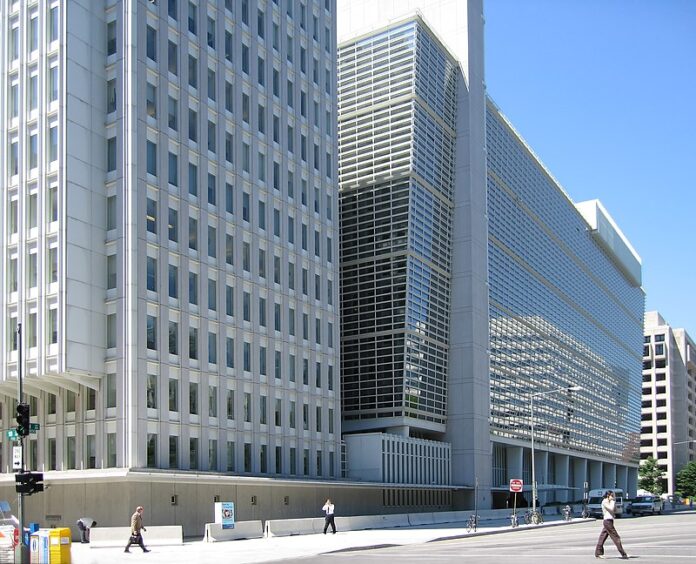
ISLAMABAD, December 20, 2025 — The World Bank’s Board of Executive Directors approved yesterday, $700 million in financing for the Pakistan Public Resources for Inclusive Development – Multiphase Programmatic Approach (PRID-MPA), a multi-year, multi-program initiative to support macroeconomic stability and service delivery.

The PRID-MPA – an innovative, national program supporting federal and provincial reforms to mobilize domestic revenue – will enhance spending quality and leverage data and digital tools for improved services. The MPA is intended to support ongoing fiscal reforms, aligned with the IMF-Extended Fund Facility program and the National Fiscal Pact. The MPA will provide up to $1.35 billion in total financing. Of this amount, the World Bank has approved $600 million for federal programs and $100 million specifically for the Sindh provincial program. The results-based design ensures that resources are only disbursed once program objectives are achieved.

“Pakistan’s path to inclusive, sustainable growth requires mobilizing more domestic resources and ensuring they are used efficiently and transparently to deliver results for people,” said Bolormaa Amgaabazar, World Bank Country Director for Pakistan. “Through this MPA, we are working with the Federal and Sindh governments to deliver tangible impacts—more predictable funding for schools and clinics, fairer tax systems, and stronger data for decision‑making—while safeguarding priority social and climate investments and strengthening public trust.”

 The federal component will focus on raising domestic revenues more fairly, improve budget planning and execution, and strengthen data systems for evidence-based decisions. Key actions include advancing tax policy and administration reforms; financing and scaling the Integrated Financial Management Information System and its linked e-procurement platform; undertaking targeted subsidy reforms; and strengthening the national statistical system led by the Pakistan Bureau of Statistics. Together, these reforms will bolster fiscal stability, expand fiscal space for priority social and climate needs, enhance transparency and spending efficiency, and improve essential public services.

“Strengthening Pakistan’s fiscal foundations is essential to restoring macroeconomic stability, delivering results and strengthening institutions,” said Tobias Akhtar Haque, Lead Country Economist for the World Bank in Pakistan. “Through the PRID‑MPA, we are launching a coherent nationwide approach to support reforms that expand fiscal space, bolster investments in human capital and climate resilience, and strengthen revenue administration, budget execution, and statistical systems. These reforms will ensure that resources reach the frontline and deliver better outcomes for people across Pakistan with greater efficiency and accountability.” 

In Sindh, the program is expected to increase provincial revenues, enhance the speed and transparency of payments, and broaden the use of data to guide provincial decision making. The program will directly support the increase of public resources for inclusive development, including more equitable and responsive financing for primary healthcare facilities and more funding for schools.