Home Blog Page 11

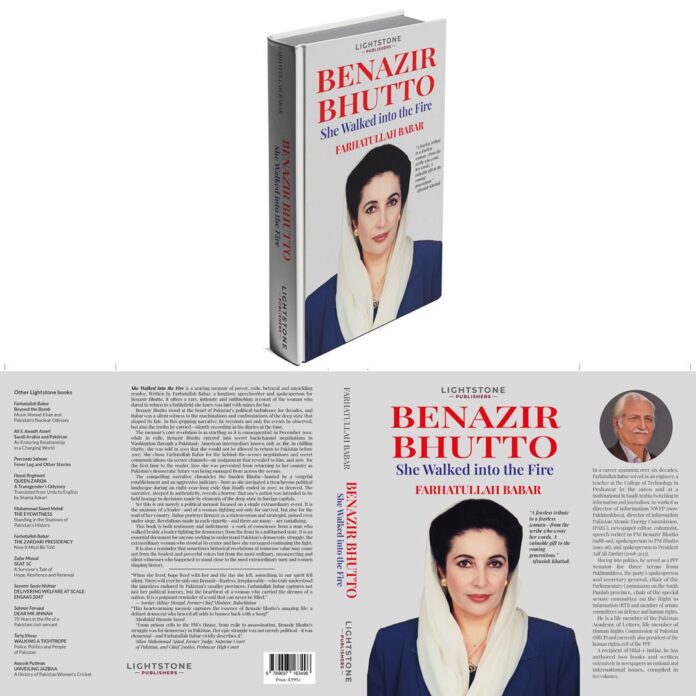
Benazir Bhutto’s biography, published by Lightstone Publishers

0
Spokesman Report
Karachi, 26 December 2025: On the eve of the 18th martyrdom anniversary of Shaheed Mohtarma Benazir Bhutto on 27 December 2025, Lightstone Publishers announces the publication of Farhatullah Babar’s deeply personal, political, and revealing memoir of the Muslim World’s first woman Prime Minister, titled Benazir Bhutto. She Walked into the Fire.
Chronicled by Farhatullah Babar, her speechwriter and spokesperson for two decades from 1988 until her assassination in 2007, the memoir is more than a biography. It is an insider’s political account, with tantalising disclosures and sharp insights into Benazir Bhutto’s leadership under siege from patriarchal power, military dominance, deep-state intrigues, ideological opponents and manipulations thousands of miles away in a foreign land.
This is the third book published this year by Farhatullah Babar, following his earlier works, The Zardari Presidency. Now It Must Be Told and Beyond the Bomb: Munir Ahmad Khan and Pakistan’s Nuclear Odyssey, both also published by Lightstone Publishers.
The biography unfolds with piercing clarity the previously unpublished accounts of some telling events from her two terms in office, her leadership of the party, eight years in agonising exile, her reflections on how to deal with the Bonapartes and reining in the deep state, her near-quitting of politics and her tragic final return to Pakistan.
It also recounts in graphic detail a secret backchannel project launched through covert intermediaries in December 2001 in the US to, as claimed by protagonists at the time, restore democracy in the country and pave the way for ending her exile, but actually turned out to be an attempt at redrawing Pakistan’s democratic road map by a foreign power. The memoir makes public for the first time a note left by Benazir, asking the author to share this truth with the world when the time is right. That time is
now.
This book will shake the powerful and inspire the powerless. It is a memoir that history demanded but power never wanted to tell.
Benazir Bhutto. She Walked into the Fire will be available in bookstores nationwide in the second week of January 2026.

 Christmas, Islam, and the Lost Message of Peace

0

Christmas is one of the most cherished moments in the global calendar, marking the birth of Jesus Christ — one of the greatest prophets in human history. According to Christian belief, he was born in Bethlehem, a humble town in the West Bank that today remains under Israeli occupation. From that land emerged a message that still echoes across centuries: love your neighbor, seek truth, forgive freely, and show mercy even in hardship.

For Muslims, Jesus — Isa ibn Maryam (peace be upon him) — is not only respected but deeply revered. The Qur’an dedicates an entire chapter to his miraculous birth and to the purity and piety of his mother, Mary. Islam affirms that Mary conceived Jesus by the will of God, without a biological father, and that the infant Jesus spoke in her defense — a miracle highlighting divine power and mercy.

Islam teaches that God sent many prophets — Abraham, Moses, Jesus, and finally Muhammad (peace be upon them all) — as guides for humanity. Belief in all of them is a core Islamic principle. The foundational faith includes belief in all prophets, revealed scriptures, angels, the Day of Judgment, and God’s decree. This reflects Islam’s spiritual inclusiveness: a Muslim cannot reject Jesus or Moses and still claim faith. The Qur’an presents Jesus as a noble prophet who healed the sick, defended the weak, and called people to righteousness.

Christians and Muslims share deep respect for his moral example. Islamic tradition also teaches that Jesus will return near the end of time as a sign of God’s justice. That belief strengthens the spiritual connection between the two faiths rather than weakening it.

Across much of the Muslim world, Christmas is acknowledged with warmth and respect. In Malaysia, Indonesia, the Gulf states, and elsewhere, public spaces display Christmas decorations, and citizens of different faiths greet one another sincerely. That spirit of coexistence reflects the higher purpose of religion: to bring people closer to God and to one another.

Yet the world today stands painfully distant from the teachings of Jesus. The message of humility has been overshadowed by arrogance; compassion has been replaced with dominance; and the defense of the weak has too often yielded to the pursuit of wealth, territory, and power.

From Europe to the Middle East to Africa, wars continue to scar humanity. The conflict between Russia and Ukraine has dragged on with staggering human cost — soldiers and civilians alike suffering displacement, injury, and death while entire cities are destroyed and generations traumatized.

In Gaza and the broader Israeli-Palestinian conflict, tens of thousands of civilians have been killed or wounded, and families live under unimaginable loss and fear. The civil war in Sudan has unleashed famine, displacement, and brutality on a massive scale.

Tensions between Armenia and Azerbaijan over Nagorno-Karabakh have uprooted communities and shattered lives. Border friction between Thailand and Cambodia periodically flares, affecting vulnerable border populations. And the Caribbean region is witnessing rising confrontation involving Venezuela and the United States — another reminder of how competition over resources and power can spiral toward conflict.

Looming over all of this is the dangerous and often-overlooked nuclear risk in South Asia. India and Pakistan — both nuclear-armed neighbors — have fought multiple wars and experienced repeated crises. Any future conflict between them, if it were ever to escalate to nuclear exchange, could kill millions in minutes and devastate the region for generations. It is a sobering reminder that war today carries consequences far beyond the battlefield — consequences that threaten the survival of entire nations.

Behind many of these conflicts lie the same driving forces: greed, the hunger for dominance, the thirst for hegemony, disrespect for international law, and a chilling indifference to human suffering. Power becomes a prize rather than a responsibility. Neighbors become enemies rather than fellow human beings. War, sanctions, and blockades punish ordinary people — the poor, the elderly, and especially children — while the powerful speak in cold language about strategy and national interest.

This reality stands in total contradiction to what Jesus taught. His message condemned arrogance. He challenged the tyranny of wealth over conscience. He uplifted the marginalized, called for humility, and insisted that the moral worth of a society is measured by how it treats the weakest among it.

Christmas should therefore be more than a seasonal ritual. It should be a moment of moral awakening. A time when Christians and Muslims — who together make up over half of humanity — reflect on their shared spiritual foundation: belief in one God, devotion to truth, compassion, justice, humility, and service to others.

Today, the sacred books that once guided civilizations often sit unread on shelves, gathering dust while nations prepare for war instead of peace. Christmas is the time to wipe away that dust — literally and symbolically — and return to the message inside: love your neighbor, protect the innocent, feed the hungry, forgive the offender, and speak truth to power.

If even a fraction of that message were followed, wars would not be waged for land, oil, minerals, or geopolitical advantage. The enormous resources consumed by conflict could instead lift millions out of poverty, build schools and hospitals, and restore dignity to forgotten communities. True greatness lies not in the size of a nation’s military, but in the depth of its compassion and the justice of its actions. This is the heart of the matter: Faith without justice is empty, worship without mercy is incomplete and peace without humility is impossible.

When humanity rediscovers this shared spiritual core — not as slogan, but as living practice — peace will no longer remain a distant ideal. It will become a real and achievable way of life. And perhaps then, Christmas will not simply mark the birth of a prophet. It will mark the rebirth of the values he taught — compassion over cruelty, humility over arrogance, and peace over war — lighting a path forward for all humanity.

The writer is Press Secretary to the President (Rtd),Former Press Minister, Embassy of Pakistan to France.Former Press Attaché to Malaysia and Former MD, SRBC. He is living in  Macomb, Michigan, USA

Diplomats, business leaders gather at Ghana Consulate’s year-end luncheon

0

By Naveed Ahmed Khan                                        Photos Sultan Bashir

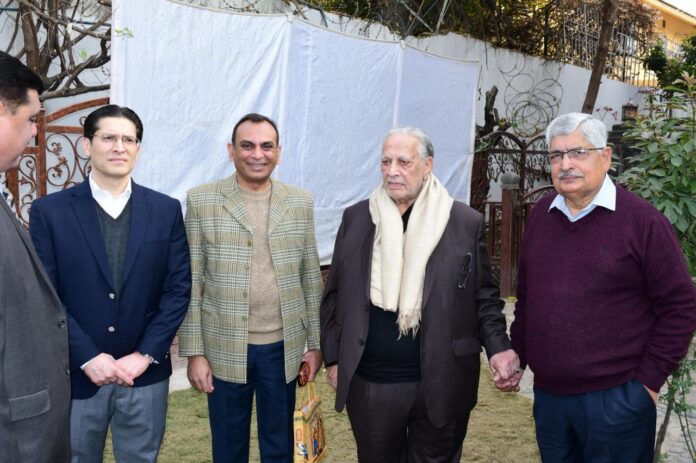
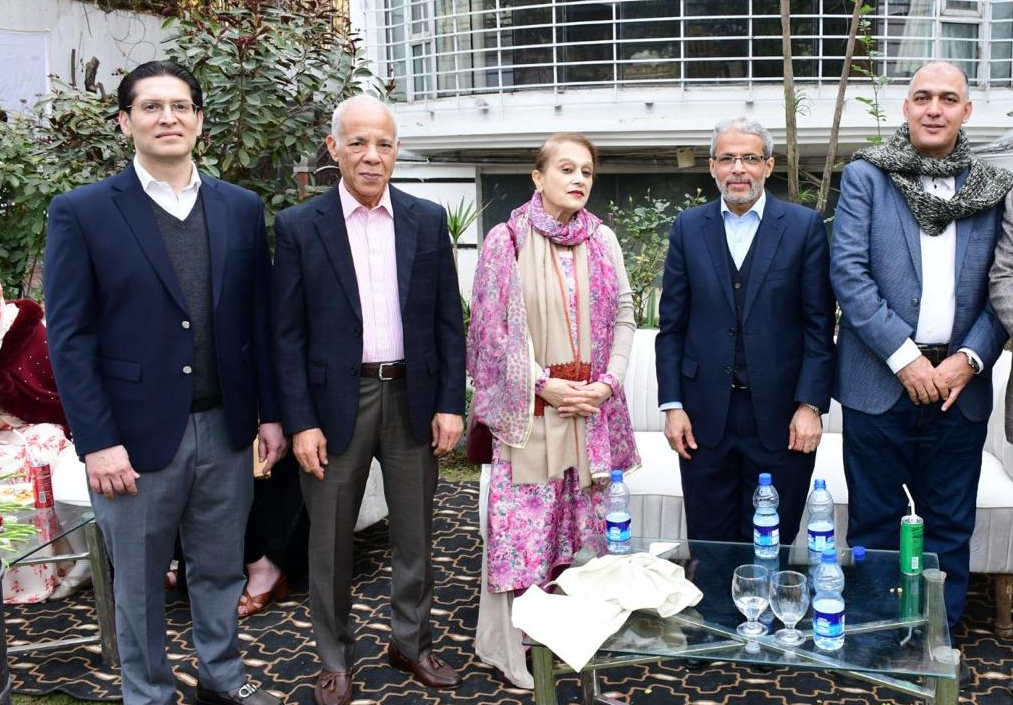
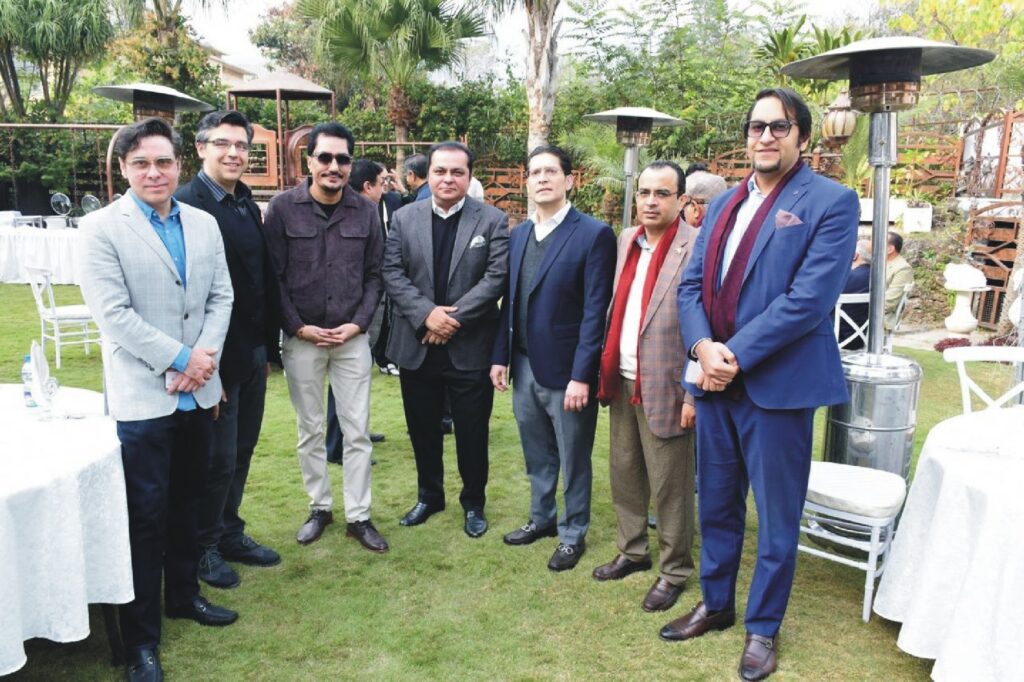
ISLAMABAD: Dr. Shahid Rasheed Butt, Honorary Consul General of Ghana in Pakistan and a renowned businessman, hosted a gracious year-end luncheon for honorary consuls and dignitaries from across Pakistan at his residence. The event, co-hosted by Vice Consul Omar Shahid Butt, marked the close of diplomatic and consular engagements for the year.

The luncheon was attended by diplomats, senior bureaucrats and leading business figures, who discussed matters of mutual interest, including politics, the economy, regional stability and trade cooperation. Prominent participants included Ambassador of Morocco Mr. Mohamed Karmoune,Ambassador of Yemen Mohammed Motahar Alashabi ,   Ambassador Asad Durraini, Ambassador Khalid Mahmood, Ambassador Khalid Masud, Ghalib Iqbal, Honorary Consul General of Tunisia Ammad Rasheed, Honorary Consul General of Lithuania Masud Khan, Saad Mehmood, Mian Habibullah, Tahseen Syed, Asad Ansari, Assad Saifullah, Faisal Muneer, Baser Daud, Malik Nadeem, Salman Dar, Faisal Zahid Malik, Choudhary Haroon Naseer,Prof. Dr. Zafar Nawaz Jaspal and Naveed Ahmad Khan.

Diplomats, business leaders gather at Ghana Consulate’s year-end luncheonIn his welcoming remarks, Dr. Shahid Rasheed Butt expressed gratitude to the guests for attending despite their busy schedules. He said the primary purpose of the gathering was to reconnect with friends and colleagues as the year drew to a close.

Participants said the discussions focused on the evolving political situation in the region, global economic pressures and opportunities for strengthening economic engagement between Pakistan and Ghana, particularly through trade and private sector collaboration. Views were also exchanged on regional challenges, including inflation, supply chain constraints and access to new markets.

Speaking to the guests, the Ghana Honorary Consul General emphasised the importance of sustained people-to-people and business-to-business contacts alongside formal diplomatic channels. He noted that Pakistan and Ghana share common challenges and opportunities in areas such as agriculture, energy services and small and medium enterprises, adding that regular engagement could help identify practical avenues for cooperation.

Diplomats, business leaders gather at Ghana Consulate’s year-end luncheonVice Consul Omar Shahid Butt briefed the participants on planned activities of the Ghanaian Consulate in Pakistan aimed at further strengthening bilateral relations. He said Pakistan’s exports to Ghana stood at US$76.51 million during 2024, according to the United Nations COMTRADE database on international trade. Major export items include salt, sulphur, earth, stone, plaster, lime and cement; beverages, spirits and vinegar; sugars and sugar confectionery; cotton; plastics; electrical and electronic equipment; and pharmaceutical products.

The luncheon concluded with a consensus on prioritising continued economic and trade dialogue to further strengthen Ghana–Pakistan cooperation.

Cleft Hospital & The Spokesman highlight inclusive healthcare in Pakistan

0

By Amjad Mehmood                                                   Photo by Sultan Bashir

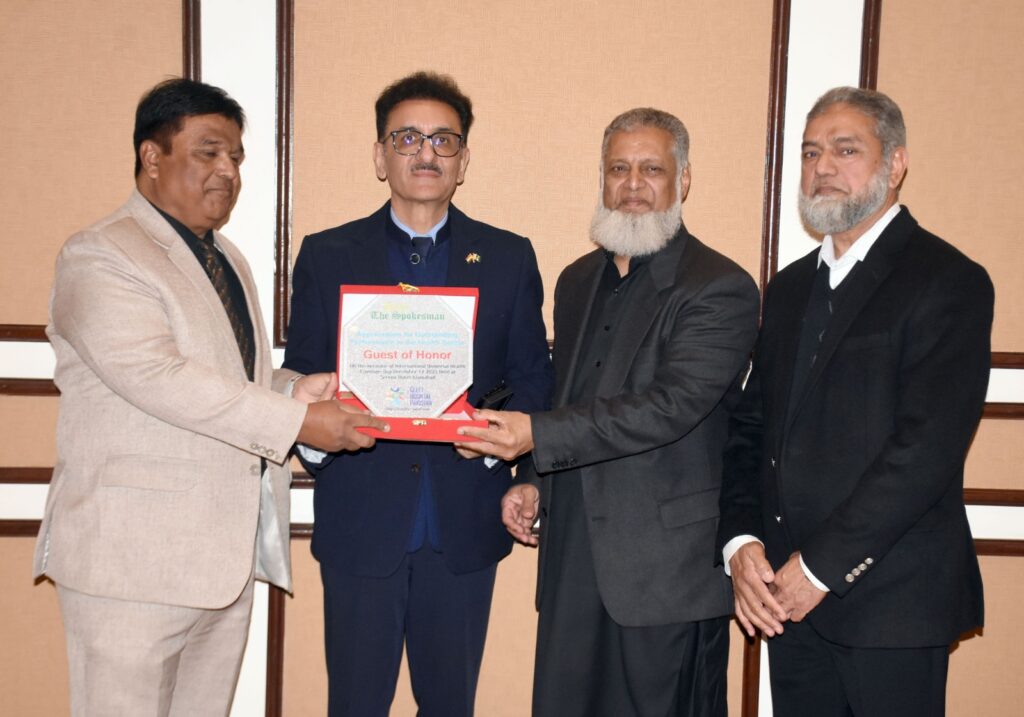
— Cleft Hospital Pakistan, in collaboration with Daily The Spokesman, jointly organized a high-profile event titled “World Health Coverage Day” at a Serena hotel in Islamabad, bringing together diplomats, senior government officials, members of the business community, philanthropists and media professionals. The event underscored the importance of universal access to healthcare and highlighted the role of specialized non-profit institutions in bridging gaps within Pakistan’s health sector.
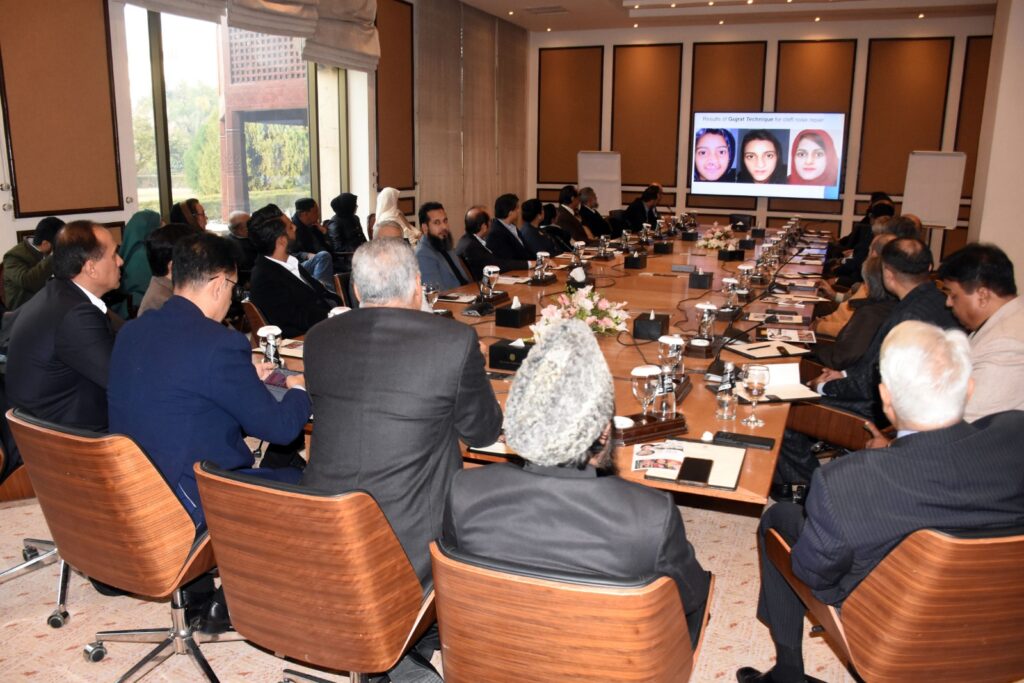
Cleft Hospital & The Spokesman highlight inclusive healthcare in PakistanThe ceremony was graced by Ambassador Dr. Ahmed Ali Sirohey as the chief guest,  who has served in many countries by representing Pakistan as Counsellor, Deputy High Commissioner, and   Ambassador. He is currently serving as Director General, Crisis Management Unit (CMU), Ministry of Foreign Affairs  . The event was further honored by the presence of Ambassador of Tajikistan, H.E. Sharifzoda Yusuf Toir, and the Consul General of Lithuania, Mr. Mohamed Masud Khan along with representatives from civil society organizations and healthcare advocates. Speakers emphasized that equitable health coverage is not merely a policy goal but a moral imperative, particularly for vulnerable populations.

In his address, Ambassador Dr. Sirohey paid glowing tribute to the Association’s life-changing work, describing it as “medicine infused with mercy and professionalism guided by compassion.” He emphasized that healthcare initiatives like those of PCLPA represent the highest form of public service—where science meets humanity.
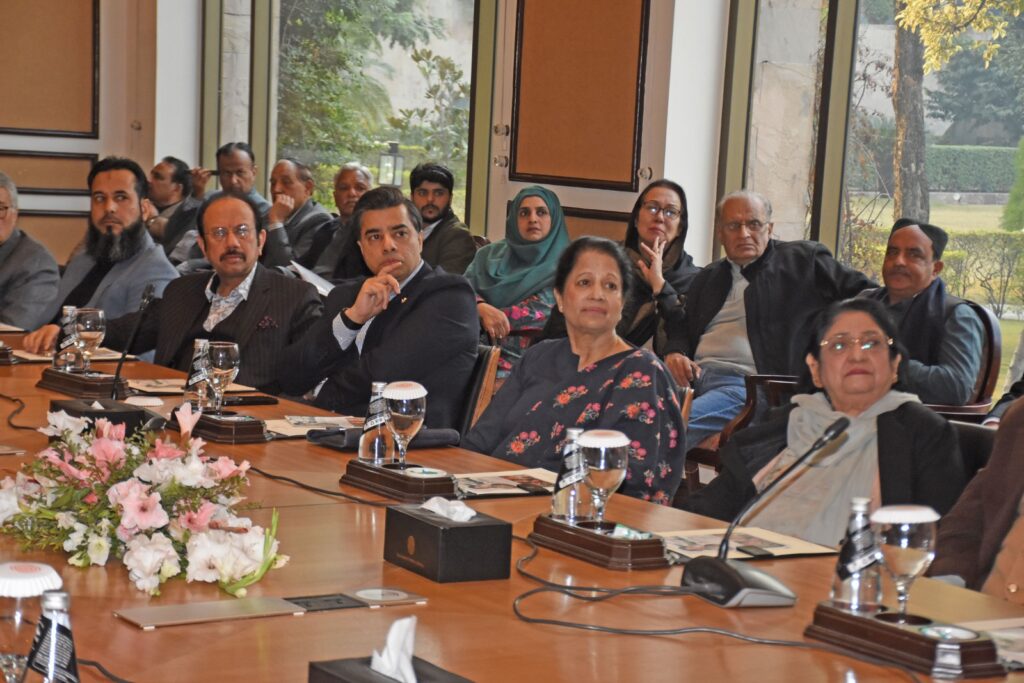
Cleft Hospital & The Spokesman highlight inclusive healthcare in PakistanHe reserved special appreciation for Dr. Aijaz, the driving force behind the Association, calling him “a quiet reformer whose scalpel heals not only faces but futures.” Ambassador Sirohey praised Dr. Aijaz’s leadership, commitment, and relentless dedication to providing free and affordable corrective surgeries for underprivileged children across Pakistan.

He assured the Association of continued moral support and encouraged stronger partnerships between civil society, the medical community, and public institutions to expand outreach and sustainability.

In the heart of Punjab’s industrial city of Gujrat stands an institution that has quietly but profoundly changed the lives of thousands of families across Pakistan. Cleft Hospital Pakistan, a specialized non-profit healthcare facility, has emerged as the country’s leading center dedicated exclusively to the treatment of cleft lip, cleft palate and associated craniofacial deformities. Through its integrated medical approach, international collaborations and humanitarian mission, the hospital has become a symbol of hope for children born with facial anomalies.
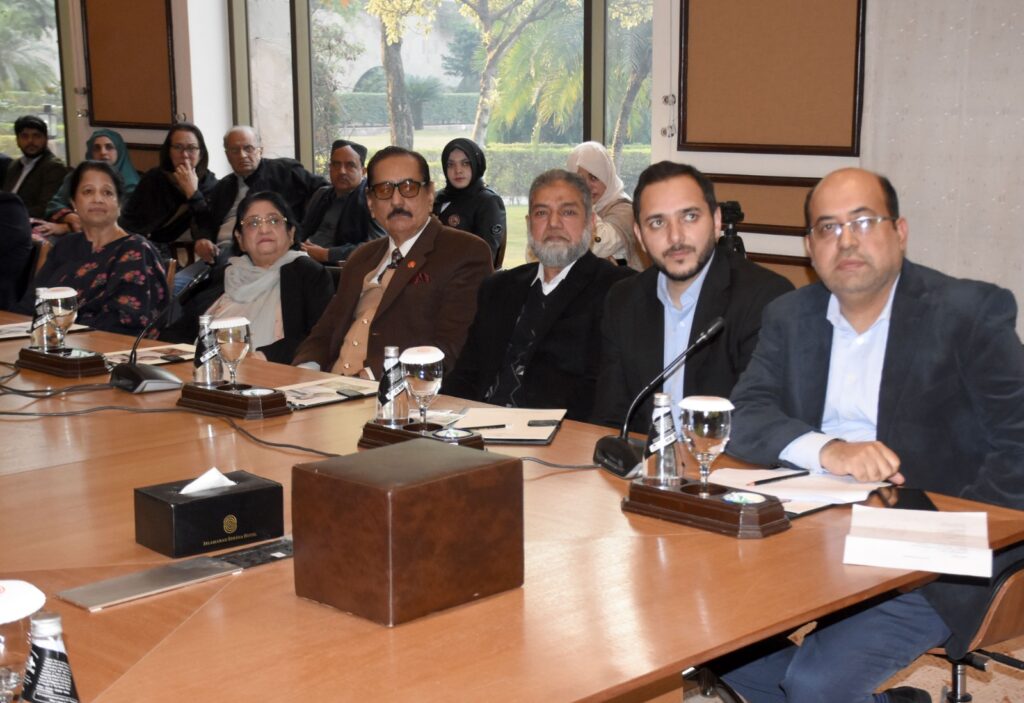
Cleft Hospital & The Spokesman highlight inclusive healthcare in PakistanThe foundation of Cleft Hospital Pakistan traces back to the vision of Dr. Ijaz Bashir, a distinguished plastic and reconstructive surgeon. During his early medical career, Dr. Bashir encountered numerous children suffering from cleft conditions who lacked access to consistent and comprehensive treatment. Realizing that short-term surgical camps were insufficient for long-term rehabilitation, he conceptualized a permanent, purpose-built hospital that could provide lifelong care to cleft patients. This vision materialized in 2010, when the hospital was formally established on the Grand Trunk Road in Juliani, Gujrat.

“CLEFT HOSPITAL GUJRAT: RESTORING SMILES, TRANSFORMING LIVES”

Before the hospital’s inception, organized cleft care in Pakistan was largely provided through the Pakistan Cleft Lip and Palate Association (PCLAPA), which conducted periodic surgical missions with the support of foreign surgeons. While impactful, these initiatives highlighted the urgent need for a permanent institution. Cleft Hospital was thus founded as a continuation and expansion of these early efforts, offering year-round services under one roof. Now, the hospital offering a comprehensive range of medical services essential for complete cleft rehabilitation. At its core is a dedicated Plastic and Reconstructive Surgery Department, which performs corrective surgeries for cleft lip, cleft palate and related facial deformities using internationally accepted protocols. These procedures are carefully timed and tailored according to the patient’s age and clinical needs, ensuring optimal functional and aesthetic outcomes.

Recognizing that cleft care extends far beyond surgery, the hospital operates a fully integrated multidisciplinary model. Specialized dental and orthodontic services address tooth alignment and jaw development, while audiology services assess and manage hearing impairments commonly associated with cleft conditions. A well-established speech and language therapy unit plays a crucial role in helping children develop clear and confident speech following surgical repair. The hospital also houses pediatric and ENT services, ensuring comprehensive medical oversight for young patients. Nutritional guidance is provided to families, particularly for infants who face feeding difficulties due to cleft palate. In addition, psychological counseling is offered to support patients and parents coping with the emotional and social challenges associated with facial deformities.

Beyond clinical care, Cleft Hospital Pakistan has positioned itself as a center for research and professional training. Its research department, established in 2015, focuses on studying the causes, patterns and management of cleft conditions within the Pakistani population. The hospital regularly hosts workshops, symposia and training programs for surgeons, speech therapists and allied health professionals, contributing to capacity building in cleft care nationwide. What truly distinguishes Cleft Hospital is its humanitarian ethos. Operating as a non-profit institution, it provides treatment at minimal or no cost to patients who cannot afford care. The hospital serves individuals from all provinces of Pakistan, as well as neighboring regions, making it a national referral center for cleft management. Support from international medical volunteers and charitable organizations has further strengthened its ability to deliver services that meet global standards.

Over the years, tens of thousands of surgeries and therapies have been carried out at the hospital, each representing a restored smile and a renewed sense of dignity. By combining surgical excellence with long-term rehabilitation, education and research, Cleft Hospital Pakistan has set a benchmark for specialized healthcare in the country. As Pakistan continues to face challenges in access to specialized medical services, institutions like Cleft Hospital Gujrat stand as powerful examples of how vision, compassion and professionalism can transform lives-one smile at a time.
Cleft Hospital & The Spokesman highlight inclusive healthcare in PakistanEarlier, Dr. Ijaz Bashir delivered a detailed multimedia presentation outlining the journey, achievements and future vision of Cleft Hospital Pakistan. He shared key statistics on patient outreach, surgical success rates and multidisciplinary care outcomes, while also highlighting the hospital’s growing emphasis on research, training and prevention. Dr. Bashir emphasized that cleft treatment is a long-term process that requires sustained support, often spanning several years of a child’s development. He also underscored the need for increased public awareness and early intervention, noting that timely treatment can dramatically improve quality of life and social integration for affected children. The presentation met with keen interest and appreciation from participants, many of whom acknowledged the hospital’s transparent and impactful use of resources.

Participants from diplomatic circles, business communities and philanthropic organizations unanimously appreciated both the event and the work of Cleft Hospital Pakistan. Several philanthropists and corporate representatives announced their intention to financially support the hospital’s mission, pledging donations and exploring long-term partnerships to sustain and expand its services. Media representatives also committed to raising awareness about cleft conditions and promoting preventive healthcare narratives.

Cleft Hospital & The Spokesman highlight inclusive healthcare in PakistanAt the conclusion of the event, the co-host of event, Mr. Naveed Ahmad Khan, Editor of Daily The Spokesman, addressed the audience and expressed deep appreciation to all participants for their presence and support. He termed the gathering a memorable and meaningful occasion and reaffirmed his commitment to continue organizing such awareness-driven events in the future. Mr. Naveed Khan said it was a great honor for Daily The Spokesman to be part of an initiative that promotes inclusive healthcare and humanitarian values. On behalf of the organization, he extended heartfelt gratitude to the chief guest Ambassador Dr. Ahmed Ali Sirohey, Ambassador of Tajikistan H.E. Sharifzoda Yusuf Toir, and Consul General of Lithuania Mr. Mohamed Masud Khan for gracing the event with their distinguished presence. He also paid special tribute to Dr. Ijaz Bashir, founder of Cleft Hospital Pakistan, for sponsoring the event and for his unwavering dedication to serving humanity.

The event concluded with a hi-tea, providing attendees with an opportunity for informal interaction and networking. Conversations reflected optimism, shared purpose and a collective resolve to support inclusive healthcare initiatives. The successful observance of World Health Coverage Day ended on a high note, reinforcing the message that collaborative efforts can make quality healthcare accessible to all segments of society.
Russia-Pakistan Relations Poised for Growth After Islamabad Roundtable

0

Spokesman Report

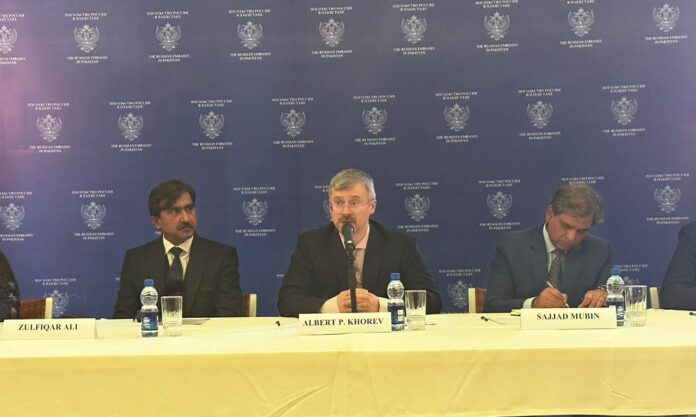
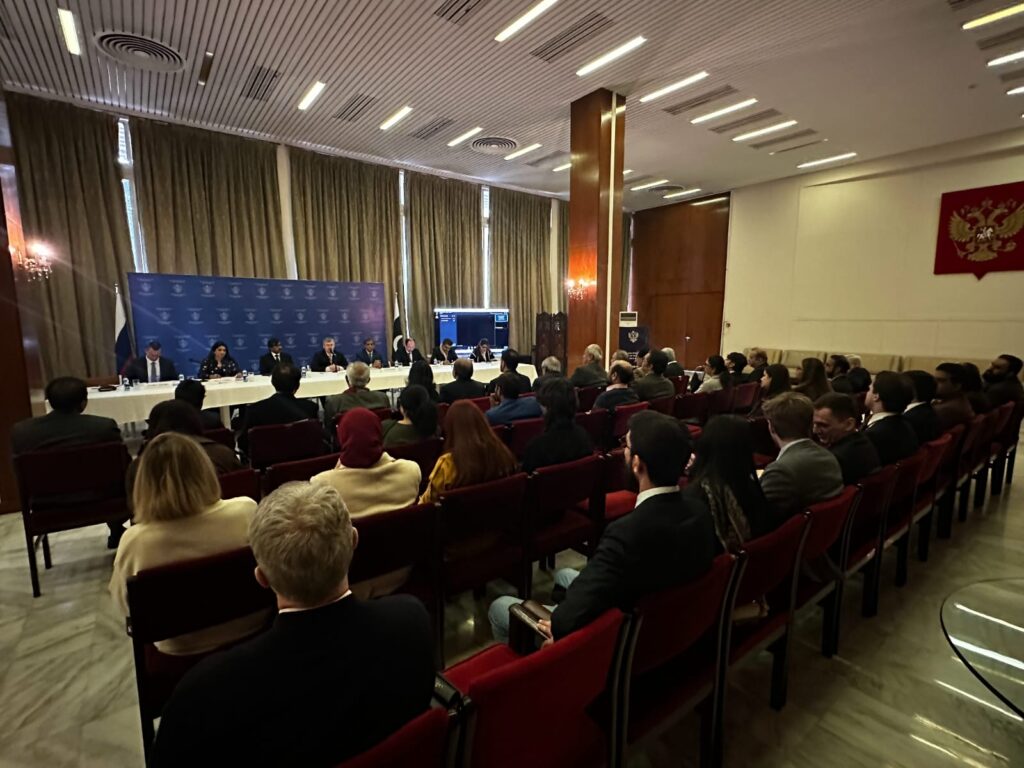
Islamabad:The Embassy of Russia in Islamabad hosted a roundtable discussion titled “Russia-Pakistan: Overview of the Modern Stage of Bilateral Relations,” organized in collaboration with the Consortium for Asia Pacific and Eurasian Studies (CAPES). The event brought together over 40 representatives from universities and research institutions from various Pakistani cities, including Islamabad, Peshawar, Lahore, Faisalabad, Karachi, Sargodha, and Okara.

In his opening remarks, Ambassador Albert P. Khorev noted the growing dynamics of the Russia-Pakistan political dialogue and the intensified contacts between the two countries’ legislative bodies. He also emphasized the steady development of cultural ties and the constructive interaction between religious organizations in Russia and Pakistan. He added that the populations of both countries were united by their commitment to traditional spiritual and moral values.

Russia-Pakistan Relations Poised for Growth After Islamabad RoundtableIn this regard, the Ambassador confirmed Russia’s readiness to increase efforts to implement joint projects aimed at deepening cooperation between the two friendly neighboring countries within the Eurasian region.

Russian Trade Representative in Islamabad Denis Nevzorov informed the participants of the key trends in bilateral trade and economic cooperation in 2025. He also presented the 16th INNOPROM International Industrial Exhibition, which will take place in Yekaterinburg, Russia, on July 6–9, 2026.

Further discussions produced initiatives aimed at strengthening bilateral people-to-people contacts. These initiatives included resuming direct flights between the two countries, launching joint educational programs at Russian and Pakistani universities, and translating Russian classical and modern literary works into Urdu.

The event confirmed the strong interest of the Pakistani academic and scientific communities in further enhancing dialogue with the Russian Federation and expanding economic, cultural, educational, and humanitarian ties between the citizens of the two friendly states.

Al-Shifa surgeons restore vision of 101-year-old patient

0

Spokesman Report

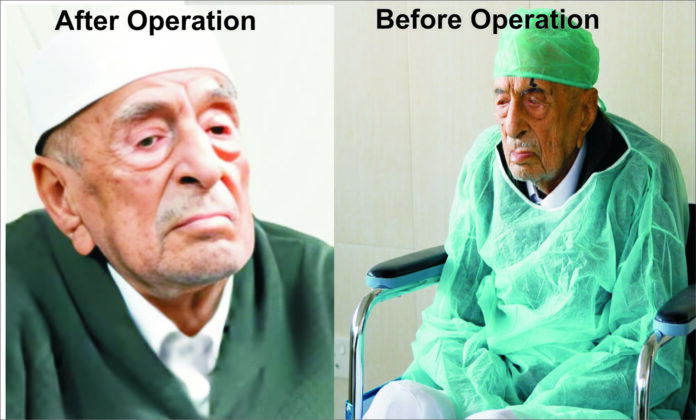
RAWALPINDI :Al-Shifa Trust surgeons have successfully restored vision to a 101-year-old patient suffering from dense cataracts and age-related macular degeneration (AMD), after multiple specialists had declined the case, citing high medical risks.
Raza Khan, a resident of Islamabad, underwent the high-risk procedure at Al-Shifa Trust Eye Hospital in Rawalpindi. The surgical team, led by Dr. Sabeehuddin, used advanced surgical tools and special gels to protect the delicate eye tissues, which is especially important in elderly patients.
The case carried sentimental weight for the institution, as Mr. Khan was a close friend of the late Lieutenant General Jahan Dad Khan, the trust’s founder. Prior to his procedure Khan’s family reported being turned away by several ophthalmologists in the twin cities, who felt the patient’s age and retinal degeneration posed too great a risk.
“The procedure involved more than just removing the cloudy lens,” noted the head of the cataract department. “We had to work with retinal problems that usually reduce the chances of success for very elderly patients. To witness recovery at this age shows the progress of modern eye care.”
Post-operative assessments confirmed a significant breakthrough as the patient has regained sufficient vision to identify family members and navigate his surroundings independently. His recovery marks one of the oldest successful cataract interventions documented in the region.
Al-Shifa Trust currently operates six specialized hospitals across Pakistan, including facilities in Rawalpindi, Chakwal, Kohat, Sukkur, Muzaffarabad, and Gilgit. A seventh hospital is currently under construction in Lahore and is scheduled to begin operations in 2027. According to institutional data, approximately 80 percent of the trust’s patients receive treatment free of charge or at heavily subsidized rates.
The success comes at a critical time for eye health in Pakistan. National Survey data indicate there are roughly 2.7 million blind individuals in the country, with cataracts accounting for 51 percent of those cases. Despite the high prevalence, surgical coverage remains below 65 percent in rural districts, often leaving the elderly in total darkness.
This milestone shines as a testament to the extraordinary growth of complex geriatric interventions within Pakistan’s philanthropic healthcare sector. Fueled by the community’s generosity, Al-Shifa Trust proudly bridges the gap left by the overstrained public health system, transforming lives through medical excellence.

Standard Chartered and IFC Partner to Fuel Pakistan’s Agri-Value Chain Resilience

0

Spokesman Report

Karachi: IFC announced its first PKR denominated investment via an unfunded Partial Credit Guarantee of up to PKR 33.6 billion (approximately US$120 million equivalent) to support a long-term PKR-denominated financing from Standard Chartered Bank Pakistan Limited to Engro Fertilizers Limited (Engro Fertilizers). This financing will enable Engro Fertilizers to strengthen the agri-value chain in Pakistan by mobilizing local capital. The investment—aimed at strengthening Pakistan’s agriculture sector and bolstering food security—also benefits from a first loss counter guarantee from the IFC-Canada Facility for Resilient Food Systems.

This engagement marks IFC’s first local currency investment in Pakistan, thus expanding access to long-term financing solutions in both local and foreign currency, critical for economic growth particularly in important sectors such as agriculture and micro, small, and medium enterprises. By leveraging PKR-denominated financing, Engro Fertilizers, one of Pakistan’s leading fertilizer producers, is championing the use of domestic capital to enhance operational resilience. The financing will help Engro Fertilizers make capital investments in maintenance of facilities and turnarounds, enabling uninterrupted supply of urea and other fertilizers to meet national demand. The funding will also support farmer programs, ensuring continuity of initiatives that complement Engro’s core mission of reliable production.

The agriculture sector is contributing 24 percent of Pakistan’s GDP, 70 percent of its exports, and 40 percent of its employment, making it vital for long-term growth. Yet systemic challenges—inefficient supply chains, underfunded farmer programs, low literacy, and rising input costs persist. This investment will help address some of these gaps.

“Engro has always strived to solve Pakistan’s most pressing issues meaningfully. Using local capital to strengthen local value chains reflects our commitment to the country and to our farmers – the backbone of Pakistan’s economy – through reliable fertilizer production. We are grateful to our partners, IFC and Standard Chartered Bank, for enabling us to advance this mission,” said Engro Fertilizers CEO, Ali Rathore.

 “This investment reflects the strength of our partnership with Engro Fertilizers and Standard Chartered Bank and our shared commitment to provide innovative solutions to address challenges in a sustainable manner. Through this project, we are opening new pathways for local currency long-term financing that support growth and financial resilience to manage country risk in a sector vital to the country’s economy,” said Ashruf Megahed, Regional Industry Head, Manufacturing, Agribusiness & Services, Middle East and Central Asia at IFC

 Commenting on the occasion, Rehan Shaikh, CEO & Head of Coverage, Standard Chartered Pakistan stated, “At Standard Chartered we are committed to financing solutions that enable sustainable growth and long-term resilience across Pakistan’s economy. This partnership with IFC and Engro Fertilizers reflects our shared vision of strengthening food security and supporting one of the country’s most critical value chains. Standard Chartered is keen to continue working with IFC to replicate this successful structure across its network.”