Nissar Ahmed Thakur
While the world anticipates 2026 with renewed hopes and New Year resolutions, the people in Indian-occupied Jammu and Kashmir stand at the threshold of another year defined by uncertainty and apprehension; their future—amidst the continued conflict—remains bleak and unpredictable.
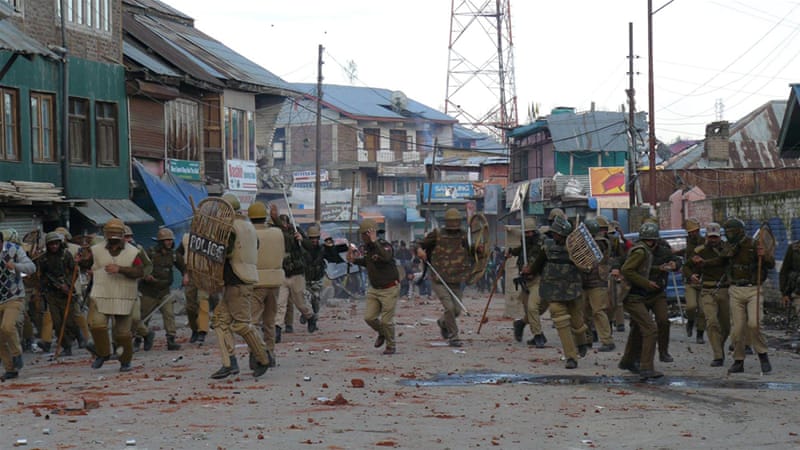
Though it is premature to predict what lies ahead, given the existing political dynamics, 2026 offers little hope for positive change in the restive region that grappled with a myriad of challenges in 2025—ranging from security concerns and political upheavals to violence and the systematic stigmatization of its identity—despite official claims that the year was less violent than previous ones.
Key events that shook the region
The Pahalgam attack on April 22, 2025, marked the most defining moment of the year. The attack, which claimed 26 innocent lives, pushed India and Pakistan to the brink of full-fledged war. India, without providing even a shred of evidence, accused Pakistan and Kashmiri groups for orchestrating the attack and, in an atmosphere of heightened war hysteria, carried out missile strikes inside Pakistan in May 2025 under the so-called “Operation Sindoor”. In retaliation, Pakistan’s military response compelled India to seek an internationally mediated ceasefire. But what unfolded behind the scenes in Kashmir during this heightened escalation remained largely overshadowed by broader geopolitical calculations.
The incident was used by the Indian government as a pretext for intensified “counter-terror operations” in Kashmir, which critics argue led to disproportionate targeting of civilians under the cloak of national security. As a result, thousands of civilians (3000 plus), primarily young Kashmiris were detained under the Public Safety Act (PSA) and the Unlawful Activities (Prevention) Act (UAPA). Dozens of residential houses allegedly belonging to freedom fighters were demolished in south Kashmir’s Pulwama and Islamabd district. Reports also documented torture, incommunicado detention, suspicious custodial deaths, and harassment of Kashmiri students and communities elsewhere in India. UN experts strongly condemned these measures, describing them as part of a broader pattern of collective punishment.
Systematic erosion of democratic rights
The year 2025, saw a gradual erosion of Kashmiris’ political and democratic rights. The political developments touted by India as a return to normalcy since October 2024 have offered no relief to ordinary Kashmiris, who remain caught in a web of chaos and uncertainty triggered by every new incident in the region.
Against the backdrop of growing majoritarianism, the holding of assembly elections and the installation of an “elected” administration were initially perceived as a potential turning point in the region’s deeply fragmented political landscape. Irrespective of questions surrounding their credibility, the elections marked a formal return to locally elected government, but in practical terms, substantive authority continued to rest with the Lt. Governor, who retains sweeping powers over administrative and security matters in the territory—which enjoyed substantial constitutional autonomy under Article 370.
LG’s veto-like powers over key decisions
Under the Jammu and Kashmir Reorganisation Act of 2019, the powers of the state legislature have been drastically curtailed, rendering it effectively a toothless body. Under the new arrangement, all bills passed by the legislature require the Lieutenant Governor’s assent. The gradual erosion of local authority has resulted in a “hybrid” system, in which the elected Chief Minister has been reduced to a ceremonial figurehead, with limited administrative control.
This drastic curtailment of powers and erosion of Chief Minister’s authority has further reinforced the perception that “democracy” functions merely as a façade behind which New Delhi exercises control over the region. Within this dual power structure, the CM has become a mere puppet while the Governor—an appointee of New Delhi—virtually calls shots on the ground.
Omar Abdullah, the Chief Minister, has publicly lamented over the systematic erosion of his authority and condemned the dual power structure as one “built for failure.” He confessed that the dual power structure has not only created confusion but also weakened the government’s ability to address domestic challenges effectively and he called him self half minister.
Viewed against the broader backdrop of political restructuring, regional stakeholders have been reduced to mere pawns, enabling New Delhi to maintain the status quo—while ordinary Kashmiris continue to bear its consequences.
Statusquoistic politics & NC’s inability to assert its position
Mainstream political parties have played a significant role in helping New Delhi to sustain the status quo by operating within institutional frameworks that strictly limit meaningful political change to take place in the region. Their prioritization of personal or party gains over real reforms has further entrenched central authority.
The National Conference, with its long history of betrayals, has once again failed the supporters who trusted and voted for it in the previous elections. The NC had pledged to restore Articles 370 and 35A, along with full statehood to the region (pre-August 5, 2019 status), including passing an assembly resolution on the matter during its first session.
Regrettably, the party went on the backfoot and, after assuming office, it prioritized the issue of statehood restoration over the reinstatement of Article 370, reflecting its inability to assert its longstanding position on the issue.
The NC came to power partly on the promise of leveraging the legacy of Article 370 to restore the region’s political identity and dignity through the reinstatement of full statehood. It has miserably failed to fulfill key commitments outlined in its election manifesto. In its first cabinet meeting, a resolution was passed urging the return of full statehood, without explicitly challenging the 2019 abrogation.
Opposition parties criticized these resolutions as “half-hearted,” or publicity stunts, accusing the NC of backtracking on manifesto commitments. Some within the NC and public have echoed frustration over unmet promises.
New Delhi’s refusal to restore statehood
The Modi government virtually ditched the Omar Abdullah administration thereby refusing to reinstate the statehood it had promised during the elections, which yielded no tangible gains on the ground except providing New Delhi with a democratic façade and a degree of symbolic normalcy, to ward off international pressure. While the Omar administration fretted over its limited authority, the centralized control imposed in 2019 remains firmly in place and continues to dictate the region’s governance.
Stigmatization of Kashmiri identity
Beneath the façade of so-called democracy, the systematic stigmatization of Kashmiri identity continues unabated. Kashmiris are routinely portrayed as inherently rebellious, anti-national, and terrorists. This venomous narrative and negative framing have significantly contributed to the widespread othering and demonization of the Kashmiri people. Across India, ordinary Kashmiris are relentlessly hounded, coerced, and humiliated—forced by Hindutva hardliners to chant slogans such as Jai Hind and Jai Ram. This shameful practice has gradually normalised a widespread presumption of guilt rooted in geography and identity, leading Kashmiris to be viewed through a lens of suspicion and presumed culpability.
The hate and othering of Muslims in general—and Kashmiris in particular—is no longer a fringe issue in India. It has been politically mainstreamed under the Hindutva project and granted blanket immunity by those at the helm, occupying the highest echelons of power.
The Façade of Development
Recent surveys have exposed the government’s mantra of development in Kashmir. According to the survey data from J&K, one in three individuals is unemployed, while for women, the situation is even grimmer, with one in every two unemployed. Agriculture and services continue to engage the majority of the workforce, whereas the manufacturing sector employs less than 7 percent.
Endnote: For years, India has projected elections and democracy as the solution to Kashmir’s problems. Yet, under this fig leaf of democracy, it has created a parallel power structure widely perceived as asymmetrical, in which unelected officials wield sweeping powers far exceeding those of representatives elected by the people. Two years down the line, the BJP government has shown no willingness to reinstate Article 370 or grant full statehood to J&K, which was long touted as the first step toward normalizing the situation. In an era marked by excessive centralization, however, full statehood alone would not suffice to resolve the myriad challenges confronting the region. The fate of its people, therefore, will continue to hang in balance and their woeful plight is unlikely to end unless the core issue of Kashmir itself is addressed in its historical perspective.
Sustainable peace and justice in the region can only be achieved through a genuine, peaceful resolution of the dispute, in accordance with United Nations Security Council resolutions. These resolutions not only recognize the aspirations and rights of the Kashmiri people but also offer a concrete pathway out of decades of conflict and uncertainty. All that India needs to realize is that a lasting solution to the Kashmir problem lies not in the elections—but in the long-awaited referendum—held under the supervision of the United Nations.
The writer is Director media and communications and can be reached:- [email protected]