Srebrenica Genocide Remembered
Naveed Ahmed Khan
Islamabad—A solemn ceremony was held in Islamabad to mark the 30th anniversary of the 1995 Srebrenica genocide, widely regarded as the worst atrocity on European soil since World War II. The commemoration, attended by a large number of dignitaries, diplomats, civil society members, and friends of the Bosnian people, served as a powerful reminder of the horrors of ethnic cleansing and the urgent need for global solidarity against hatred and injustice.
In July 1995, during the Bosnian War, over 8,000 Bosniak men and boys were systematically murdered by Bosnian Serb forces in the town of Srebrenica. Approximately 30,000 civilians were forcibly expelled from the enclave in what the United Nations has since recognized as genocide.
To honor the victims and reflect on the lessons of that dark chapter in history, the UN General Assembly has designated 11 July as the International Day of Reflection and Commemoration of the 1995 Genocide in Srebrenica.
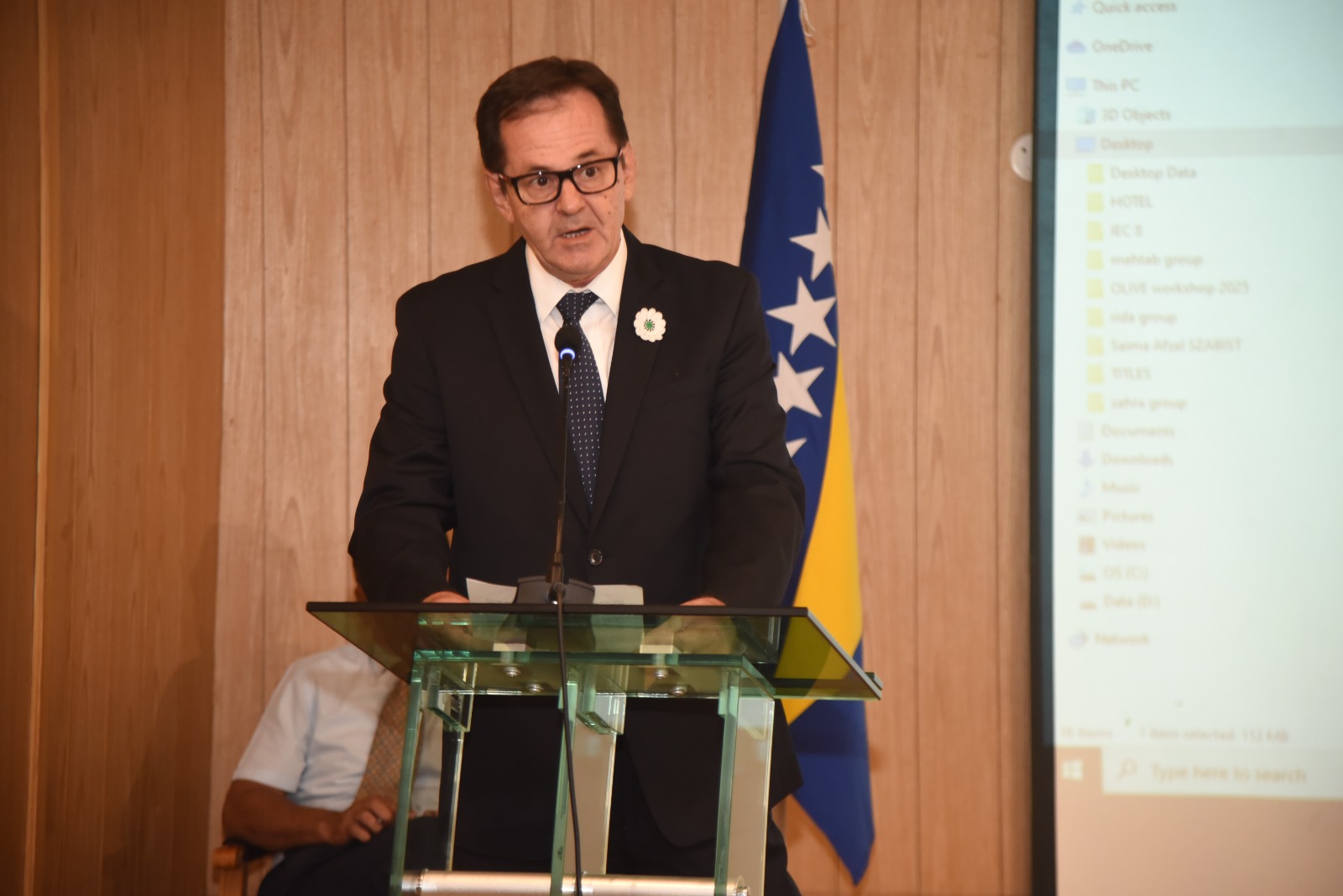
 Speaking at the Islamabad ceremony, His Excellency Emin Cohodarevic, Ambassador of Bosnia and Herzegovina to Pakistan, delivered a heartfelt keynote address. “We are so pleased that you can join us in commemorating the International Day of Reflection and Commemoration of the 1995 Genocide in Srebrenica, observed on 11 July,” he said.
“This year marks the 30th anniversary of the genocide,” he added, reminding the audience of the systematic killing of over 8,000 Bosnian Muslim men and boys—an act the UN has acknowledged as the gravest crime committed in Europe since the Second World War.
He also recalled the broader toll of the Bosnian War, which between 1992 and 1995 claimed more than 100,000 lives, saw thousands of women raped, and forced over two million people from their homes.
“On this solemn anniversary, we remember and honor the victims, the survivors, and their families,” the ambassador said. “In our remembrance, we reflect on what this anniversary means for today’s increasingly polarized world, our society, and how we can act today. We stand together against those who try to divide us and recommit ourselves to opposing hatred, discrimination, and prejudice wherever they rear their head. Only then can our communities and the world be safer, stronger, and more cohesive.”
Ambassador Cohodarevic encouraged attendees to embrace the message of the commemoration: “Remember Yesterday and Act Today.”
He also expressed sincere appreciation to the Government of the Islamic Republic of Pakistan for its unwavering support in the adoption of the UN General Assembly resolution in May 2024, which designated 11 July as the International Day of Reflection and Commemoration of the Srebrenica Genocide.
“The adopted resolution has planetary significance. It represents a moral, historical, and civilizational act of the United Nations,” he emphasized.
The ambassador stressed the importance of collective memory and justice in turbulent global times: “In times of complex global relations, it is important to know that the truth has its guardians. Therefore, it is important that we together strengthen the culture of peace, encourage advocates of justice, institutionally protect the legacy of the United Nations courts, affirm dialogue, condemn the policy of glorifying war criminals, and strengthen education systems in the function of genocide prevention.”
A screening of the internationally acclaimed film “Quo Vadis, Aida?” was also held during the event. “It is not only a cinematic masterpiece but a painful reminder of the Srebrenica genocide,” Cohodarevic remarked. “I would like you to take away the feelings and questions the film raises. How many things would have been different if we had more empathy and solidarity? Did this tragedy have to have such a terrible outcome?”
Before concluding his speech, the ambassador extended heartfelt thanks to the Shaheed Zulfiqar Ali Bhutto Foundation for hosting the event and to Mr. Tazeen Akhtar, Editor of Pakistan in the World, for his instrumental role in organizing the commemoration.
“Once again, thank you for joining us this afternoon,” he concluded, leaving the audience with a profound message of unity, remembrance, and the moral imperative to ensure that such atrocities are never repeated.