Naveed Ahmed Khan Photo by Sultan Bashir
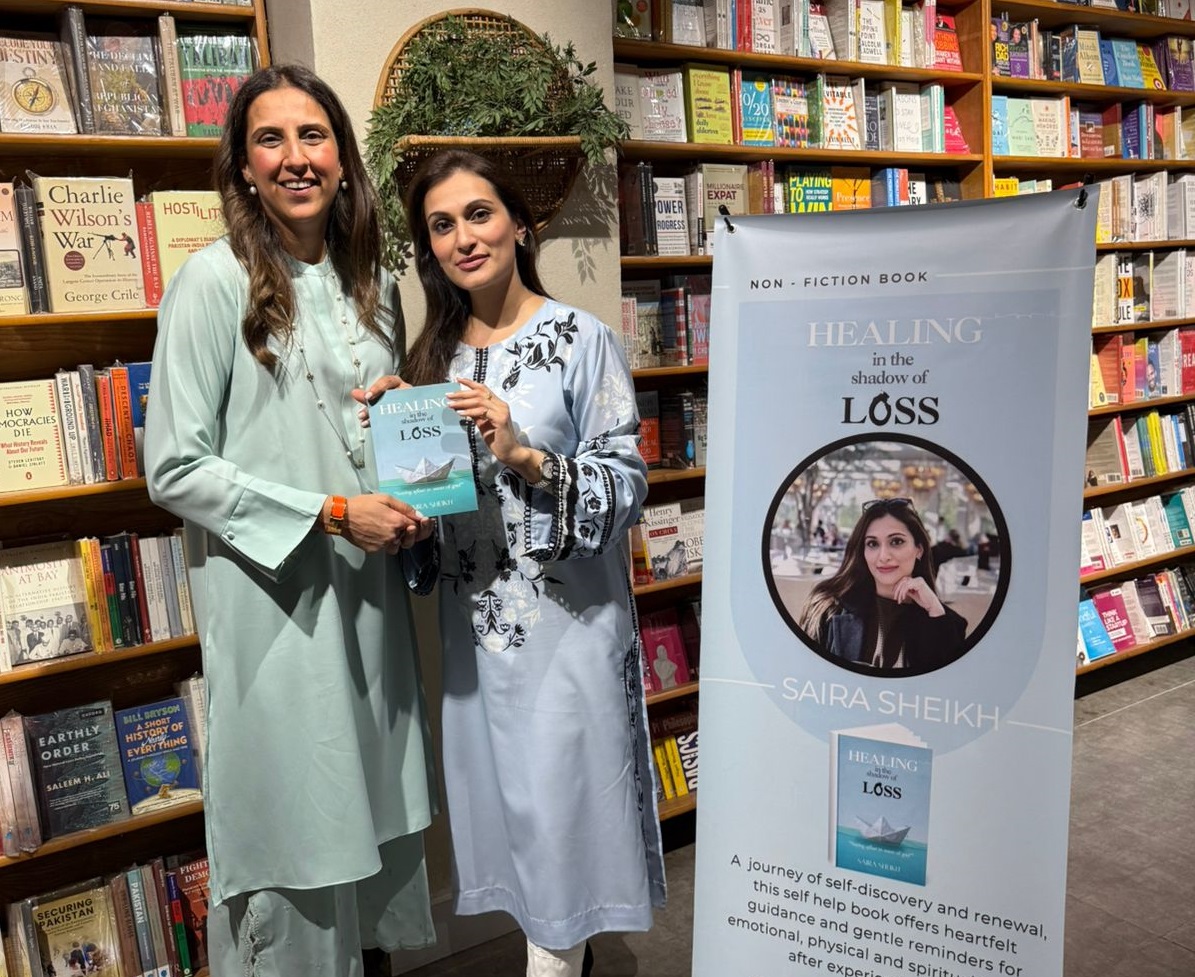
Islamabad – The cozy ambiance of Biblio Café on Agha Khan Road, F-6, came alive here on Tuesday evening, with heartfelt conversation as it hosted the launch of Healing in the Shadow of Loss, a poignant self-help debut by author Saira Sheikh.
The event drew an eclectic mix of literary and intellectual voices, including Dr. Aqeela Asif (Assistant Professor, COMSATS University), renowned photojournalist Mobin Ansari, Rai Riaz Hussain (former Press Secretary to the Prime Minister), LalaRukh Dhar (Director, Staff College), and Dr. Rubia Usman (Consultant Physician), among others. Their participation underscored the wide relevance and emotional resonance of Sheikh’s work.
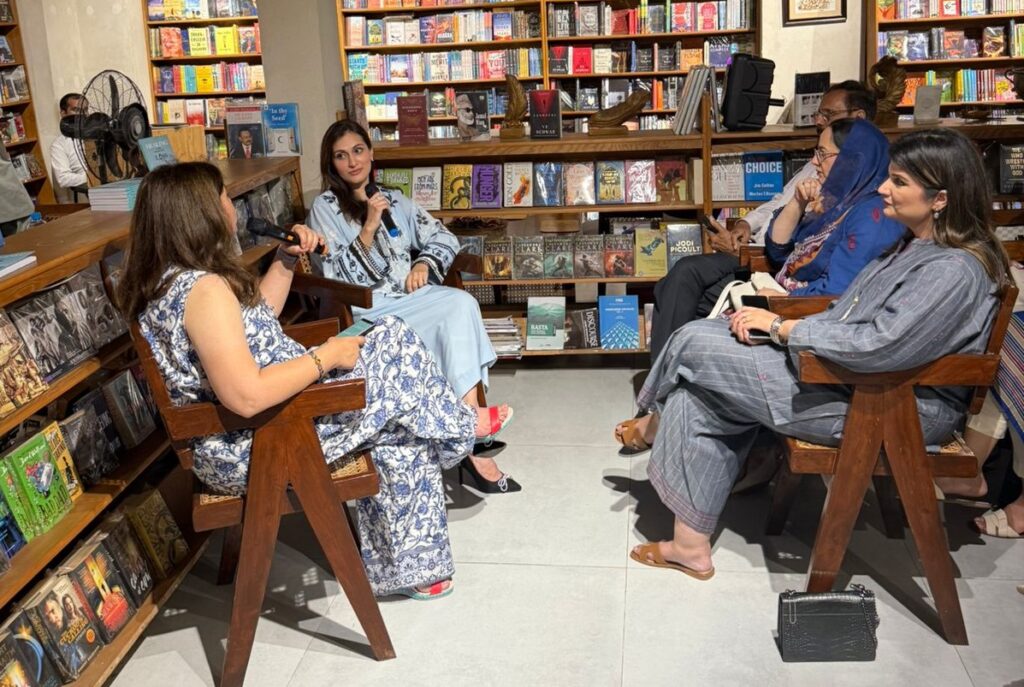 Sheikh, a Pakistani expatriate and Cardiff University MBA graduate, is known for balancing multiple roles—entrepreneur, mother of two, and now, published author. Her transition into writing stems from a personal journey of transformation. Healing in the Shadow of Loss offers a nuanced approach to grief, blending emotional intelligence with cultural insight and lived experience. Her entrepreneurial spirit, expressed through a home-based soy candle business, reflects the same personal resilience and creative drive found in her writing.
The event was moderated by Mona Raza, literary influencer and founder of Readers Lounge—Pakistan’s largest female readers Facebook group. Raza, a prominent voice in the local #bookstagram community, has spent over seven years cultivating reading culture across digital and traditional platforms. Her stewardship of the evening’s proceedings reflected her commitment to literature that engages with real human experiences.
Islamabad’s literary and intellectual circles turned out in force for the launch, which brought together established writers, rising voices, and members of Sheikh’s inner circle—family, friends, and devoted readers. The audience’s diversity highlighted growing interest in self-help literature rooted in local cultural contexts.
A deeply engaging discussion served as the evening’s centerpiece, offering rare vulnerability and insight. When asked by Raza what prompted her to turn personal healing into a public work, Sheikh reflected, “Writing became my sanctuary when traditional forms of processing grief felt insufficient. I realized that many of us in Pakistani society are expected to move through loss quietly, without acknowledgment of the complex emotions involved. This book emerged from my desire to create space for that acknowledgment.”
Responding to an audience question about cultural stigma surrounding grief, Sheikh noted, “We often hear phrases like ‘time heals everything’ or ‘be strong,’ but rarely do we create space for people to actually feel their emotions fully. My work challenges the notion that healing must happen in isolation or within predetermined timeframes.”
Following the formal program, Sheikh took time to sign copies and engage in one-on-one conversations, furthering the book’s mission to cultivate community-based healing. “My hope,” she shared, visibly moved, “is that this book will help normalize conversations about grief in our society. We need to move beyond the expectation that people should heal quietly and quickly. Real healing requires community, understanding, and the courage to sit with difficult emotions rather than rushing through them.”
Published by Tanzeela K Hassan of Thazbook, Healing in the Shadow of Loss is being lauded as a milestone in Pakistan’s growing indigenous self-help genre. Early reviews from mental health professionals and literary critics alike have praised its cultural nuance, emotional authenticity, and accessible prose. Sheikh’s ability to translate complex psychological concepts into everyday language is being recognized as both timely and transformative.