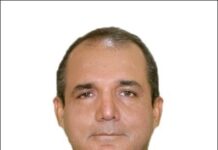
Hammad Asghar Ali
It is noteworthy that the dynamics of insurgency, peace, development, and political narratives in Balochistan are not only critical for national security but also crucial for Pakistan’s future. Analysts observe that over the past few years, the state has prioritized development projects while simultaneously exposing terrorism, misleading propaganda, and false human rights claims. In this context, former BLA commander Sarfaraz Bangalzai’s recent revelations shed new light on the ground realities in Balochistan.
According to Sarfaraz Bangalzai, Dr. Mahrang Baloch and the Baloch Yakjehti Committee (BYC) present themselves as defenders of human rights, but in practice, they protect terrorist activities. Significantly, when the bodies of BLA terrorists involved in the Jaffar Express hijacking were brought to a hospital, BYC activists attempted to erase their identities, destroy evidence, and manipulate media narratives. This behavior supports terrorism more than human rights.
Experts point out that Dr. Mahrang’s father, Ghaffar Langove, still has a BLA flag on his grave, symbolizing the link between so-called “civil activism” and armed militancy. Furthermore, the fact that Ghaffar Langove was killed in an internal BLA feud—not by state action, as confirmed by Mama Qadeer—disproves BYC’s claims.
Similarly, Sarfaraz Bangalzai notes that Sammi Deen Baloch blames the state, ignoring her father’s BLA connections. Interestingly, her brother, aligned with the Allah Nazar group, runs a family business called “Morning Blue” in Oman and funds it. Analysts argue that these aspects are deliberately ignored in BYC’s narratives.
It is also noteworthy that BYC labels every individual who joins terrorist camps as “disappeared,” but when these individuals later appear as suicide bombers or active militants, the narrative goes silent. Examples include Karim Jan, Wadud Sattakzai, and Sohaib Langove. Karim Jan, for instance, was listed as missing by BYC but was later confirmed as a BLA Majid Brigade member who died in combat, acknowledged by his family.
Sarfaraz Bangalzai further claims that young people who attempt to leave militant groups are often killed in internal reprisals, and the blame is falsely shifted to the state to fuel propaganda.
At the same time, it is important to highlight that 43 out of 57 major development projects in Balochistan are progressing rapidly. Analysts report that 80% of the jobs created are allocated to local residents, reducing unemployment and promoting economic stability at the grassroots level.
Projects like Reko Diq, Saindak, and Chamalang mines have become the economic backbone for thousands of families. Similarly, the Kachhi Canal and Mirani Dam are irrigating millions of acres and improving drinking water availability.
The $90 billion Central Business District and the Gwadar Port expansion are expected to generate up to PKR 400 billion over the next decade. The Gwadar Safe City project is providing a secure environment for residents, investors, and workers alike.
In education, new scholarships, technical institutes, and vocational training programs are preparing youth for modern industries. In healthcare, new medical complexes, trauma centers, and upgraded hospitals are bringing hope to underdeveloped districts.
It is important to note that some groups spread false narratives about Balochistan’s accession to Pakistan. Historical facts show the opposite. Under British rule, Balochistan lacked provincial status, legislative representation, and democratic rights. Allama Iqbal envisioned Balochistan as part of a future Muslim state, and Quaid-e-Azam Muhammad Ali Jinnah actively fought for its rights in the 1935 Government of India Act.
Under Jinnah’s guidance, Qazi Muhammad Isa founded the Balochistan Muslim League in 1939, sparking political awareness. Before August 14, 1947, the Shahi Jirga and Quetta Municipality voted to join Pakistan. Similarly, the states of Makran, Kharan, and Lasbela voluntarily became part of Pakistan. Later, the Khan of Kalat formally signed the Instrument of Accession, integrating Balochistan constitutionally. In 1958, Gwadar was peacefully acquired from Oman through the efforts of Prime Minister Feroze Khan Noon and Begum Viqar-un-Nisa Noon.
It is especially important to emphasize that the real image of Balochistan is not what social media or external agendas portray. The state has made unprecedented efforts for the province’s development, peace, and dignified future, while terrorist groups continue to exploit youth for their survival. Analysts believe that it is time for the people of Balochistan to focus on real development, economic opportunities, and peace, because the province’s future is tied to security, growth, and national unity.
The time has come for destructive elements in Balochistan to abandon their negative approach and join the state, nation, and people in a constructive path.