

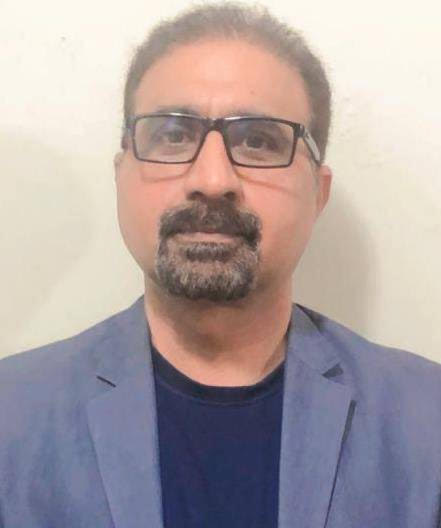
Zia ur Rehman
The Government of Punjab deserves credit for continuing its efforts to promote education through stipend programs for low-income families. Under the Zewar-e-Taleem initiative of School Education Department Punjab, Punjab provides a quarterly stipend of Rs. 3,000 to secondary (6-10th grades) school-going girls in 17 districts of Punjab, Whereas The Benazir Income Support Programme (BISP) provides a monthly stipend of Rs. 1,000 per child to the children of BISP beneficiaries who are enrolled in schools across Punjab, covering students from Grade 1 to Grade 12.
These initiatives are commendable in spirit. They reflect the government’s commitment to encouraging education, especially among girls in low-income households. They also align with Article 25-A of the Constitution of Pakistan, which declares that the state shall provide free and compulsory education to all children aged five to sixteen years. The Punjab Free and Compulsory Education Act 2014 is enacted to operationalize this constitutional right. In this context, initiatives like Zewar-e-Taleem and the BISP education stipend schemes play a vital role in helping the government fulfil its constitutional and legislative obligations through conditional cash transfer mechanisms that incentivize school attendance. However, when viewed against the backdrop of rising inflation, economic stress, and the devastation caused by recent floods, these amounts seem increasingly inadequate. For many struggling families, such stipends make little difference in the decision to send a girl to school or to work.
Southern Punjab was among the regions hit hardest by the floods, leaving many communities in ruins. Homes were washed away, fields destroyed, livestock killed, and livelihoods shattered. Even now, thousands of families are struggling to rebuild their lives. In such circumstances, education often becomes a luxury that many can no longer afford. The immediate need for food, shelter, and income outweighs the long-term value of schooling.
For families living on the edge, Rs. 1,000 a month cannot cover transportation costs or basic school supplies, let alone replace the income a girl might earn through domestic work or daily labor. When every rupee counts, the choice between survival and schooling becomes painfully clear. The result is that many girls, particularly in disaster-affected areas, are at risk of dropping out and being pushed into child labor or early marriage.
The situation in Punjab mirrors challenges seen in many developing countries, but there are valuable lessons from nations that have found ways to turn financial incentives into lasting educational gains. Bangladesh, for instance, transformed girls’ education through its Female Secondary School Stipend Program. The initiative provided not just cash incentives but also free tuition, textbook subsidies, and conditions tied to school attendance and delayed marriage. This comprehensive approach led to a sharp increase in female enrollment and a noticeable decline in child marriages.
Similarly, Brazil’s Bolsa Família program linked cash assistance to school attendance and regular health checkups, helping millions of poor families improve their living standards while ensuring that children stayed in school. In Rwanda, targeted stipends for girls’ education were complemented with mentorship, transport facilities, and community engagement, making it easier for girls to continue schooling safely and consistently.
Punjab can draw inspiration from these examples. The stipend programs currently in place need to be re-evaluated, not just for their structure but for their impact. Increasing the stipend amount is essential; Rs. 1,000 a month today simply does not match the cost of living or the financial pressures families face. If we truly expect families to prioritize education, particularly for their daughters, we must make it worth their while.
Doubling the existing stipend to Rs. 2,000 per month would not only help ease the immediate financial burden but would also send a strong signal that the state values girls’ education as an investment in Pakistan’s future. Infact support should also go beyond cash transfers such as subsidized transport, and school meals, can make education a more practical option for poor families.
There is also a need for greater community engagement to help families understand the long-term value of educating their daughters. In the poorest households, education is often viewed as an expense rather than an investment. Changing that perception requires consistent awareness campaigns and local champions who can demonstrate the benefits of keeping girls in school.
Educating girls is not just a moral responsibility, it is an economic imperative. Studies have shown that every additional year of schooling for a girl can raise her future income potential and contribute to national economic growth. In a province still recovering from natural disasters and economic hardship, investing in girls’ education is one of the surest ways to break the cycle of poverty.
Punjab’s stipend programs have laid a strong foundation, but in their current form, they fall short of addressing the depth of today’s challenges. Strengthening these incentives and adapting them to current realities is not just about keeping girls in classrooms, it’s about safeguarding the province’s future.
The writer, Mr. Zia ur Rehman, is the Founder and Chief Executive of AwazCDS-Pakistan and a mathematician turned social and human rights activist.

