Naveed Ahmed Khan Photos by Ramzan Mughal
ISLAMABAD – In a vibrant ceremony marking Egypt’s National Day, Pakistan and Egypt reaffirmed their commitment to strengthening bilateral ties, with a particular focus on collaboration in agriculture, food security, trade, and cultural exchange. The event, held in Islamabad, brought together a distinguished assembly of diplomats, federal ministers, military officials, and political figures, reflecting the depth and diversity of the two nations’ longstanding relationship.
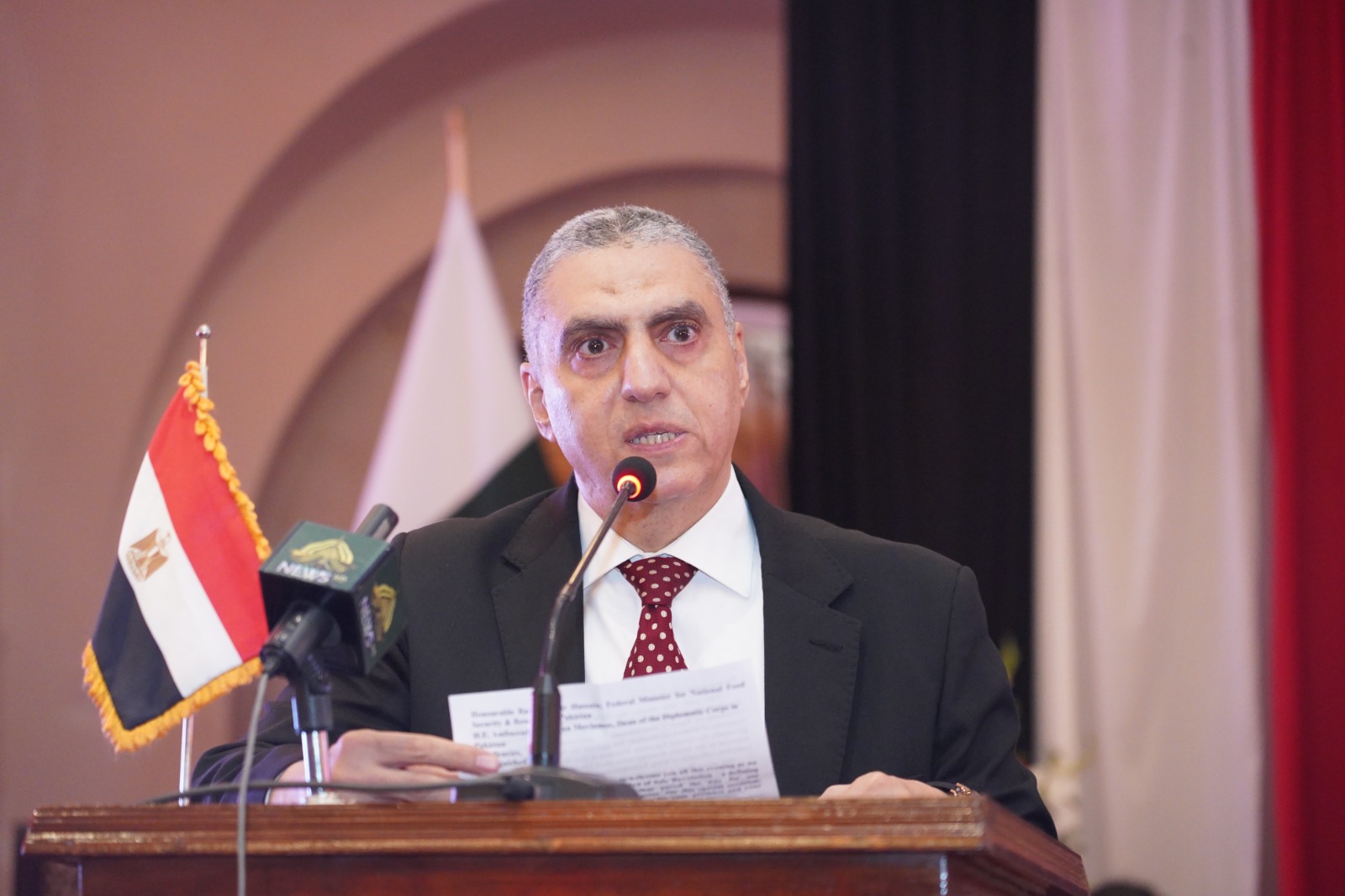
Federal Minister for National Food Security and Research, Rana Tanveer Hussain, represented Prime Minister Shehbaz Sharif at the celebration, which was hosted by Egyptian Ambassador H.E. Dr. Ihab Abdelhamid. Upon arrival, Minister Hussain and other dignitaries received a warm welcome from Ambassador Abdelhamid and his diplomatic team. The guest list included Federal Minister for Investment Qaisar Ahmed Shaikh, Governor of Sindh Kamran Khan Tessori, the Dean of the Diplomatic Corps and Ambassador of Turkmenistan Atadjan Movlamov, Ambassador Hamid Asghar Khan, Additional Foreign Secretary (Africa), and several other eminent figures from the diplomatic, political, and military communities.
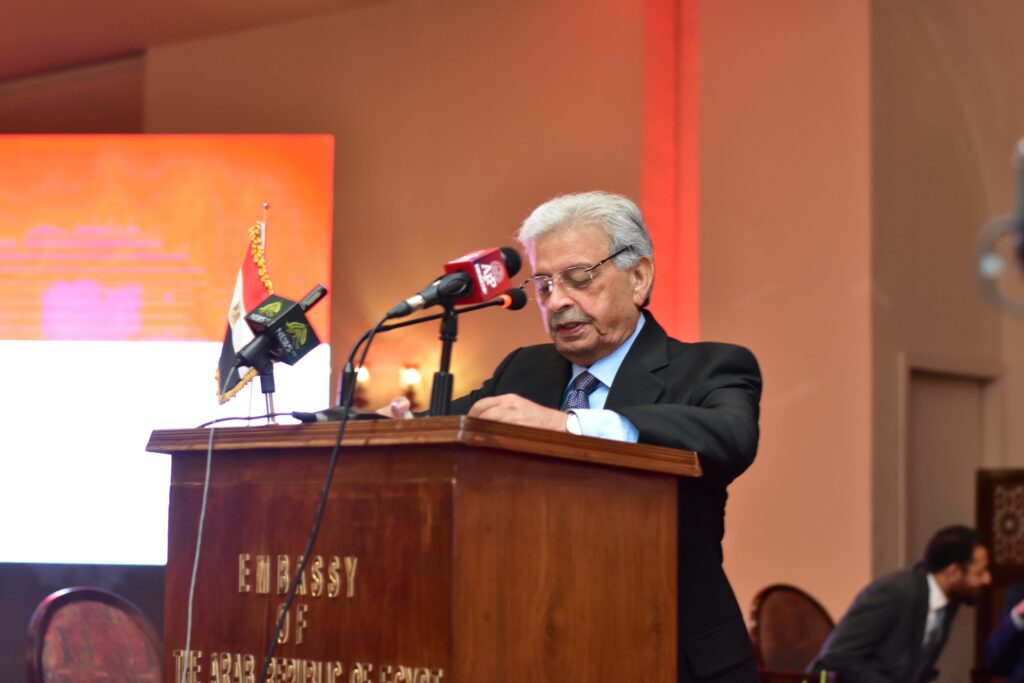 In his keynote remarks, Minister Hussain called for deepened collaboration with Egypt in agricultural science, biotechnology, and food security, citing Egypt’s advanced capabilities in climate-smart technologies, arid farming, and drip irrigation systems. He emphasized the relevance of these areas to Pakistan’s own agricultural challenges and highlighted the potential for joint ventures, research partnerships, and capacity-building initiatives.
“Referring to Egypt’s impressive progress in agricultural development, the Minister called for enhanced collaboration in areas such as seed development, arid farming, and sustainable agricultural practices,” read an official statement issued after the ceremony. “He underscored the importance of bilateral initiatives in biotechnology and food security, particularly in the face of climate change and resource scarcity.”
Minister Hussain further acknowledged Egypt’s unwavering support for Pakistan at regional and international levels, including consistent cooperation within platforms like the Organization of Islamic Cooperation (OIC) and the United Nations. He praised the revival of the Pakistan–Egypt Joint Ministerial Commission (JMC), noting that both governments are working to finalize new agreements in trade, agriculture, higher education, and cultural exchange—steps that signal a reinvigoration of bilateral ties.
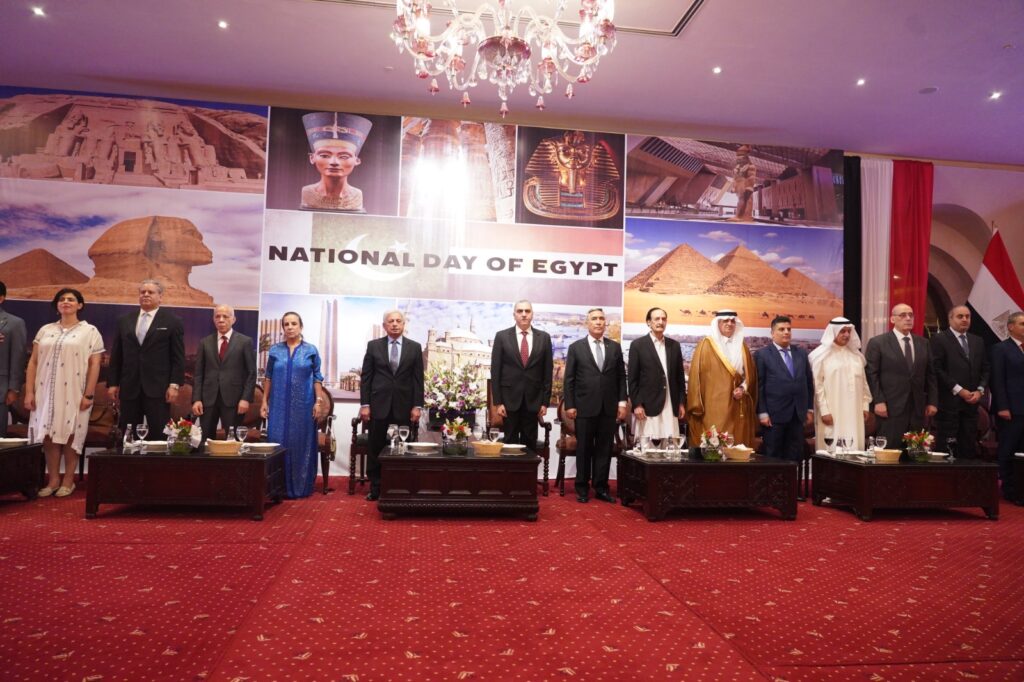 In response, Ambassador Abdelhamid extended heartfelt thanks to the government and people of Pakistan for their hospitality and reiterated Egypt’s commitment to deepening its relationship with Pakistan. He noted Egypt’s willingness to explore joint ventures in key sectors such as renewable energy, technology, and pharmaceuticals, and emphasized that both countries share a common vision for regional peace and development.
The ambassador highlighted Egypt’s growing agricultural exports and discussed opportunities for bilateral trade expansion, particularly in textiles, agriculture, and information technology. “We see great potential in Pakistan as a strategic partner, and we are committed to fostering cooperation that benefits both our nations economically and culturally,” he said.
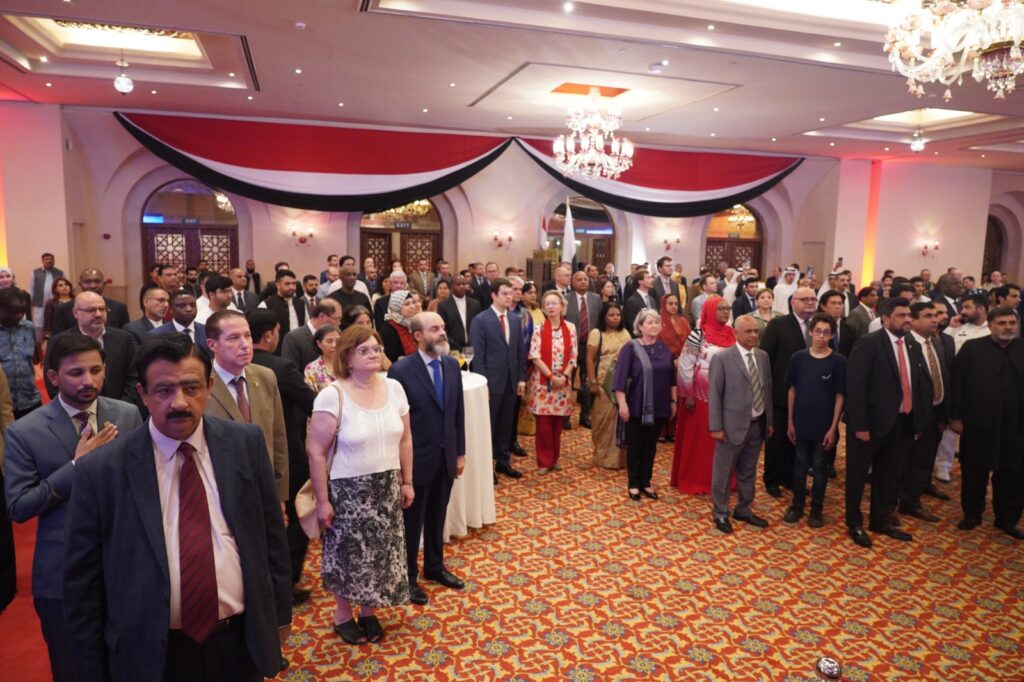 The ceremony served not only as a diplomatic engagement but also as a networking hub for business leaders and diplomats, many of whom discussed strategies to enhance the bilateral trade volume and explore investment opportunities.
Adding a cultural dimension to the evening, guests were treated to traditional Egyptian folk performances and a display of artifacts, offering a glimpse into Egypt’s rich and ancient heritage. The performances were well-received by the audience and contributed to a celebratory atmosphere of mutual respect and cultural appreciation.
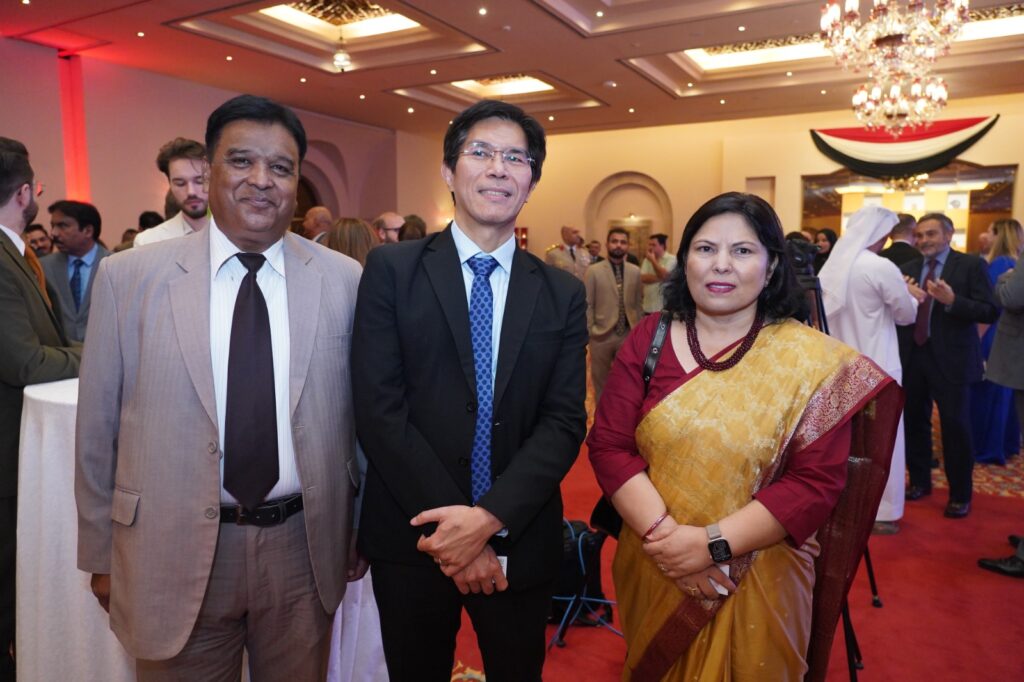 Ambassador Abdelhamid also revealed plans to host more cultural festivals, academic collaborations, and student exchange programs aimed at strengthening people-to-people connections, particularly among the youth.
As the event concluded, the mood remained optimistic, with both sides expressing eagerness to build on the positive momentum. In an era marked by global uncertainty, the enduring relationship between Pakistan and Egypt stands out as a beacon of friendship, cooperation, and shared prosperity.
The National Day celebration served as more than just a ceremonial occasion—it became a platform for reaffirming a strategic partnership rooted in mutual interests, historical ties, and a shared commitment to development, resilience, and regional stability.